
Tag: feminism

  • The Land Of Rising Gender Diversity

    The Land Of Rising Gender Diversity

    Content Notes: Artistic Rendition of Topless Nudity and Discussions of Acephobia, Homophobia, Pathologisation, Sexism, Transphobia, TERFs and Xenophobia

    I know I promised last time to discuss trans representation in a manga. And we will get there. But before that, I think it’s only fair to dedicate an essay to attempting a brief 4,500+ word explanation about the intricate history of transgender people in Japan. Because without it we will be helpless to understand the context a character grows from. And because this pride, I can’t help but be thinking of my trans community at home and abroad. So together, lets see how gender diversity developed in Japan.

    The Beginnings Of Having Fun

    From the early Meiji period (1868-1912) there was already a seedling of transgender adjacent history. Men and women were understood to exhibit a variety of sexual behaviours including dressing and living as the opposite gender.[1][2] However, there is no evidence of a strong internal identification.

    The modern use of the term transgender often relies on personal knowledge. Someone is transgender because they identify with a gender that is different to the one they were assigned at birth. Those who are cisgender identify with their birth gender. But there is often alot of grey area between transgender and cisgender, especially when looking to the past.

    Therefore when we look at historical cases, even if they appeared as another gender, there is usually little record of an internal identification. This is not to definitively say they were or weren’t transgender, but rather that any such attribution cannot be solidly stated. And that such complexity of gender identity and deviancy should not be compressed to conventional modern understanding.

    From the 1920s onwards sexology began to sprout in Japan. This resulted in a quick boom of research around perverse desire, including transvestism (crossdressing), sadomasochism (pleasure from pain), fetishism (unusual sexual interests) and homosexuality.[1]

    But in the lead up to WW2, such studies were banned and it wasn’t until the 1950s that there was a new wave of sexological research. This was due to US occupation ending, which resulted in many of the restrictions on the purveying of pornographic material being lifted. [3]

    Collection of Kasutori Zashi Magazines photographed by darkamyy
    Retrieved From: Reddit

    Of note are two similar genres of pornographic material. Hentai magazines (not the kind you are expecting) and kasutori zasshi or pulp magazines.[1][3] The latter is essentially just your run of the mill romance and kinkster periodicals, though these often included transvestite, transgender and homosexual content, alongside more familiar kinky spreads.[3]

    The former are pervert publications, which utilized a unique process of creation. These magazines were produced, ran by and read by both sexologist academics and queer people alongside kinksters.[1] Essentially both those deemed perverse and those who study the perverse interacted, theorised and researched together within columns.

    And these magazines were very progressive even by modern day standards. Some rejected the view of perversion as a medical disorder stating:

    ‘Sodomites, you must have pride! You are definitely not abnormal!’ [1]

    And as stated by Mark J. McLelland:

    “These publications were considerably more supportive of sexual and gender variety than any publications existing in English at this time…the paranoia about ‘the homosexual menace’ in 1950s America being absent in Japan.”[3]

    However, some parts do not align cleanly with modern sensibilities.[1] There was a common understanding of perversion as taking traditionally male or female attributes and slightly subverting them. The paradigm was good for the time, but still relied on notions of masculinity as inherently sadistic and femininity as inherently masochistic. It’s just feminine bodies sometimes behaved masculine and vice versa.

    The simple binary of attributes began to break down in the 1960s. This was due to an increased national attention on “feminised men”, who comprised a mix of camp gay men, crossdressers and transgender women.[1] First through the propagation of gei bās (a transliteration of gay bars) where effeminate gei bōi servers, who wore Western women’s clothing and makeup, captured heterosexual imagination. [3] This was to the point that so called tourist gei bās popped up exclusively to cater to a heterosexual clientèle.

    Photo of Le Carousel’s Blue Boys (e. 1960-1964) by an Unknown Photographer
    Retrieved From: Digital Transgender Archive

    And second through the Blue Boy Boom. The term Blue Boy was implemented by a variety of gender diverse people who were Assigned Male At Birth (AMAB).[1] Originating from a group of transgender and transvestite Parisian performers called The Blue Boys featured in Europa Di Notte by Alessandro Blasetti in 1959.[3]

    The interest for Japanese audiences started in 1961 when Europa Di Notte was released in Japan, followed by Blue Boy performances in Tokyo in 1963.[3] This led to an unique blend of AMAB people who usually desired surgical enhancement to their femininity but identified as anything from homosexual man to heterosexual woman.

    But the most influential part of the Blue Boy Boom was The Blue Boy Trial.[1][3] A doctor was arrested in 1965 for performing Genital Reassignment Surgery (GRS) on three people, who were later charged with prostitution. In 1969, the doctor was tried under the Eugenic Protection Law for sterilisation.

    GRS is the surgical procedure to turn penises and testicles into vaginas (vaginoplasty) and vaginas into penises (phalloplasty). These are complicated procedures and have undergone major revisions since they were first recorded in 1930 and in 1946 respectively.[4] Neither procedure makes anatomy that functions similar to cisgender genitalia, but it does make anatomy that functions for urological and sexual activity.

    The Blue Boy Trial led to SRS being banned in Japan until 1998 and so anyone desiring transgender care had to go abroad. But, it’s not like laws ever stopped the trans community from flourishing on home-soil either.

    Separation Between Gay and Trans

    The 1970s saw transgender people and transvestites discussing their own relationship with gender. Carrousel Maki commented on openly experiencing a masculine nature even after having GRS.[1] Others viewed themselves as both homosexual male and transgender woman with some even conceptualising themselves outside the gender binary. However, cisgender consensus was shifting towards understanding of transgender people as possessing “a sex of the heart” that was different from their bodily anatomy.

    The 80s saw even further gender complication with the introduction of the term Nyūhāfu or Newhalf.[1][3] Initially created by Betty of the Osaka show bar Betty’s Mayonnaise, the label gained popularity after Keisuke Kuwata produced a hit single employing the phrase. It became more recognized by cisgender heterosexual audiences after model Rumiko Matsubara released an album called Nyūhāfu and openly identified as such.

    Cover for Rumiko Matsubara’s Nyūhāfu Album (1981)
    Retrieved From: Tumblr

    This cemented within the broader public a distinction between gay men and transgender people.[1] Although it should be noted, such a distinction was not necessarily retained within the community. Many individuals still view their gender identity as tied to their homosexuality. As well, others who crossdressed or otherwise appear as another gender, identify solely with their natal gender.

    Through the mid 80s and into the 90s, there was a boom in transgender and more broadly queer activism. Transgender activists specifically began to lean into pathological labels.[3] In 1995 when four doctors at Saitama Medical College submitted an application to their ethics committee to prescribe GRS to trans patients. This was approved in 1998, with the provision of stringent guidelines to get around the Eugenics Protection Act.

    Photograph of Saitama Medical School (2019) by an Unknown Photographer
    Retrieved by: Ondotorism
    Note: Please appreciate my upmost maturity in having resisted the temptation to put a One Punch Man panel here

    Torai Masae, a trans man and founder of FtM Nippon was active in redefining transgender identity as a disability.[3] The tactic was successful in no small part due to a fortuitous coincidence between the Japanese term for Gender Identity Disorder (seidōitsuseishōgai) and disability (shōgai).[5] This inspired a sympathetic public that, amongst other gains, supported transgender people’s right to change their legal sex. And in 2004, spearheaded by Masae and other transgender activists, such recognition was passed into law providing the person was:[6]

    • Over 19 years old.
    • Unmarried.
    • Had no children.
    • Had no reproductive glands or had reproductive glands with a permanent lost of function.
    • Had a body which appears to comprise of parts that resemble the genital organs of those of the opposite gender.

    The no children rule was amended to only count progeny who were minors in 2008[5] and the requirement for sterilisation was deemed unconstitutional in 2023.[7][8] There is still ongoing judicial action regarding the requirement to possess genital organs aesthetically resembling the opposite sex.[7] But although the public at large and governmental institutions only recognise trans women and men, it does not mean genders outside the binary stopped existing. In fact, they were becoming more popular than ever.

    X-Jendā? I Hardly Know Them!

    X-Jendā is a Japanese umbrella term for genders outside of the binary whilst additionally representing an identity itself.[9] Although akin to the English word non-binary, it is significant to state x-jendā is a unique category with its own complexity.

    Part of this is due to the Japanese language blurring the distinctions between gender and sex that exist in English. Seibetsu means both biological sex and gender in Japanese and the suffix -sei is applied to gender and sexual identifiers.[9] This can be seen in ryōsei which describes intersex people and those who’s gender is fluid. Therefore in utilizing an English loan word, x-jendā explicitly decouples sex and gender whilst showcasing not just gender identity but ones perspective on gender itself.

    Cover of X-Gender Vol 1. (2022) by Asuka Miyazaki
    Retrieved From:Bleeding Cool

    The word x-jendā originated in the Kansai queer communities of the 1990s, with Sonja Dale specifying Osaka and Kyoto being the most probable areas to have spread the term.[9] The first textual reference to x-jendā appeared in a 2000 gay rights magazine Poco a Poco, ran by G-Front Kansai. They included it in a glossary of useful terms with the following definition x-jendā :

    “As the narrow definition of MtF[Male to Female]/FtM[Female to Male] strongly indicates a desire to move towards the opposite sex, [x-jendā] is used by individuals who do not fit under the existing categories of male (dansei)/female (josei), or who are unsure of their sex/gender.”[9]

    Shinichi Morita, a founding member of G-Front Kansai, would be instrumental in the spread of x-jendā as a term.[9] On top of that, they would later identify as MtFtX in the G-Front and PESFIS documentary ♀?♂?※?. Put differently, they transitioned from male to female to x-jendā.

    More specifically, Morita states that their gender is close to female internally but they are attracted to gay men. [9] This leads to them enjoying an internal feminine experience but an external presentation that allures homosexual men. Morita even advocated for the removal of gender roles in the workplace and an end to gendered discrimination, siding with the now contentious jendā-furī (gender-free) movement.

    X-Jendā would subsequently appear in a variety of texts within the early 2000s, both by academic and by queer people themselves. The 2007 Rockdom of Sexuality text Toransu ga wakarimasen!! (I don’t understand trans!!), included essays by FtX individuals.[9] There were even televisual appearances by FtX people to discuss their gender on talk shows although outside of such programs there was little representation. However, it is with the advent of the internet that x-jendā skyrocketed into popular use.

    Blog spaces long housed personal stories and tales for x-jendā individuals to converse about their identities and their own issues.[9] Mixi, an anonymous social media somewhat akin to Facebook has x-jendā specific groups like Otoko Demo Onna Demo Nai Sei (The Sex That is Neither Male Nor Female) and Seibetsu no Nai Seka (A World Without Sex/Gender). Both of these have over 4500 members.

    Furthermore, gender diverse groups allow folks to discover their x-jendā identity,[9] similar to how some Western transgender and non-binary people start in Butch sapphic circles or femboy Twitter. Speaking of, even Twitter has allowed for x-jendā individuals to connect and follow specific friends or creators. Though I’m not sure how truthful that is presently in the year of our Devil 2025.

    Image of Nuriko from Fushigi Yûgi by Yuu Watase
    Retrieved From: Mini Tokyo
    Note: Although Fushigi Yûgi is not my favourite anime, it occupies my mind so much because of the really good music and NURIKO MY BELOVED!

    And there have been examples of celebrities in Japan coming out as x-jendā. Mangaka for Fushigi Yûgi, Yuu Watase, disclosed she is x-jendā in 2019.[10] And based on the specific tweet she opened up in, there is evidence of at least some doctors becoming more receptive to gender diverse identities outside of the binary. But sadly, there is a more broad move to preserving the history of pathological control in Japanese medical establishments.

    Sterilising Fun

    Pathologisation has long remained an issue with the treatment of transgender individuals. Since the rise of sexology in 19th century Western Europe, medical practitioners with little actual knowledge of the community have tried to be the gatekeepers of our bodies.[11]

    In the 1960s, psychiatrists tried to develop transexual models of disease to decide who was worthy of hormone treatment and surgical intervention.[11] They prioritised a stable binary identity, aversion to our own bodies, adherence to gender roles and heterosexuality as the defining traits of “genuine” transgender people.

    As we know seidōitsuseishōgai or Gender Identity Disorder became the key diagnosis for trans individuals in Japan, to the point it developed into a term of self-identification for some.[3][6][11] It is moreover the phrase most prominently used to describe transgender people in Japanese media. Whilst this leaning into pathologisation did allow for some to gain new rights and recognition, there was criticism early on.

    In 2002, academic discourse argued that such a move meant transgender people would be viewed as inherently needing treatment. As a result they would have to portray themselves as traumatised or distressed to gain access to healthcare.[3][9] This leaves those who live outside the binary like Nyūhāfu and X-Jendā to be legally, socially and medically ignored. Anyone who does not conform to cisgendered views of gender identity is ignored as assimilation is prioritised over care.[3]

    My favourite example of assimilationist tactics is in a study by Elroi Waszkiewicz, a paper I will never stop recommending to friends.[12] In it, he documents transgender men’s experiences in US institutions designed to help people transition. He notes a phenomenon called Gender Profiling, whereby gender stereotypes are used to decide if someone is truly trans. Specifically, the gendered biases of an individual medical professional become hoops for a trans patient to jump through in order to access medical care.

    Image of James Dean Smoking (1955) by an Unknown Photographer
    Retrieved From: Wikipedia

    This exists because of the vague rules of the DSM-5 and ICD-11 diagnosis. Since it is impossible to definitively define what makes someone any gender, the clinician is left to their own devices to assess if a patient is undoubtedly suffering from The TransTM. And cisgender clinicians suck at understanding gender.

    Some of my favourite examples relayed by Waszkiewicz include clinical judgement of: the right way to hold a cigarette, the correct underwear to use and the appropriate type of people to be attracted to (cisgender heterosexual women). [11]

    Adding to this, in the Japanese context, there is an awful twist. As transgender people are only allowed to legally change gender if they first fail to reach the standards of their natal sex.[9] In other words, there is active emphasis on the assimilation and inferiority of transgender people, as pitiable failures of traditional gender, whose disabled heart must be accommodated.

    To delve a little into my own personal experience, since this post comes out on the second anniversary of my GRS. When I was seeing psychiatrists in 2020-2022 to get surgery, the fact I wore makeup and dresses was noted down multiple times as valid reasons for surgical intervention.

    One psychiatrist rebuked me for saying I didn’t mind appearing masculine some days. A thing that was a relatively ordinary occurrence in my humble village in the North East, never mind a common experience for queer people. But because I am transgender, any enjoyment or acceptance of my natal masculine characteristics is seen as proof of deception.

    Additionally, after I went through with the GRS, there was a strange frequency to which specialist nurses and even the surgeon assumed my goal was to provide pleasure for a partner. More specifically, that I underwent treatment, aftercare and now constant dilations to make sure a hypothetical future cisgender heterosexual man received pleasure.

    Generic Man from The Heckler (1992) by Keith Giffen
    Retrieved From: Write Ups

    I even know of trans women being denied GRS on the grounds that they were asexual, leading to me hiding my asexuality. Not once did the idea I might enjoy being with someone without a penis, or the concept of my own personal satisfaction, seem to enter their minds. It shows how dehumanising clinical staff can be. Our needs are second to that of the presumed future partners.

    Even if a trans person is seeking medical care, the power being in the hands of ignorant clinicians leads to us having to contort to cisgender expectations. Further worsening this though, if people desire only certain parts of medical care, if they have an atypical gender identity or merely want to be their own brand of person, there are systematic barriers and legal vulnerabilities for such deviation.

    The system in Japan, as well as in other countries like the UK and US, hamper and strangle the trans community. It impairs our ability to be our authentic selves freely and to gain equal status with our cisgender counterparts. And this gets even worse with the rise of ultraconservatism and transphobia within Japan.

    TERFs Are A Mould That Infests Everywhere

    Since the early 2000s in Japan, there has been what Kazuyoshi Kawasaka calls a growing Anti-Gender movement.[13] This crusade is pioneered by ultraconservatives, emboldened by the popularity of Shinzo Abe during his two runs as Prime Minister of Japan. It has attacked both feminist scholarship and LGBTQIA activism within the 21st century, focusing on the subversion and supposed removal traditional gender roles.

    Official Portrait of Shinzo Abe (2012)
    Retrieved From: Wikipedia

    The feminists of the 90s and 00s promoted the concept of jendā-furī, the idea of a gender free society, where cis Japanese women would be liberated.[13] These activists relied on bureaucratic relationships to enact their policies and had little to no grassroots organisation to exert political pressure in a more bottom up manner. As such, when there was a rise of ultraconservative politicians that deliberately manipulated the idea of jendā-furī as a:

    “soft fascism of sexual perverts”[13]

    The feminists of the time struggled to develop a resistance to this rhetoric.[13] A struggle that was exacerbated by prominent feminists inability to counteract against the calculated misinformation, instead treating it as innocent ignorance. However, as you can expect, it was not only cis Japanese women who were targeted. In fact queer people and Korean women were especially vilified in this modern ultraconservative movement.

    A vilification that was made worse by a lack of intersectional intercommunity practice amongst activist groups, who all seemed to despise each other. Feminist scholar Chizuko Ueno commented that:

    “…if someone asks me if feminism can forge a coalition with gay men, I would answer ‘yes, if they are not misogynistic’. Gay activists would harshly criticise me if I talk like this, but I cannot imagine gay men who are not misogynistic. The gay men who are not misogynistic would be those who do not romanticise masculinity; if they exist, I want to meet them”[13]

    Conversely gay writer and activist, Noriaki Fushimi, argued that jendā-furī denied the inherent differences in sexual desire based on biological sex.[13] As well he suggested that gay people should focus on pleasure, not activism. It seems not everyone can be as presciently intelligent as Shinchi Morita.

    This backlash led to the deprivation of the rights for Korean residents in Japan, queer people in poverty, and the strengthening of xenophobia often lobbied at queer refugees.[13] And although it died down when Abe first resigned, after his re-election there was a whole new wave of ultraconservatives.

    This time it directly targeted transgender people, especially women. The late 2010s, saw Trans Exclusionary Radical Feminism (TERF) be shipped from the UK into Japan. TERF represents both a movement and signifier of individuals that seek to exclude trans people, especially those who are AMAB, from feminist discourse. The central proposition is that transgender women are perverse males who obtain sexual titillation from transitioning. Whilst trans men are innocent soft girls cruelly tricked into removing their divine femininity. I wish I was overstating this.

    Photograph of Ochanomizu University (2018)
    Retrieved From: Zero Hora

    Ochanomizu University, a women’s only university, stated they would admit trans women by 2020.[13] In response Twitter TERFs in Japan decried the move and were routinely challenged. This led to a prominent Japanese feminist group, Women Action Network (WAN), to publish an article by an anonymous user.

    In it, the writer stated that TERF is a slur (it is not) and that trans people being allowed into women’s only spaces will cause a wave of misogynistic violence.[13] Furthermore, it spewed rhetoric similar to UK transphobic discourse and even name dropped Queen of Mould herself, JK Rowling.

    WAN decided against retracting the hate piece after there was understandable outcry, resulting in TERF politics gaining a large platform in Japanese feminist circles.[13] So not only did traditional liberal feminism once again fail to help marginalised individuals, in certain circles it actively made it worse. All the while, lessons of the past about intercommunal connections were never learned.

    On top of this, the modern era has seen a roll back on securities for queer people, like the blocking of a bill to enshrine protection from discrimination for the LGBTQIA community.[13] As, well there has been an increased movement in Japan to make transgender and gender non-conforming individuals feel uncomfortably alienated from single-sex spaces.[6] There has even been discourse around transgender athletes, with them being framed as dangerous to women’s sports.[14]

    Overall, like in the UK, the US, France and other countries in the West, Japan has moved towards the removal of trans people from public life. But that does not mean there is no hope.

    Progress Marches Onwards

    In 2017, Tomoya Hosoda became the first open trans man in the world to be elected into a public office.[15] He became the councillor for the Kanto city of Iruma on a platform to increase the rights of LGBTQIA people, the disabled and the elderly. He is the second transgender person admitted into a political position in Japan after Aya Kamikawa was elected to the Tokyo municipal office in 2003.

    Photograph of Tomoya Hosoda (2017) by Nerelle Harper
    Retrieved From: QNews

    In 2019, Yokosuka City became the first municipality to allow partnerships between x-jendā individuals and legally enshrines equal protections for them under the law.[16] There is a general trend in Japan for districts allowing marriage between same-sex couples and growing pressure on current Prime Minister Shigeru Ishiba’s government to nationally recognise equal marriage for all.[17]

    Transgender employees are successfully suing governmental and private workplaces for harassment and discrimination, marking the beginnings of protection from bigotry for queer people.[18][19] There are and continue to be, legitimate strides being made to protect, uplift and dignify the LGBTQIA community in Japan.

    Furthermore, in reading about the rise, the continued resistance and ever-present queerness of the Japanese transgender and gender non-conforming community, I ended up feeling genuine trans joy. By reading about individuals whose gender is just homosexual, with the creation of terms to challenge pathologising traditionalism and witnessing the words of transgender Japanese people express their unbridled self-love. Even whilst acknowledging the horrors the community is currently facing, the unabashed communal love and self-confidence is moving.

    I know that Pride this month is mired by the horrors of the world. For as long as I’ve been aware I was a little queer, there has been a pervading sense in the UK of hatred towards me and people like me. Of governmental machinations seeking to crush my community. Made all the worse by recent decisions in the UK to offer protection only on the basis of chromosomal sex.[20] But as we can see in Japan and in other countries there are movements against this. Activists, politicians, celebrities and everyday people fighting in ways big and small to stop the repealing of progress.

    We might not be able to do a lot. All I feel I can do is write. But sometimes even the small things, like educating a friend or talking about your queerness can have a big impact. We as trans people, non-binary people, queers all around, need to maintain our presence in life. It’s hard. Even scary, and I will never judge someone for retreating. But the more we are open in the face of adversity, the more we openly challenge the narratives of pathologisation, politicisation and hatred. The more we become immovable to any force. Allowing our community to be out and proud.

    And allowing ourselves to be happy, if but for a moment.

    Happy Pride to everyone reading, no matter who or where you are. You’re amazing. Don’t stop being amazing.

    References

    1. Hitoshi, I., & Takanori, M. (2006). The process of divergence between ‘men who love men’ and ‘feminised men’ in postwar Japanese media. Intersections: Gender, History and Culture in the Asian Context, 12.
    2. Wieringa, S., Blackwood, E., & Bhaiya, A. (Eds.). (2007). Women’s sexualities and masculinities in a globalizing Asia. Springer.
    3. McLelland, M. (2004). From the stage to the clinic: changing transgender identities in post-war Japan. In Japan Forum (Vol. 16, No. 1, pp. 1-20). Taylor & Francis Ltd.
    4. Beemyn, G.(2013). A presence in the past: a transgender historiography. Journal of Women’s History, 25(4), 113-121
    5. Konishi, Y. (2024). Trans depathologisation and gender identity disorder in Japan: A critical discourse analysis of medical literature, 2010–2022. Social Science & Medicine, 353, 117039.
    6. Dale, S. P. F. (2022). Transitioning through the toilet: Changing transgender discourse and the recognition of transgender identities in Japan. In Rethinking Transgender Identities (pp. 163-181). Routledge.
    7. Doi, K., & Knight, K. (2023, October 25). Victory for Transgender Rights in Japan | Human Rights Watch. Retrieved from Human Rights Watch website: Human Rights Watch
    8. Khalil , S., & Tan, Y. (2023, October 25). Japan’s top court says trans sterilisation requirement unconstitutional. BBC News. Retrieved from BBC News
    9. Dale, S. P. (2012). An introduction to X-Jendā: Examining a new gender identity in Japan. Intersections: Gender and sexuality in Asia and the Pacific, 31.
    10. Watase, Y. [@wataseyuu] (2019, May 20)ブログでもここでも呟いたけど、再度。 漫画にも影響してると思うから。 私はXジェンダーと医師に診断されてて、中身は、男にも女にも寄れるし男でも女でもない。 見た目はちゃんと(20代後半から社会に合わせて)どうせやるならやるでメイクもオシャレもする、それだけ。 女性の身体は否定しないが . Retrieved From: Web Archive
    11. Konishi, Y. (2024). Trans depathologisation and gender identity disorder in Japan: A critical discourse analysis of medical literature, 2010–2022. Social Science & Medicine, 353, 117039.
    12. Waszkiewicz, E. (2006). Getting by gatekeepers: Transmen’s dialectical negotiations within psychomedical institutions.
    13. Kawasaka, K. (2023). Queers and national anxiety: Discourses on gender and sexuality from anti-gender backlash movements in Japan since the 2000s. Global Perspectives on Anti-Feminism: Far-Right and Religious Attacks on Equality and Diversity, 182-201.
    14. Tanimoto, C., & Miwa, K. (2021). Factors influencing acceptance of transgender athletes. Sport Management Review, 24(3), 452-474.
    15. Farand, C. (2017, March 18). Japan becomes first country in the world to elect a transgender man to a public office | The Independent. Retrieved from The Independent website: The Independent
    16. Tokoi , M., & Mochizuki, M. (2019, June 12). Pushing for “X-gender” recognition | NHK WORLD-JAPAN News. Retrieved from NHK WORLD website: NHK World
    17. Khalil, S. (2023, October 2). Marriage equality eludes Japan’s same-sex couples. BBC News. Retrieved from BBC News
    18. Doi, K., & Reid, G. (2023, July 18). Japan Supreme Court Ruling a Victory for Transgender Employees. Retrieved from Human Rights Watch website: Human Rights Watchruling-victory-transgender-employees
    19. Doi, K., & Knight, K. (2022, November 29). Japanese Trans Woman Wins Workplace Harassment Case. Retrieved from Human Rights Watch website: Human Rights Watch
    20. Fox, A. (2025, April 16). What does the Supreme Court ruling on definition of a “woman” mean?. Retrieved June 21, 2025, from The Independent website: Independent
  • I Could Be A Teenager’s Libertarian Dream

    I Could Be A Teenager’s Libertarian Dream

    Content Notes: Discussions of Ableism, Gamergate, Paedophillia, Rape, Racism, Right Wing Radicalisation and Sexism

    In the previous essay we covered the numerous versions of SCP-166 and the larger extrapolations that could be made from them. But the SCP Foundation is an online collaborative forum. Unlike some writing forums where someone simply uploads a poem and gets critiqued, each piece is part of a vaster web created by the community. And therefore, any story is not just a tale of its creators but of those who interacted with it too. Therefore let’s look at what the community can tell us about SCP-166.

    A History of Horny Demons

    I believe one of the most pervasive and evergreen comments regarding the SCP 166 article is how Epon (it’s primary focus) had to drink sperm. How the act of spermophagia for sustenance was quite literally integral to the idea of a succubus and could not be separated from it. From user Wishun on 30/1/2013:

    “Succubi, at their core, are sex eaters. They sustain themselves via intercourse and that is their defining characteristic. Wether [sic] that feeding is spiritual, emotional, phsyical[sic], etc. varies by mythos. If this is going to stay true to the core idea, there needs to be something linking to that universal theme.”[1]

    Straight away one could argue a historical link doesn’t explain why Epon has to be a teenager, but let’s tackle the comment in a alternative way. Perhaps it is due to ignorance on my part, but I was never aware of sperm sustenance being an inextricable tie to succubi lore. At most I associated them with the kiss of death. Moreover they were consistently just innately desirable beings in a sort of vague way whenever I encountered them in media. But I will admit my asexuality may have hampered any exposure to contemporary portrayals of succubi.

    Therefore with this ignorance began my research to find some reliable accounts of succubi history. A goal that ended rather disappointingly. Alot of the academic writing borders on flowery and magical language, making it difficult to distinguish historical records from mythologising by the writers. The best account I could find was an excellent book by Walter Stephens, however he primarily covers Christian theology on sexual demons and witchcraft. And does not touch much on early Jewish scholarship.

    One of the earliest accounts for succubi starts with Thomas Aquinas, a name synonymous with Christian medieval philosophy.[2] Although not a primary focus of any writing, Aquinas popularised two aspects of demonic copulation. Firstly, that demons (and angels as well) possessed virtual bodies. That is to say, bodies made of air that looked like ours but did not interact with matter normally.

    They did not need to eat or drink but some demons were interested in a separate bodily act. Essentially, demons could sire sinful mortal children by altering their shape to a charming lady to bank a male’s semen and then shift into a comely man to impregnate a woman with said sperm. Therefore, we can consider them early recycling icons.

    Altarpiece of Thomas Aquinas from Ascoli Piceno, Italy (15th Century) by Carlo Crivelli
    Retrieved From: Wikipedia

    Until Heinrich Kramer’s unfortunately influential Malleus Maleficium (1486), a treatise on witchcraft, most stories of succubi and incubi portrayed their actions as lacking consent.[2] It is in Kramer’s account where the idea of witches making deals with sexual fiends to enact harm on others was first introduced.

    On top of this, we get a slight change to the game plan of demons. Through the method above, Kramer argues they are creating half demonic children which we call cambions but he referred to as changelings. Furthermore, incubi and succubi were still not understood as a unique class of demons, but rather the name for any fiend who sleeps with a human.

    Of final importance is “The Witch; or On The Illusion of Demons” by Giovanni Francesco Pico della Mirandola. [2] This is a fictional account of the Mirandola witch trials between 1522 and 1525 that saw seven men and three women killed for witchcraft. The text makes use of accounts Mirandola himself had gotten from torturing the witches, even utilizing one as a named character who speaks on the matter of witchcraft. It is in essence, a play justifying governmental murder. As well, it includes the baffling addition that demons genitals feel like densely packed flax and are bigger than humans.

    I state these strange details not just because of their hilarious nature, but to evidence Stephen’s aspersion that Mirandola primarily communicated this out of spiteful hate for the seven men who purportedly experienced otherworldly sex.[2] I agree with Stephens that the history of the succubi and incubi is littered with jealous guys. On top of this, I would include that it does often come across as if they get very little physical contact of their own. It seems impotent rage remains a timeless behavioural issue.

    Substantiating A Succubus

    So apart from being an excuse to research demonology, I wanted to discuss the origins of succubi for two reasons. Firstly, that the idea of them stealing sperm to somehow gain your spiritual essence is a more recent addition to the mythology. And secondly to show the early writing on succubi was largely Christian fear-mongering in an effort to induce a literal satanic panic for religious leaders to capitalise on control.

    This is not to say that semen sustenance is therefore unimportant to the mythology, but rather that any assertion of its integral nature is a post hoc justification. People liked SCP-166 with the addition of this succubi lore and therefore considered Epon eating sperm as an indispensable story beat. Without it, she will lose her demonic aesthetic trappings, and these fiendish references cannot be replaced with other parts.

    Aetheria (2025) by Yuming Li
    Retrieved From: Instagram

    But there were other avenues to explore in the lore, some of which is not innately sexual. A being with a virtual body comprised of air and succubi powers could have been a compelling discourse on the nature of visual attraction. Dissecting how attraction does not have to rely on physical substantiation. People can just catch a glimpse of a stunning face and be completely enamoured. Even be driven mad with rage or love because they will never grasp what they covet.

    It would make for a fun evil SCP if the succubi utilized this to her advantage to torture others. Or a tragic one if she could never experience physical touch, even by those she loves. All this, without needing to focus on physical nakedness, sperm eating and barely legal teenagers.

    There’s even wider social commentary to be made, how men sleeping with succubi inevitably generated a righteous anger in other men for the lack of sexual satisfaction in their experiences. As well they are invariably proven lacking when compared to the incubi lovers of women. These mythologies tap into the intimate insecurity of the most influential males who have to cover up how genuinely unfuckable they are with status symbols. A tale that has no bearing in the modern day of course.

    It would have been another unique take on the succubi to suffer the insecurities of those around her being projected onto her. The desire to conquer a body that is pleasurable beyond measure whilst also needing to contain such lustful thoughts so as to uphold their social image. The feelings of inadequacy when faced with an otherworldly force you cannot compete with. The form of a succubus is bursting with cultural touchstones on the nature of love, sex and relationships. Touchstones that end up feeling completely ignored by SCP-166 and admittedly by most of the spin offs that followed.

    Le génie du mal (1848) by Guillaume Geefs
    Retrieved From: Wikipedia
    Note: This is the closest I can get to succubi/incubi art without showing pornographic poor anatomy

    Whilst I enjoy the subsequent writing, it does feel like none of them ever really grapple with the history of the succubus. Or the various diverse ways they have been portrayed in Christian theology and beyond. There is no interest in analysing how the succubus has been utilised in changing times, varied cultures and disparate people.

    Instead, it is stripped to its barest essentials as an icon of cisgender heterosexual male appeal, with no consideration for actual historical use of such iconography. Instead, cursory overviews with no critical appraisal are uncritically accepted as the canonical versions of a millennia old mythological group. An uncritical acceptance that is born from a specific movement online.

    E-Libertarianism? In My Nerd Community? More Likely Than You Think

    When reading through the comments chain of SCP-166 there is a surprising level of reasonableness for a post-2014 online nerd space. However, there were some parts that rather lived up to my expectations such as this reply by user Puffinmasa on 31/12/2020, commenting on the current SCP 166 piece:

    “I wasn’t really married to the old article, but the context added with the witches vs patriarchy vibe makes this very noxious. Every aspect of the article seems to serve one of two purposes; to ensure that it’s seen as a replacement/undermining of the old scip [sic] instead of it’s own thing, and to push that psudo-pagan[sic], earthy ‘wholesome’ aesthetic we’ve all come to associate with a certain clique.”[1]

    Before we get further into this, quick note, I am rebranding myself to be a pseudo-pagan, earthly wholesome writer cause that sounds fantastic. But to decode this comment is to inevitably reveal my side in various online culture wars (as if my writing already hasn’t).

    In addition, it is worth noting I do not have special access to the intent behind Puffinmasa’s veiled language. However, I would argue it is reasonable to say there are aspersions of anti-progressive language, siding against what would presently be called “The Woke Mob”. And whilst not every user commenting on SCP 166 is like this, more than is strictly comfortable are.

    In their extraordinary essay which you should absolutely go read, Faith Agostinone-Wilson examines the emergence of E-Libertarianism, which she describes as having the core belief that the internet is:

    “a self-governing, neutral location with equal access for all that should not be interfered with by regulations of any kind”[3]

    This sounds reasonable on the offset, but there are 4 key tenets propping the belief up.[3] Beginning with First Amendment Absolutism, a belief based on the United States First Amendment that governments should not censor speech. However, such rhetoric is extended to the idea that any censorship or moderation, even by private groups or individuals, is a slippery slope towards authoritarianism.

    To suggest the removal of comments, the blocking of people or even just to critique any speech mildly is to allow for totalitarian beliefs to seep in. However, as Agostinone-Wilson points out, such proponents never address the opposite issue.[3] That uncritical acceptance of bigotry will lead to normalisation of hate speech.

    Next is the myth of the Internet being a neutral place. A realm where markers of race, gender and class are completely absent, and those who do show their marginalisation are associated with unjust regulation.[3] This is where terms like Social Justice Warrior and Political Correctness are from. The idea that countering bigotry in all its forms is itself harming the impartiality of the internet. To sanitise or otherwise make cyberspaces comfortable for minorities, is to harm the foundation it was built upon.

    Because, building on Free Speech Absolutism, the internet should be a marketplace for all ideas. Only through the neutral competition of thought online can truth be found. This ignores how monopolies, the rich and politically powerful can influence algorithms in certain directions to make the search engines and social media lack any semblance of neutrality.

    As well, it creates an acceptance of ignorance. Any facts or knowledge the users are not predisposed to knowing through academic gatekeeping, algorithmic manipulation and other forms of information control are simply not strong enough to compete in the market. In other words, those who shout the loudest are automatically right.

    FREE SPEECH (2023) by Ripper13
    Retrieved From: Imgflip

    Thirdly, the internet is not real, a classic for trolls to this day. The idea that harassment, threats, doxxing and other deeds taken online cause no harm. [3] Anything that may support violent beliefs is reasonable as the media either does not directly call for harm or if it does, it’s never as bad as [Insert Pithy Fallacy of Relative Privation].

    This extends to analysis of work created by internet users. Anything generated online, be it a Youtube video, Soundcloud song or fanfiction is considered to bear a less tangible connection to reality. And therefore such art should never be subject to the same standards as “real-life” creations. After all, you’re just taking this too serious; it doesn’t really mean anything if it’s on the internet. It can’t be harmful because it is not real.

    Linking to this is the final belief, that harassment is the price of admission for a wholly free society. [3] The abuse marginalised people face is the price they must pay for freedom the internet affords. This can be as straightforward as the passive normalisation of harassment and dehumanisation of minorities, but sometimes rises to explicit acceptance of the behaviour.

    Even if stories, artwork, commenters or anything else alienates, degrades or outright harms minority groups, it is a worthwhile tribute on the altar of freedom. As long as the libertarians don’t have to sacrifice anything that is. Like their imaginary underage wives.

    The Harms of Being Edgy

    You can see evidence of Agostinone-Wilson’s tenets of libertarianism throughout the comment history of SCP-166. Although it notably got worse in 2014 around the time of Gamergate, which solidified a lot of the more casual right wing internet users into a collective network.[4] This is not to say that SCP users ever rose to the level of Gamergate actions but rather that the cultural mileau of online nerd spaces at the time leaked into this community in the worst possible way.

    There’s examples of Free Speech Absolutism such as, if it makes you feel bad then its automatically good horror that needs protecting, from Jabal on 14/9/2019:

    “There are plenty of articles that are supposed to make you feel uncomfortable or make your skin crawl. Complex and controversial themes if well handled should never be off limits in my opinion. The fact you have such a strong opinion about it and that it is well written means it is already a success.”[1]

    That the internet is neutral and needs to not be “sanitised” from Count DVB on 2/2/2019:

    “Never really saw her as something overtly sexual. Sex is part of life and existence and trying to “sanitize” it for the sake of being “serious” is… maybe a little ridiculous.”[1]

    The Internet is not real, in response to a commenter saying that SCP-166 perpetuated rape culture, Anonymouse99 said on the 16/8/2013:

    “There’s a knife SCP that makes you kill people, but I sincerely doubt the author was making an argument about how knives need to be regulated. You’re looking wayyyy too much into this.”[1]

    And that harassment is the price of admission, specifically to be in the SCP fandom is to normalise the sexualisation of young girls/women, from The Raven on 16/12/2010:

    “It’s creepy, but hot in a way. Yes, I’m strange.*volunteers for “feeding” duties* .”[1]

    Note: In fairness, The Raven did edit this comment to no longer be creepy. Though this was only after being directly called out.

    I mention all of this not to cast aspersions that the SCP forums are secretly trying to radicalise you, but rather to show the inextricable political connections with SCP-166 and its defenders. The broader goal of e-libertarianism is to package conservative values as countercultural, inverting the movements of the 1960s to create an irony laden version of right-wing ideals.[3] That to, for example, mirror paedophilic and sexist norms in a collaborative horror fiction forum is actually edgy and against the status quo.

    It doesn’t even need conscious adoption of the core ideals to be effective. As long as the general trend online captures these ideas, the radicalisation happens on an discrete level. Exposure, even thoughtless exposure, is the only requirement.

    Therefore these kinds of stories and defences do not exist in a vacuum. They were and are, part of a vaster network of a right-wing pipeline into extremism. As Agostinone-Wilson notes the pathway towards white supremacy in online spaces often starts with more “harmless” contrarian trolling and espousal of less radical E-Libertarianism.[3] The uncritical appraisal of fiction like SCP-166 leads to real life harm, not just in the sense of inspiring even more barely legal pornography and espousing libertarian philosophy on consent.

    It normalises the dehumanisation of marginalised and vulnerable individuals under the guise of horror. This normalisation then leads to ironic acceptance becoming unironic. Marking the gradual descent downwards to right-wing extremism as can be seen in Gamergate amongst other online radicalisation movements.[3][4] And the most troubling part of this, is horror does not have to be so thoughtless. Iconoclastic figures in horror like Jordan Peele have shown that the language of the genre can be employed to uplift the tales of the marginalised.

    SCP 818 (2015) by SunnyClockwork
    Retrieved From: DeviantArt

    But even within the SCP Foundation, there is an excellent history of queer, disabled and racialised creators sharing their marginalisation using horror. Or even just tales that tap into resonant themes of these groups. My current favourite being SCP-818 an article inextricably linked to ableism faced by high support needs autistic individuals and the disposability of disabled black people. It’s terrifying and dreadful, but you always sense condemnation towards the treatment of 818. Something not present with the writers or many commenters for SCP-166.

    Indeed when a more progressive outlook is achieved, when Epon’s humanity compels someone to think about their own culpability in a sexist society, the conclusion is not what I would call a beneficial influence. As shown by user Lummox on the 3/11/2013:

    “Just knowing [Epon] exists leaves a mark of shame. Knowing that if I were to touch her delicate flesh with my rough, callused hand, it would leave a mark[…] She’s a damsel in distress, as rescued as she’s ever going to be, an ageless innocent trapped at the emergence of nubility. I need to be protected from her, and she from me.”[1]

    I do not want to disparage this user for providing an incredibly vulnerable self-reflection. There is no ill will on my part towards anyone I have shared statements from. But, from Lummox’s comments, it seems like all this tale does is feed sexist understandings of gender dynamics. Men are violent aggressors and women are damsels in distress.

    A narrative that solely makes inter-gender relations and understanding worse. One bred not by a progressive feminist understanding on the nature of gendered discrimination, but on conservative gender essentialism where personality traits are dictated by chromosomes and genitalia.

    It helps no one but right wing propagators to present this horrific bleak picture of humanity. Because if we are biologically hardwired to cause harm or be harmed, then more left wing notions of equality between people cannot be reached. All we can do is seek to prevent the harmful gender from hurting the vulnerable gender. Or give in to hopelessness and lean into our roles. But there is hope. And weirdly enough the SCP community shows it.

    The Benefits of Community

    On the first page of the discussion board for SCP-166 back on 7/11/2008, before Clef’s first rewrite, is this comment by user Dr Gears:

    “…The pretty SCP girl who lives off semen seems like a send-up for a erotic fan-fiction. not [sic] saying there’s no hope for it, but our other succubus is pretty darn good…”[1]

    It’s not a lot, its not an amazing opus on the nature of sexism in nerd spaces, although to be fair neither is this essay. But, it is something that gave me hope. And throughout my research of this topic, I have found commenters and writers who pushed back against the messaging of SCP-166. And that, is of vital importance.

    It obviously helped changed this specific article but also protected the community. The strength of collaborative fiction is not just in the nature of multiple writers contributing. It is in the communal critique of ideas. Even if the community as a whole moved at a glacial pace, I am glad it moved at all and had these conversations.

    Ironically, in allowing for the dissent, and the back and forth by less than perfect humans giving less than perfect arguments, the community prevented a lot of the harm that SCP-166 could cause. In forcing people to defend their positions, in censoring trolls or hate speech and keeping individuals on track with dissecting the tale, it meant that others were ameliorated from right-wing libertarianism.

    There are countless examples of commenters reading rewrites or proposed edits and finding them significantly better than the current version. And in doing so, realising the harm SCP-166 dealt in its current form outweighed the artistic merit.

    I am not stating that it is the job of every marginalised person to have to be a voice of the oppressed. Rather, I am saying that it is the job of community heads, online and offline, to create spaces where marginalised people can easily speak. To prevent trolling and silencing of the most vulnerable.

    Because whether you like the original SCP-166, the modern one, or one of the rewrites in between. By having a community that supported other writers, their visions, their perceptions, we got some excellent spin offs of 166. And some deeply personal tales of sexism and feminine experiences that changed how men looked at the struggles of women.

    But those are tales we will explore next time.

    References

    1. SCP Contributors (2025). SCP-166/Discussion. Retrieved From:SCP Wikidot
    2. Stephens, W. (2003). Demon lovers: Witchcraft, sex, and the crisis of belief. University of Chicago Press.
    3. Agostinone-Wilson, F. (2020). Enough already! : a socialist feminist response to the re-emergence of right wing populism and fascism in media. Leiden ; Boston: Brill|Sense.
    4. Mortensen, T. E. (2016). Anger, Fear, and Games: The Long Event of #GamerGate. Games and Culture, 13(8), 787–806. DOI
  • I Was Once A Teenage Controversy

    I Was Once A Teenage Controversy

    Content Notes: Art of Sexualised Teenagers and Discussions of Acephobia, Gay Conversion, Homophobia, Paedophilia, Rape and Sexism

    I have adored the SCP Foundation since I was a teenager writing weirdly disturbing horror stories for English class. The communal atmosphere, the dedication to executing novel ways to write online, even the acceptance of the bizarre captivated my imagination. My love of this niche is to the point of having read the first 1000 articles and planning to go through them all eventually. But this dedication comes with the knowledge of the more disturbing and disgusting side of the SCP Foundation lore. Therefore, let’s explore perhaps the most famously controversial SCP. 166

    A Real History of A Fictional Organisation

    The SCP Foundation is an online forum where writers can submit stories. The narratives come in two flavours. The more conventional one is the Tales Series, which are stories that can follow any format and are meant to be writer’s exploration of SCP lore. The other is SCP files, where the story poses as an academic journal entry, introducing the reader to strange new anomaly. The point of these files is to produce unusual beings and objects, things that should not exist within the world and therefore need to be locked away or studied. Usually with a reliance on horror and science fiction genre conventions.

    As well, the SCP Foundation is itself in the lore, as a scientific private company that seeks to: Secure anomalies, Contain them from the outside and Protect the world from the dangers. Hence SCP. This establishes metafictive interactions with the files, where the reader imagines themselves engaging with in universe scientific write ups of the bizarre anomalies. The idea of a role-playing metafiction extends to the writers themselves, who screen names are repeatedly in universe characters, usually researchers in the SCP Foundation. A pertinent example is the primary writer for the article we are dissecting today, user DrClef, who’s fictive counterpart is called Doctor Alto Clef.

    The SCP Foundation started on the 22nd of June 2007 on…4chan.[1] Yeah that 4chan. The first SCP file 173 was posted on /x/, a creepypasta forum, by an anonymous user. Weirdly enough, this SCP is easy to explain to Doctor Who fans, just imagine the weeping angels. No genuinely, it is a statue that moves when no-one looks at it and breaks your neck. This story inspired a bunch of other articles and multiple threads on 4chan, that shared the format and even created a collaborative lore. But the restrictions with using threads were beginning to annoy the writers.

    A life-sized paper mache figure, ressembling a cross between a human baby and an alien standing upright. It sits in a decrepit white room, with rectangular windows at the back.
    Untitled 2004 by Izumi Kato
    Retrived From: The Scare Chamber
    Note: This was the original image used for SCP-173, but there is now no image on the SCP article due to copyright worries

    So on 18th January 2008, the series moved to the EditThis wiki website, which is described as a Wikipedia clone.[1] The articles from 4chan were then moved to the SCP wiki. During this time period there was little moderation or communal understanding on how to write an SCP file. After all, it was still a burgeoning community that had swiftly grown from one writer to many hundreds in 6 months. But EditThis would not remain the home of the community. Eventually, on 25th of July 2008, the SCP series would move to Wikidot due to EditThis trying to monetise the website. The former wiki was deleted on 6th September 2008, despite a minority of users still being active there.

    To this day, the SCP series continues to be hosted on Wikidot and is currently sitting at over 8,000 articles. There is a thriving and active population of writers in both the SCP files and Tales series. It has even inspired other online horror writing communities, most famously The Backrooms, as well as influencing hit games like Control and Lethal Company. Furthermore it has its own games like SCP-Containment Breach, Secret Laboratory and 5K which I am informed are indeed games. That exist. And can be played. There has even been real-world implications with the term infohazard being used in certain sections of online cults communities. Though today, we will narrow our focus onto one of the oldest articles in the SCP Series.

    Laying Down The Beginning

    SCP-166 is an SCP file created in Ross Fisher Davis on the 1st of June 2008, back on the EditThis website.[2] It was then ported over to the Wikidot site on the 26th of July. The original first article still exists and can be read here. Whilst I would typically recommend that people read the sources, this file contains disturbing sexualisation of a barely legal/underage girl, depending on interpretation. So, feel free to avoid it if that will harm you in any way. In case you do not wish to wade through it, I will provide the low lights. Moreover, throughout these essays, the character of SCP-166 will be referred to as Epon which is one of her canonical names. This is in hope of displaying quite how awful the writing is if she is named.

    All SCP articles begin with the a number, a risk classification and then the details of the procedures to contain the anomaly.[3] The containment procedures are relatively normal, stating she requires minimal security, though adds some foreshadowing by saying her windows must be misted. On top of that, male staff are forbidden from entering the vicinity or examining the contents of the video surveillance. Next, we receive a description which covers history, physical features and a report of the anomalous effects.

    Epon was found in a convent in England, left there to be cared for by the nuns as her mother was a supposed elder entity.[3] She is described as a pale, slender human girl around the age 16-18. Epon’s hair seems to grow abnormally rapid rate, and she is reported as refusing to wear clothing, therefore being perpetually naked. No further justification is offered. She is as strong as an adult man, but is susceptible to asthmatic fits when exposed to aerosols and cigarette smoke.

    Lastly, Epon’s effect is the capability to mind control any man that she makes eye contact with. The only limit is she cannot force someone to inflicted harm upon themselves. This is terrible enough without the following line about her final anomalous effect:

    “SCP-166 is sustained entirely on human male semen, which she would normally obtain by her powers over the minds of a desirable male.”[3]

    To help frame that behemoth of a sentence the tagline for this article, often used as unofficial titles, is A Teenage Succubus. Though I acknowledge the need to state why this is abhorrent, as a point of analysis, I want to add that the reasons should plainly obvious to anyone. Apparently they aren’t, but they should be.

    Let’s start by addressing the age range of 16-18. This is a cop out of an age range. Deliberately designed in the same way “barely legal” pornography is, to allow for the slightest wiggle room. So they can claim it’s not really predatory or creepy because it is technically lawful and morally permissible.

    In addition, the spermophagia and nakedness are obvious additions designed to titillate. But on top of this she is deliberately pale, slender and has long enchantress-like hair. It’s like the gothic horror ideal of a sexual partner, with the added paedophilic youthfulness desirable only to terminally online libertarians. As well, the mind control aspect to drain men of their semen, presumably through an oral sex act, is a naked sexual fantasy posing as horror. It’s not subversive or chilling in anyway detached from the fact someone produced this.

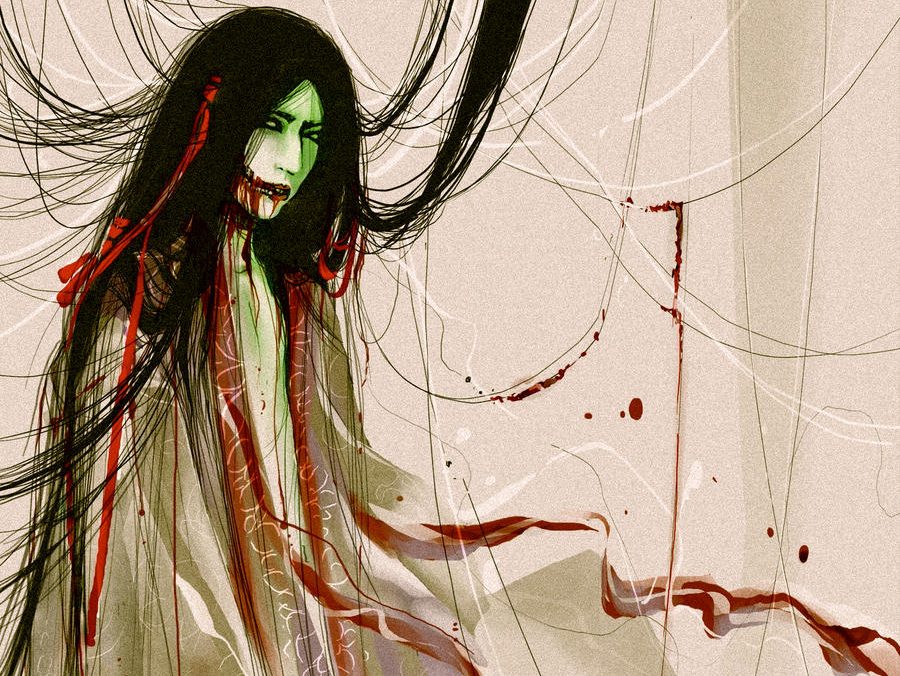
    But even if we imagine a far off world in which this is not a twisted dream, it is nonetheless an innately sexist story. The enchantress leading astray wretched vulnerable men with her rampant feminine wiles and powers. I’ve explored it further in this Kuchisake-Onna essay, but the essential point is viewing femininity as deceitful and manipulative compared to the logical and truthful masculinity. A type of narrative often used against feminine people (regardless of gender identity) to justify their sexualisation and sexual abuse of feminine people through their innate nature. Even their ability to refuse consent cannot be trusted, as their words say one thing, but their bodily presentation says another.

    Fortunately for all of us it was rewritten. Unfortunately, it was not rewritten well.

    Canonising Procreative Acts

    On the 7th of November 2008, user DrClef created and posted a full rewrite of the SCP-166 article.[2] He stated on the attached SCP 166 discussion board that this was due to it needing a punch up. [4] This rewrite was followed by a spate of edits over a year between DrClef and user Slate, the culmination of which can be viewed here as Rewrite 1. There is also a set of significant rewrites in 2013, which I will include a part from in my overview.

    We once more begin with containment procedures. First is an outline of items Epon has been given like a Bible with Apocrypha and a catholic rosary, suggesting a more religious aspect to her character.[5] At this point we encounter our first issue, as Epon is still unable to don clothes. But now there is an added explanation that she gets pressure sores after 45 minutes of wearing fabric. The descriptions of no male staff being allowed nearby and needing to drink 1cc of semen a day to survive is repeated.

    An illustrated pale girl fully naked, grasping a white rosary. Her blonde wavy hair goes to the floor, covering her chest and thighs whilst accentuating her body. Her ice blue eyes stare directly at the viewer as she prays, her lips slightly ajar. The background contains abstract decoration as well as the title "SCP-166 Teenage Succubus"
    SCP-166 (2014) by すわん
    Retrieved From: Pixiv
    Note: I feel the need to state I do not endorse these types of images, but I also need to show how Epon was drawn during the Rewrite 1 era.

    We then move onto the descriptions. Epon is physically similar, though they do not specify her being pale and includes a odd line about her being cute but nothing special according to the female staff. [5] Moving to her effects, her powers are described as more enamouring than direct mind control. In essence, regardless of sexual or romantic orientation, 100% of males who see Epon fall deeply in love/lust and will attempt to copulate with her. The effect will fade on 70% of men once they lose sight of her, though for 30% it leads to a continued violent desire to rape her.

    It should be noted, we get a small 2 line paragraph that explains this causes distress to Epon. This focuses in on the reason for her anguish being because she is Catholic and wishes to remain chaste. [5]

    After that we receive a couple of addenda . Addendum A talks about her history at a nunnery as previously mentioned, but connects it to a story of a young man catching sight of her at the convent. This man then murders one nun and injures three others in an attempt to rape Epon, before being killed himself. This gains the attention of the SCP Foundation and details why she is in their custody. Furthermore, the addendum provides one of two examples of a man being capable of somewhat resisting the urges Epon brings. As a male SCP soldier isolates himself from her in response to her effects manifesting in him.

    Addendum B is not present in the 2013 edits but is in the 2008 ones.[5] It describes Dr Alto Clef (the character), gaining access to Epon’s room and demonstrating no ill effects as well as enjoying a pleasant chat. We only know the chat was about Epon’s mother and Clef seemingly showed no effect analogous to other males in her presence.

    A digital painting of a woman with flowing hair, wearing a light dress, holding a white object, set against a dark, abstract background with hints of red and orange.
    SCP-4231-A and SCP 166 by AmoneYun
    Retrieved From: SCP-DB
    Note: SCP-4231-A is called Lilly and is Epon’s mother

    The concluding part is from the 2013 edit, which includes a letter from Clef to Epon.[6] It states he is her father, and he slayed her mother when she was first born. The letter insinuates Epon’s mother to be a nature goddess of some sort and states Clef left his daughter with the nuns. Finally, its ends with Happy Sixteenth Birthday, implying Epon was or is 16 during her containment at the Foundation. Though due to a widespread issue with early SCP articles, we do not know the date of the letter as that information is redacted.

    Authorial Intentions Overriding Reality

    So. This edit fixes none of the problems with the first version and instead doubles down on a lot of the creepiness. Whilst I will go over the wider communities response in the next essay, I want to tackle DrClef’s vision for the article here. In a comment submitted on the SCP-166 discussion board, on the 16th August 2013, he argues three essential points:[4]

    • There is an apparent horror in both Epon and the men suffering from the mental alterations. With the latter being somewhat responsible for the suffering because of an operative having resisted the desires implanted in him.
    • That even if it perpetuates victim blaming, that doesn’t make this a terrible article. As we could see Epon as a metaphor for the male gaze and objectification.
    • That one can view Epon as a person who shows both sides of the Madonna-Whore Complex and this adds to the horror of the article.

    So, the first issue is, there is not much work being done about how horrifying the experience is for anyone involved. Most of that is left implicit save for a single brief paragraph by anonymous others stating that Epon is troubled by it. This, in and of itself, is not bad. Implicit horror is valid and often used to enormous success in the SCP Series.

    However, for implicit horror to work, the implications need to be the focal point. What is left unsaid, what is unknown, generates questions that should be the focus of the audience’s mind. But those questions don’t feel like the focus in comparison to DrClef’s grandstanding for his self insert character.

    Many comments on the first rewrite in 2008 remark that the article expands Dr Alto Clef lore.[4] People wonder if he is a demon or the devil incarnate, and this trend continues in the 2013 edits. Apart from that, instead of wondering about the delicate implications, the use of teenage sperm drinking and the insistence Epon remains naked are what chiefly horrify people. The idea of both Epon and these men experiencing disgusting violation is less commented on in comparison. Consequently, even if it was his intention, he absolutely failed to strike the appropriate balance to highlight that horror. Instead, he oversold the cheap shocks and his own lore-building.

    An illustrated character wearing a white coat and a black hat, holding a rifle, with a snake wrapped around him and flowers in the background.
    Kondraki/Clef (2013) by ptzs
    Retrieved From: Pixiv

    But even with nominal attention on Epon, the group who really are not focused on remain the men whose minds are twisted. We get no sentiment as to how they feel at what could either be an incredible mental violation or a resistible thought insertion. There is no sense of a need for therapy, memory wiping drugs (a staple of SCP Series) or any other interventions. Never mind the lack of access to any of these men’s experiences through their own words.

    We can never tell how in control they are, and that feels somewhat pivotal to a narrative about unwilling mental and bodily violation. If both the men and Epon are meant to be experiencing violation; it would be imperative to at least somewhat understand the nature of that violation. It is not just that Epon’s victimhood is barely considered, the men’s feel like a contrast to show how powerful and special Clef is.

    Furthermore, the fact Epon’s power overrides sexuality is never expanded on. If done right, this could have been an imaginative exploration of gay and ace conversion. The horror implicit in the distinct nature of marginalised sexual and romantic preferences being stripped away to conform to a societal standard.

    But we barely receive a single throwaway line, which ends up with Epon and the men being treated as disposable. Anyone who was identified as being victimised by DrClef’s own thesis for his work is never given the opportunity to express the horror within that experience. Instead their pain is a backdrop for the terrific tragic life of Dr Alto Clef. Because only through him can we apparently undestand the horrors of Epon’s existence.

    The Terrifying Twisting of Feminism

    Even if we view Epon as a metaphor for the male gaze and objectification, these issues are not subverted. Merely making her Catholic and an unwilling participant in her effects is not enough to actually comment on objectification. In fact, she is never allowed to be anything but the object of her own article. A being who’s opinions are not once given any narrative weight. Especially in comparison to that of her father who receives an in-universe letter to express how he feels. Who is allowed an actual point of view in the media.

    And it is not like it would be impossible to show her perspective. Many articles use therapy logs or letters or even drawings by the anomalous focus, to showcase their perspective and view of the situation. Instead Epon is relegated to someone else’s perspective on her, making her the text book definition of an object. Her perspective is paid pure lip service.

    But even then the lip service doesn’t make complete sense. Why is the focus of her terror at her situation how it effects her religion? I do not know many Catholics; the United Kingdom is infamous for our completely normal relationship with Catholicism. But surely, the peril of bodily injury is present along with the threat of spiritual detriment. And any religious orientated harm is linked to Epon’s chastity. The key reason for her harm is on the patriarchal expectation of her. Even as a victim of her own existence, the writing and world around her frames her victimhood by the ideals of men, and never through her lack of agency.

    A classical painting depicting two women and a child beside a stone fountain, with lush landscapes in the background.
    Sacred and Profane Love (~1514) by Titian
    Retrieved From: Wikipedia

    Finally, by making Epon a Madonna-Whore complex incarnate, DrClef is just enacting sexist stereotyping not commenting on them. Though originating in psychoanalysis[7], the Madonna-Whore complex is presently used as a pop feminist social critique for how women are measured as partners to men. They are to be both as chaste as the Virgin Mary, but as sexually debauched as the media portrayal of sex workers. Women are imprisoned in a double standard to be both asexual and hypersexual, to be good at sex but never enjoyed it with anyone apart from their one true love. To simply portray sexism is not enough to comment on it.

    In portraying a supposedly subversive character, DrClef’s complete lack of understanding around feminist literature and analysis leads to an outdated and overdone trope. A girl whose beauty literally is only enrapturing to a male gaze. A girl who must stay perpetually nude for contrived reasons and yet has to resist the innate sinfulness of the feminine form. She is the one who must carry the penance and is never allowed to grieve for the situation she finds herself within. Though of course, Clef is given plenty of narrative space to lament.

    DrClef never thoroughly examines the socio-cultural issues with this, nor ever condemns the men for trying to harm her. I’m ordinarily not one for the requirement to expressly condemn abominable acts. But when there are comments, art and fanfiction literally thirsting after the teenager from her inception, you need to explicitly counter them.[4] I do not comprehend how it took 12 years for a rewrite to happen. But we did eventually get one.

    Putting the Nymph in Nymphomania

    On the 5th of June 2018, after numerous critiques and calls by the divided community to change SCP-166 (as well as spiritual successors doing better jobs than the seminal article), DrClef requested a complete rewrite of the article.[4] On the 30th of October 2020, Cerastes had created the rewrite[2], though thanked users like UraniumEmpire and LtFlops amongst others for the help.[4] The article in its current version can be read here. There will be not as much analysis of this version, as it contains less compelling or horrific content.

    For the final time, we begin with the containment procedures and start off strong as Epon is allowed to wear clothes! Mostly loose fitting organic cotton and she eats…typical food, without any additives. They keep the Catholic items like the Bible with Apocrypha and the rosary. Her physical description has changed as she is still a European female, but with satyr-like features, swapping out the goat aspects for reindeer ones.

    A cartoon styled illustration of a character with antlers, wearing a simple dress and holding a rosary. The character has a friendly expression and features one blue eye and one brown eye
    SCP-166 (2021) by Zal-Cryptid
    Retrieved From: DeviantArt

    Epon’s anomalous power is reasonably simple, man made objects around her degrade and rust, with plant life growing in their place. She maintains the vulnerability to artificial pollutants, though they directly cause ulcers as well as asthma. Her existence is confirmed by a Global Occult Coalition agent (essentially the occult UN of the SCP Universe) called Agent Ukulele. A blatant nod to Dr Alto Clef, who routinely carries around a ukulele. It appears Epon caught the eye of the GOC due to being able to enact a ritual to force the world back to the Palaeolithic era. The anarcho-primitivists would have idolized her.

    We get a couple of addenda, the first being an interview between a chaplain and Epon. They both talk about their familial relations, with a hint of Dr Alto Clef being Epon’s father at the end. Addendum 2 features a higher up chastising a redacted researcher, though it is in fact clearly Clef. The researcher had given Epon a phone line without permission and showcases the regret that Clef has about not being there for his daughter. Ultimately we get a similar letter from before, stating he killed Epon’s mother but nevertheless wants to protect her. And that, is the current edition of SCP-166.

    I do not have much to say on this. It is a marked improvement over the previous article, but then again blank page would be too. The character concept for Epon is perfectly cute. The icon of the past actively transforming the world around them to return to a state of Edenic paradise is a nice, if a straightforward idea. The design also calls back to this with the reindeer like features and the need to wear and eat organic items. It even ties back to the letter, with her mother being a nature goddess. This is perfectly serviceable and wholesome, though I agree with commenters that it fails to leave an impact. [4]

    However, the rewrite is hampered by the desire to still treat the article as backstory for a self insert. As well there is an inability to modernise a deeply dreadful tale into something greater than the sum of its history. In essence, the story struggles to rise to the heights of the SCP greats because it is trying to do too much, leaving it with no cohesion.

    A character with long blonde hair wearing a black and white outfit, holding a crystal orb, standing in a mystical background with dark colors.
    SCP-166 (2023) by pirixiepeace
    Retrieved From: DeviantArt
    Note: Once again, I would like to reiterate that I do not support images sexualising teens (or nuns) and I am showing them I am showing them to relay the sexualisation is still present.

    Cerastes had to tie the SCP article to about 12 years of lore building by DrClef and others in the community. Allowing for all the contingencies as to who Epon is, what she has achieved and will achieve as well as DrClef’s vision for is fictive daughter. This impossible position means the story could never genuinely let go of the past and transcend it’s origins. Even moreso, people haven’t fully let go of the sexualisation of Epon, even with this tamer article. I prefer this over the other two versions, but it is eclipsed by other tales generated from Rewrite 1 like SCP 4166 or 0166. However, those are stories for another essay.

    Life-like Horror

    Throughout the research and writing of this essay, a comment made by user LittleCrow on the 5th of February 2011 has stuck with me:

    “I can’t believe I’m having to find the words to explain why I think a beautiful teenaged SCP who can’t wear clothes, must drink semen, and drives all the men crazy is a bad idea.”[4]

    In reading the comments made by the SCP contributors on the discussion board, I was pleasantly surprised by how much pushback there was. Even more so by how early the criticism was. But, in that is the horror I have found in this article. In the fact people surprise me by critiquing this. And in the comparable amounts of people praising the first rewrite.

    It’s kind of terrifying reading a story that fulfils all the sexist tropes used against you as a teenager. A terror multiplied exponentially when a bunch of men (and a couple of women) uncritically state that parroting paedophilic nonsense is good storytelling.

    Every time I read the first rewrite the lack of power Epon has, strikes me. Not just in the deliberate narrative, but in how she is invented with no agency. How a writer trapped a girl in this sick twisted hell and another framed this horror as chiefly effecting his self-insert above all others. How the uncritical perpetuation of sexist ideals infests horror even to this day, with people venting their grimmest views on women under a veil of inspired creation. Twisting half formed uneducated ideas of feminist theory to fit their narrative of auteur authorship. The horror is not in the story.

    It’s outside of it.

    References

    1. RJB_R. (2023) History Of The Universe: Part One. Retrieved From: SCP Wiki
    2. Containment Fiction Wiki Contributors (2023). SCP 166. Retrieved From: Containment Fiction
    3. Davis, R.F.(2008). SCP-166. Retrieved From: SCP Classic
    4. SCP Contributors (2025). SCP-166/Discussion. Retrieved From:SCP Wiki
    5. DrClef (2009). SCP-166. Retrieved From: SCP Classic
    6. Cerastes (2024). SCP-166. Retrieved From: SCP Wiki
    7. Hartmann, U. (2009). Sigmund Freud and his impact on our understanding of male sexual dysfunction. The journal of sexual medicine, 6(8), 2332-2339.
  • Kuchisake-Onna, Feminist Monster?

    Kuchisake-Onna, Feminist Monster?

    Content Notes: Discussion of Child Murder, Misogyny and Mutilation

    In my previous two articles, we have discussed the origins and a myriad of possible interpretations for the tale of Kuchisake-Onna. However, the feminist themes of this mythical character have had more ink spilled than any other framework. So join me, as we uncover the femininity of Kuchisake-Onna and if her story can help you too.

    Objectifying Subjection

    We are all familiar with the idea of beauty being tied to goodness. It’s a form of Halo Effect, where a desirable attribute leads to us misjudging a person’s character or actions.[1] Essentially, since attractiveness leads to our initial impression of a person being favourable, this frames any future judgement in a complimentary light. However, when the Halo Effect meets femininity, there is an unusual cross section. Because attractiveness in women comes with benefits and equal drawbacks.

    In standard philosophy there is the object and the subject. The object is an entity which is perceived but cannot observe, and the subject is that which perceives others. When we talk of women being objectified, this is what is meant. A woman is, by most standards, a subject capable of perception and judgement. But within certain media portrayals she is relegated to an object, to an item for the (usually heterosexual male) characters and audience to perceive without having to consider her view.

    An object also lacks agency. They are incapable of enacting or interacting with the world in any meaningful way. To be objectified is not simply to be admired as if you were a crass statue, but also to be denied your ability to act. This can be as straightforward as a piece of media disregarding a woman’s desires in a story. Or as blatant as the authorial approval of the character being dominated or possessed by a man.

    Megan Fox in Transformers (2007), Produced by Paramount Pictures
    Retrieved From: IMDB

    Whilst this objectification can happen to any woman in media, it is most apparent with those deemed attractive. In books this creates the “Breasting Boobily” phenomenon, where the sexually attractive features of a woman are constantly highlighted, to the point of absurdity. In film and TV, this is accomplished by cameras lingering over the desirable parts of the character, focusing and framing their sexual attractiveness as their most important aspect. In art it results waist to hip ratios that would make insects blush. An attractive woman’s identity comprises only her physical form, that which the audience can instantly perceive, rather than any other characteristics or facets of personality.

    With Kuchisake-Onna, part of her horror comes from firstly conforming to these expectations and then subverting them. Her beauty creates a Halo Effect and places her as an object within her own story. She is considered to be harmless or even virtious by the target. In addition, she is usually admired solely for her beauty. Like a piece of street art, the narrative regards her as something to be lecherously enjoyed. Some stories even portray her as a sex worker, a group known explicitly to face dehumanising objectification.

    But with the revealing of her slit mouth, Kuchisake-Onna goes from an object of desire to a subject enacting sadism. The narrative switches, transforming her into the one who is perceiving her victim. She delights in her macabre questioning and the slaying or “improvement” of the object. But this not only changes her status in the story, but the entire perception of her character.

    Don’t Lie by Dark134
    Retrieved From: Deviantart

    The Halo Effect disappears as her true form is revealed and she becomes monstrous. I understand some people have…intense feelings about the slit mouth woman. But the most pervasive and intended narrative is one in which the carnal appetite of the victim and audience are rebuked. She becomes an active agent against the desires imposed upon her. And therefore becomes a horrifying subversion of narrative expectation.

    Unwomanly Virus

    Barbara Creed argues in the The Monstrous Feminine, that femininity is deemed as evil because although it is feebler than masculinity, it’s framed more carnal and without restraint. [2] She contrasts this with Julia Kristeva’s idea of “The Clean and Proper Body”. This is a symbolic body that all should strive to achieve, one of artifice, that exhibits no sign of natural degradation. Creed states this symbol is particularly difficult for feminine bodies to maintain, due to the trials of motherhood, puberty and loftier sexist standards. But if one can accomplish this task, you then become the pinnacle of artificial femininity, devoid of the usual degrading associations.

    Obviously Kuchisake-Onna’s body, particularly the slit mouth, automatically excludes her from such ideals. But it is within a method of wounding her victims that a more unusual connection can be revealed. When answering her questions with “yes” both times, most stories say she slices the person’s mouth with her scythe, granting them her trademark look. A direct interpretation would be ironic punishment. For saying she is pretty, in a morbid way, she makes you pretty too. You could extend this further saying that the punishment for appeasing vanity is to have your own beauty marred. To fawn and placate such ideals allows them to ruin you.

    Created by Jenna Whyte
    Retrieved From: Instagram

    But using the idea of The Clean and Proper Body, we can see Kuchisake-Onna as a defeminising monster. The threat of carving a person’s face is not just an attack on bodily integrity. For women, it is an assault on their Clean and Proper Body. The slashing of their face not only renders them as hideous as Kuchisake-Onna, but as defeminised as her. They lose a core part of their identity. Their gender. Or at least, the way they have been able to express their gender until now.

    When paired with the Halo Effect, to have your attractiveness and body scarred becomes a mark on the entirety of your life. Your goodness is lessened. Your social status tanks. Even your personality could drastically change due to how you’re treated in the aftermath. The threat of a slit mouth for women is a complex intertwining of societal and physical repercussions.

    But even more so, it shows the fragility of such concepts. Like glass, the idea of a Clean and Proper Body is pristine and beautiful. But also cracks under the slightest amount of pressure. A fundamental chip in such a body becomes a pox, an indelible sign of ruin that cannot be revoked. The horror for women is not solely in death. But in the idea that the sexist ideals they must take on to survive can be freely broken. It takes one accident, one problem, a isolated event going wrong and their body shatters. With one mistake they cannot control, they become Kuchisake-Onna.

    A Monstrous Femininenon

    In her essay, Monstrous Women, Dianne Taylor posits that women become monsters when they fail to be feminine.[3] Taylor relates this to the fact women are less likely to receive the death penalty in the USA, arguing it is not solely benevolent sexism. Instead, for any one woman to be considered for the death penalty she must be:

    “incorrigible, irredeemable because she is thoroughly immune to refeminization —a monster”

    In her eyes, immunity to re-feminisation is monstrous because of how it violates both biological and social laws. Using the works of Foucault, she states that key to the judicial power of modern governments is the idea that individuals can be corrected, usually through punitive measures. But to be corrected one must accept a norm to follow, an ideal standard of what it is to be good. For men and women this is different, but frequently relies on the reuptake of gendered norms. And especially for women, biological and personality based norms intermingle as if they are one.

    A woman is not separate in character to a man because of environmental factors, at least according to dominant social narratives. Instead, it is her [Insert Relevant Pseudoscientific Explanation]. Whether it is wandering womb, the curse of oestrogen or that pesky underdeveloped pre-frontal cortex, a sexist society will always find a way to justify women’s supposed inferiority. And if a woman is smarter, more athletic, more rational or otherwise supersedes men in masculinity? Then she is showing the fragility of such norms. In refusing to go back into the feminine domain, she is violating both biological and social truths that society is built upon. [3] And becomes a monster to society at large.

    A Clinical Lesson at the Salpêtrière (1887) by André Brouillet
    Retrieved From: Wikipedia

    In this way, we can identify how Kuchisake-Onna violates these cornerstones. Whilst undeniably irrational, she is always portrayed as outcompeting men in athleticism and sadism. In doing so, she establishes her dominance over men quite easily, capable of inflicting bodily harm in a way foreign to most of them. As well although not traditionally smart, her manipulative tactics demonstrate how she can outsmart men by undermining their expectations of logical answers. This contradicts ideals of rationality, causing a terrifying breakdown in the norms of conversation which may end up in an unfortunate demise.

    In addition part of the horror is in the lack of explanation for her violations. There can be comfort gained from developing an understanding of how a person would break away from norms. These explanations do not need to be true, instead they merely have to contain enough verisimilitude to placate the person’s fears. It is never explicit stated if Kuchisake-Onna is just a hysterical woman, a supernaturally powered ghost, a demon or anything else. By never having a apparent grounding of who or what she really is, a sense of safety in knowledge is impossible to reach. Therefore, the person is confronted with an unknowable dread for a humanoid monster they will be impotent to fully comprehend.

    Slicing The Glass Ceiling

    But we can get even more specific with Kuchisake-Onna’s breaking of normative ideals. Ryden Shartle provides an excellent summarisation of the history of feminism in Japan.[4] This additionally provides a detailed background for the specific sexist norms perpetuated in 20th century. The 1920s saw a frequent scientific rationalisation for women performing housework, domestic hygiene and other activities, for the betterment of the Japanese people. This selflessness as feminine virtue was expanded in the 30s, with women being corralled to volunteer in making care packages and performing nursing duties in the army.

    Next (hopefully shocking no-one) there was the US occupation. This saw a time period where women were provided more rights, in hopes of instilling fewer sexist values…Oh wait, sorry I got that wrong. It was in the hopes of limiting Japanese military power. Lovely. After the US left, the Japanese government focused on reversing this and encouraging feminine education. This sounds pleasant, but it was principally activities like home economics and flower arranging. The idea behind this is that by having separate spheres for men and women, Japan would catch up with the US. One can provide for the home, and the other can provide valuable work, therefore maximising efficiency.

    Before the 70s, a lot of Japanese feminism even exemplified sexual differences, focusing on women’s roles as mothers and caretakers to gain more rights.[4] But then came the Ūman Ribu movement, a transliteration of women’s lib. Combining international thought with Japanese feminism, the Ribu movement was the first time that women sought to challenge men’s cordoning of roles in a unified manner. This revolved around radical feminist challenges for what it meant to be a woman in Japanese society. As well as the role they could play both individually and within the society. Which is around the same time a certain folkloric monster began to rise to prominence.

    Kuchisake-Onna by Wolf-Ram
    Retrieved From: Deviantart

    As opposed to selfless virtuosity, Kuchisake-Onna seems entirely rooted in selfish sadism or malicious madness. It is never fully expounded on, but through various texts and writings, the common through-line seems to be that she is just a cruel monster. It is her nature, either through jealously, spite or misanthropy to injure others with no feminine motive. In fact, as commented on by Taylor, the act of sadistic murder is itself considered to be masculine.[3] To delight in harm, to enjoy the process and to come out the other end unforgiving, is counter to any ideals of feminine selflessness.

    As well her actions are complete opposite to the idea of a maternal figure. Not only in the evident sense of being a murderess but in being outside of the home, usually in metropolitan areas. Places where it is expected to predominantly witness men at or leaving work. Her mere presence in such a place is a disturbance of the isolated spheres for men and women. In the act of not only existing, but overpowering men within these spaces, she represents a complete reversal of the natural societal order. An uneasy contradiction by her very existence.

    This fear is exacerbated by the fact that the Ribu movement at the time was pioneering such changes. They urged women to occupy men’s spaces in radical ways that deliberately destabilised the sexist ideals that restrained them to the home. But to the men experiencing this destabilisation, considering their security was built on the labour and isolation of women, I’m convinced it looked contiguous to the myth of Kuchisake-Onna. An opinion reinforced by the fact that her tale was largely spread due to male owned women’s magazines sensationalising the story. [5] In a way, her tale can be seen as spreading due to the feared threat and irrelevancy of masculinity at the time. She, like the Ribu feminists, was an inoccent seeming woman attacking masculinity in the very sphere it was meant to propogate.

    Popularity Contests

    Through all of this discussion, you may have gotten the impression that Kuchisake-Onna can be an imperfect feminist icon. That her story of bucking feminine ideals, representing feminist movements and becoming her own subject is empowering. Well, I am not going to fully deny that interpretation. Part of my love of Kuchisake-Onna is because she represents a lot of what I enjoy in stories. She’s a monstrous woman, a biological freak of nature that weaponises her perceived deformities and femininity against the tropes that would imprison her. It is not without merit to recognize something significant and relatable in her tale.

    However, as pointed out by Dianne Taylor, such stories are frequently to the benefit of a sexist society. [3] The violation of norms does not sever them; it instead enables them. Through the monster, a person can justify previous prevailing norms, using the event or story as an argument against the removal of them. As much as I’d love the re-interpretation of Kuchisake-Onna to be more powerful, it is never going to outdo the most conventional narrative. Her tale was, in part, propagated by men and mass media as a way to castigate and shame women. In particular feminists.

    Therefore, even if we as individuals can see Kuchisake-Onna in this way, it would be challenging to reform how most media explores her. I have read through dozens of articles about Kuchisake-Onna, and the non-academic ones invariably portray her as a freak.[6][7][8][9] Even more so, these articles barely mention much of the alternative interpretations of her story. Instead distributing one version of the tale they deem to be the most horrifying and clickbaity. Because complexity is difficult to grapple with. It has taken me over a month to produce a bare minimum amount of research to provide some varying perspectives. And I like reading academic papers.

    Medusa Head by IrenHorrors
    Retrieved From: Deviantart

    This can be seen with other mythological characters as well. I’m certain those reading this will likely be familiar with a plethora of interpretations about Medusa. But, ask most people who aren’t history nerds (or sapphic), and the invariable response will be that she is a villain. An object for the projection of sexist tropes where she is to be slain by a man because she is a monster. Such stories are usually engrained in pop culture. Unless someone wishes to undertake the work to dig deeper, they will never get to the other sides of these narratives.

    But that is not to say we are without hope.

    A Case For Monsters

    Shartle recounts how the Ribu movement focused a lot of work on filicide. [4]At the time, Japan was facing an unprecedented reporting on women killing their children. These mothers were vilified and routinely lambasted as inhuman. But Ribu figures like Yonezu Tomoko argued that whilst filicide can never be condoned, one should blame societal conditions rather than the mothers. These women were often marginalised and desperate. Whether it be poverty, abuse, untreated mental health issues or any other variety of vulnerability. Society failed to care or aid them in any capacity. Therefore, instead of dehumanising, we should empathise.

    To shift the narrative that pits monstrous women as unfeminine, one should not exacerbate the contrast but soften it. By influencing people to empathise with the socially deemed worst of the worst, we can directly threaten and destabilise the sexist tropes that prop them up. Even personally I have seen the efficacy of this. In talking to mothers within my life, the discussion of maternal filicide has come up. And often promoting empathy with these filicidal actions not only helps promote understanding, but allows them to tackle internalised sexist ideals towards themselves. In inviting people to care for a “monster”, they are allowed to realise they too are not a monster.

    Unfortunately, folkloric tales like Kuchisake-Onna end up being too abstract for people to empathise with her. An individual cannot interview Kuchisake-Onna. You cannot witness her crying because of what happen. Nor can you ever follow her consistent growth and change. It is the strength and weakness of folkloric myths that they are shorter and often personalised tales. Weaved to the society, social groups and individuals interpretations of what the tale is.

    I truly believe there is power within stories, but to utilise it we must pick the tales people can relate with. In inciting individuals to examine the monsters society generates, a person can more clearly see themselves in the imposed stigmatisation. Moreover, you can follow the person’s own narrative. How they felt, understood and reckoned with their actions. In essence, you can humanise a monstrous human more than a folkloric figure. And doing so demonstrates that monsters are not real. They exist solely in stories but are transposed onto real life, to constitute a convenient scapegoat for societal ills. In making a case for “monsters”, we make a case for the liberation of all of us.

    Thank you for coming with me on this journey. I hope you enjoyed this mini series on Kuchisake-Onna. I will be back with some musings on one of my favourite poems in a fortnight. Until then, let me know your thoughts below!

    References

    1. Wikipedia Contributors. (2019, April 18). Halo effect. Retrieved from Wikipedia website: Wikipedia
    2. Creed, B. (1993). The Monstrous-Feminine: Film, Feminism, Psychoanalysis. London: Routledge
    3. Taylor, D. (2010). Monstrous women. PhaenEx, 5(2), 125-151.
    4. Shartle, R. (2023). Motherhood, Femininity, and the Body: Reading Representations of the Feminine in Kuchisake-onna (Postwar Japan) (Master’s thesis, Arizona State University).
    5. Michael Dylan Foster. (2009). Pandemonium and Parade. Univ of California Press..
    6. Dowell, C. (2024). The Legend of Kuchisake-onna: Japan’s Slit-Mouthed Woman. Retrieved from: Medium.com
    7. Unknown Author. (2024). The Legend of the Kuchisake-onna: The Slit-Mouthed Woman in Japanese Urban Legends. Retrieved from: Mythology Worldwide
    8. Harvey, A. (2023). Kuchisake Onna: The Vengeful Japanese Spirit That Attacks Victims After Asking “Am I Beautiful?” Retrieved from: All Thats Interesting
    9. Meyer, M. (2024). Kuchisake onna | Yokai.com. Retrieved from Yokai.com website: Yokai.com