Tag: Anime

  • Infinity Nikki: Tailor Made To Make You Pay

    Infinity Nikki: Tailor Made To Make You Pay

    Throughout the past two essays on gaming addiction and the addictiveness of loot boxes and gachas, it may have been apparent that I have not really engaged with the games that are the focus of academics. This is predominantly an issue of genres. I cannot aim guns to save my life and autoplay mechanics bore me to tears. But there is one amongst the pantheon of addictively designed games that I have played. Today we will look at Infinity Nikki and see how it manipulates you to spend, spend, spend.

    Together Till Infinity

    The Nikki series is a set of mostly mobile dress up games created by the Chinese developer Paper Games. The first instalment Nikki UP2U was released in 2012, and the most recent version, Infinity Nikki, launched in December 2024. I personally started with Love Nikki, the third instalment, when I was a young teenager, before shifting to Shining Nikki and then Infinity Nikki. Although there were years long gaps between me playing them.

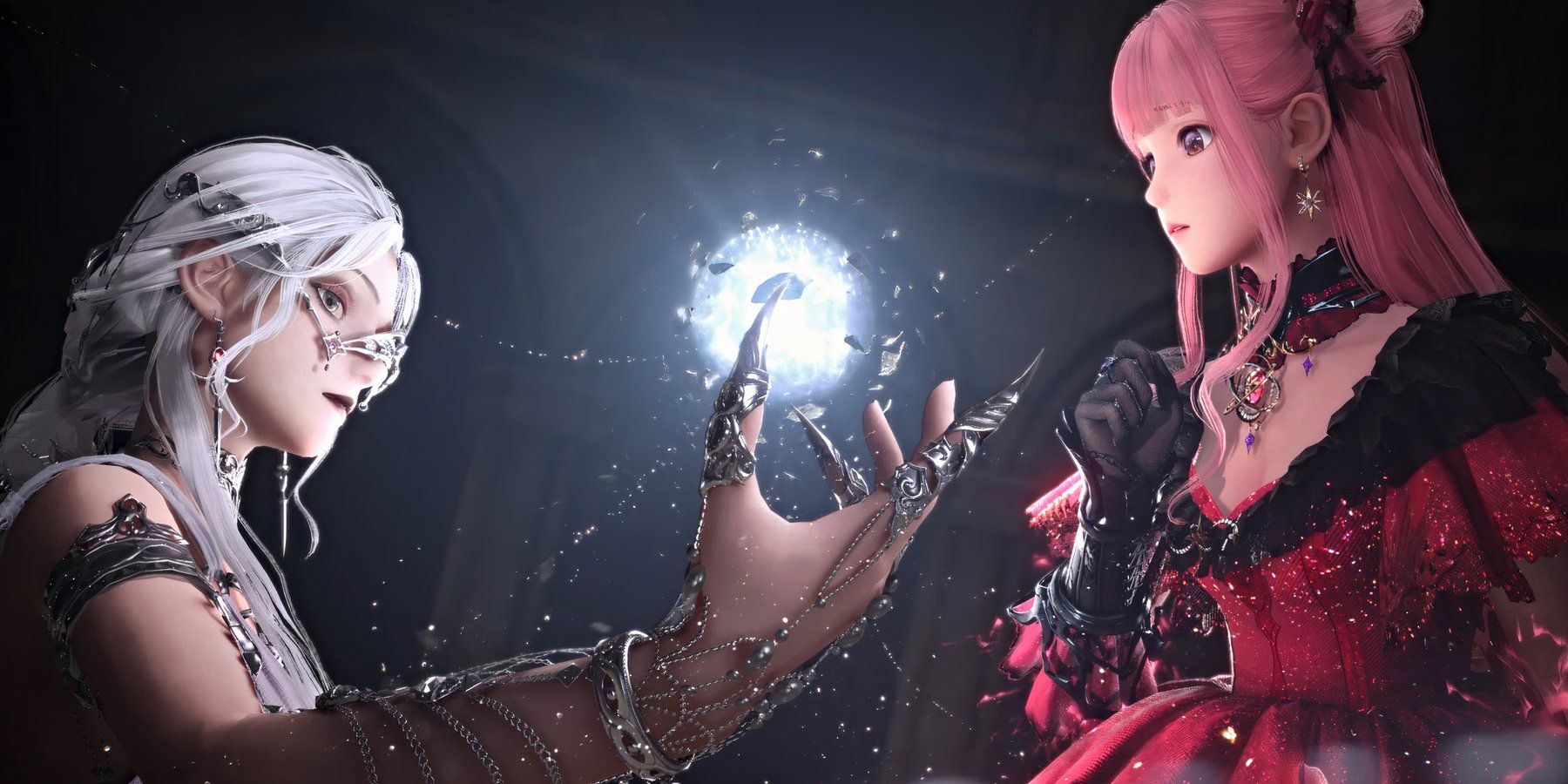
    As you may guess, the games revolves around the titular Nikki, a pink haired girl transported to a mystical world called Miraland, alongside her trusty talking cat friend Momo. In it, people resolve conflicts through style battles, where points are accrued based on creating outfits that fit into a set of descriptors. Though there has been at least one incident where someone just shot the other person.

    Nikki and Momo from Infinity Nikki by Paper Games
    Retrieved From: The Gamer

    The basic gameplay of all the Nikki games revolves around the player collecting new clothes to progress in the story. Going through styling battles unlocks further worlds, more materials and better clothes. These outfits are of different rarities and can be upgraded to increase your proficiency in styling battles. But Infinity Nikki somewhat differs from its predecessors, in that it is open world and available on all platforms, instead of being exclusively on mobile. This means both its presentation and how it utilises standard mobile game mechanics differs from the usual.

    For example, both traditional Nikki games and Infinity Nikki make use of stamina mechanics. You possess a certain number of hearts, which can be expended to carry out activities. They slowly regenerate with time, or you can spend in game currency to instantly recharge.

    However, traditionally Paper Games employs this to gate progression through levels and acquiring of materials, whereas in Infinity Nikki they use it only to bar very specific items. Many materials are gained through the open world itself. Although notably the rarer items may only have one source, like a specific animal, forcing you to wait 24 hours to collect again.

    The Violinist Outfit From Infinity Nikki
    Retrieved From: Eurogamer
    Note: People do actually try to play songs using this violin, my favourite being this

    Moreover, Infinity Nikki contains an unusual method of delivering gameplay. Abilities are gained through the accumulation of specific outfits, usually comprising 8-11 articles of clothing to collect. These can provide to you the capability to float, attack enemies or the most crucial power of all. Playing violin! These outfits serve a dual purpose of being aesthetically interesting to the player and offering mechanical benefits. Some are given to the player for free, some are earned through gameplay. And some are gained through the gacha element of Infinity Nikki.

    There are essentially two parts of the gacha mechanic. One is a permanent banner, currently with four outfits. This uses blue Resonance Crystals, in order to gain attempts, or pulls, from it. The other is two monthly cycling banners usually containing four outfits, but it can be only two in shorter periods.

    These comprise two easy to obtain outfits (requiring at most 10 pulls per article of the outfit) as well as inconsistently containing two hard to obtain outfits (requiring at most 20 pulls per article of the outfit). These banners use pink Resonance Crystals. Whilst you can earn both types of crystals in gameplay, the primary way of obtaining them is through purchases with in-game currency.

    Infinity Nikki Permanent Banner by Paper
    Retrieved From: Sport Skeeda

    You can obtain three forms of currency within Infinity Nikki. Blings is the most common, used for small easily accessible items as well as the general payment for crafting or refining materials. Diamonds is the currency used for buying more exclusive products, be these clothes or modest mechanical benefits. On top of this, they are how you buy Resonance Crystals, with some people saving up literal millions of diamonds for banners they like. And finally we have Stellarite.

    Unlike the previous two which could be earned in game, Stellarite is exclusively available through investing real-life money. It is primarily used to access exclusive outfits, which get rotated out each month, as well as bonuses for special updates, like a bicycle that can go any place. No, I am not kidding, Infinity Nikki includes bicycles locked to certain regions, meaning you could not use a bike from one area in another.

    Until they dropped a free roaming bicycle for Stellarite and then after this offered an outfit which summoned a motorbike. Though it was only obtainable through the gacha element. Rather scummy right? Well, it’ll only get worse from here.

    Through The Pattern Darkly

    Dark Patterns or Deceptive Patterns is a term coined by website designer, Harry Brigull.[1][2] It describes a set of interface design choices which manipulate users in order to promote benefits (usually profit) for the owners. In other words, you know how scammy websites will have arbitrary timers in big bold font to make you sign up for their rubbish? Dark patterns describe the mechanical aspects of such design choices.

    A Fake Example of a Dark Pattern by Cmglee
    Retrieved From: Wikipedia

    It is a rather comprehensive term, used in all forms of technology from shopping websites to social media to video games. Naturally, for our purposes, we are only interested in the latter most. To save on space, I will focus on the specific deceptive patterns that I have identified in Infinity Nikki. As well, there is no comprehensive list of what is and isn’t a dark pattern. In fact, there is much debate about whether some of these mechanics are really wholly underhanded. Therefore we will start with their general definitions and then look at how they link to Infinity Nikki, as well as the damage they cause.

    Dark patterns are often separated into one of three categories: Temporal, Monetary, Social.[2][3] Temporal concerns deceptive mechanics which manipulate the players time, often with the goal of convincing them to devote more time than is reasonable or desired. Monetary is when users financial sense is exploited or they are tricked into spending more than is necessary. Social is when relationships or desire for bonds is leveraged.

    Grinding is a common temporal example, where a tedious repetitive task is necessary to achieve a goal.[3] This means all you can hope to do is accelerate the process as there is no other way around it. Endowed Progress is another, unfortunately named, one which is when the initial advancement is significant quicker than subsequent advancement. Leading to a warped sense of progression. Fear Of Missing Out (FOMO) is when games use daily logins gifts, frequent updates or reward passes to persuade players that they should log in everyday.

    Loot boxes or gacha mechanics are the chief monetary dark pattern. But since I have already dedicated an essay to them, I will not delve far into Infinity Nikki’s specific brand.[3] Pay Walls are when content is locked behind payment. This is a common tactic for free to play games, where necessary or even just useful mechanical benefits are locked behind small payments (often called micro-transactions). Comparison prevention involves an interface making comparisons between products difficult, especially when monetary value is obfuscated.[2]

    The sole social dark pattern of interest is fake social proof. These include user reviews, testimonials or inter-user social medias that are manipulated or forged in order to present a more favourable version of the product.[2] Though it is important to note there are other examples. Like social pyramid schemes, where players are encouraged to onboard others in return for in-game currency.[3] But that is the be all and end all of the phenomenon, so there isn’t much more depth to them.

    However, as you will see, the others are really baked into the foundational practices of Paper Games and how they made Infinity Nikki.

    Tailoring Your Mind

    Grinding is one of the most normalised dark patterns listed. In Infinity Nikki, grinding is primarily done through the gating of materials to make new clothes. These clothes can be integral to story progression as well as giving diamonds for completed outfits. For me, the majority of Infinity Nikki gameplay was spent picking plants, brushing sheep and playing a fishing mini-game I dearly wish I could have skipped.

    Response to Infinity Nikki Survey by Sad-Blackberry-7283
    Retrieved From: Reddit
    Note: Average fishing hater be like

    But to do so was mandatory to complete quests and to gain new clothing items, the two major conceits of the game. This leads to people expending money on quick fixes. Such as spending Diamonds on more stamina or additional materials to quicken progression. Sometimes you would even need to expend Stellarite for exceedingly rare items. You could also try your luck on the gachas, as some outfits quicken the progress of collecting materials.

    Endowed progress is another common mechanic within games. For Infinity Nikki, like many others, you first level up and gain access to resources quickly. This leads to a blistering pace, where you’re constantly acquiring new clothes and new features to try out. However, this plateaus swiftly, with the gaining batches of clothing going from every day, to every week, to every month if you’re waiting for new non-gacha content. And to collect them requires either paying into the gacha element or spending each day grinding to obtain more materials.

    The way Infinity Nikki uses Fear of Missing Out is different to its predecessors, where there were explicit daily login rewards. Alternatively, Infinity Nikki makes use of a two tier battle pass system. For those who do not spend money, they can gain some much needed diamonds by completing daily and weekly tasks. Paying money unlocks extra Diamonds as well as access to Stellarite, stamina boosts and even exclusive outfits for Momo. If you need Diamonds for the gacha mechanic or to progress quicker, this is the most economical way. However, it is also the most time consuming.

    Cycling in Infinity Nikki as Photographed by FluffyBunny359
    Retrieved From: Reddit

    I’ve already sort of touched on Pay Walls with the whole bicycle debacle. Games will formulate annoyingly arbitrary problems and then sell solutions to the consumer. Grinding and Endowed Progress also feed into these, as users are expected to pay for the luxury of reasonable progression. Paying players then become preferentially treated, which in and of itself, can encourage others to fork out for the “premium” experience. By which of course I mean, mildly functional experience.

    Comparison Prevention makes this even worse. The use of in-game currency and in-game currency that can only be bought with in-game currency, obfuscates comparisons between game products and likening products to real world value. Crystals can be purchased, but never directly with money, only with Diamonds or Stellarite. Meaning players are likely to spend more than they otherwise would due to this complexity. Even the savviest shopper would be bogged down in mathematics to understand the likely monetary cost of clothing gained from the gacha machine.

    Fake Social Proof is an intriguing one, because I cannot say definitively if the Steam reviews have been flooded with bots. There has been some evidence of suspicious activity on Steam. Such as profiles which have engaged in no other games, play very little of Infinity Nikki and provide glowing endorsements.[5][6]

    This would make some sense as there have been efforts in the fan spaces to review bomb Infinity Nikki on Steam.[7] Usually whenever Paper Games pushes the envelope on exploitative corporate practices, like a cat near a precarious glass of water hanging over electrical equipment. But nothing I have observed is concrete, so it will not be the basis of my foundation for this point.

    Current Review Breakdown for Infinity Nikki on Steam.

    However, there are a frequent stories of the official Infinity Nikki discord server being heavily moderated against controversy, with most expressing their experiences on the fan run subreddit.[8-10] Doing so serves two purposes. Firstly, it serves to insulate paying customers in a cheerful atmosphere, thereby reducing the likelihood of player numbers (and therefore payments) dropping. Secondly, it means newer players are in a complimentary upbeat community, that incentivises a lack of critical thinking when engaging with the game. Meaning new players can be on-boarded to pay and continue paying.

    Overall, this seems a pretty scathing indictment on the methods used by Paper Games in their game. And don’t get me wrong it absolutely is. But it wouldn’t be one of my essays without some complexity thrown into the mix.

    The Light Hand of Darkness

    Look, I want to state my position here clearly. I do believe that Paper Games (and by extension other publishers) are engaging in deeply unethical and manipulative practices. But that does not mean I agree with how the research on dark patterns is applied. There’s nothing inherently wrong with it, but much of the writing feels out of touch with both game design and with gamers.

    Take grinding for example. I am a filthy turn based RPG player, so I have spent most of my time playing games by gaining levels and abilities to defeat the next big bad boss. Its undeniably mostly grinding. But I don’t believe it would qualify as inherently deceptive. There’s a lot to complain about with Final Fantasy games, but its routine of fighting is usually part of the appeal. It creates a gameplay loop where you master the skills of your characters. Iteratively getting more competent at the mechanics and gaining artificial boosts to power through the game itself.

    The Best My Favourite Turn Based RPG, Bravely Default by Square Enix
    Drawn By Akihiko Yoshida
    Retrieved From: Tumblr

    To put it in more simple terms. Its really fun beating those level 5 blobs that caused you trouble at the start of the game with a giant fireball because you now comprehend elemental weaknesses. And have way higher stats. This needs to be considered when applying these dark patterns to games. Some are clearly just manipulative no matter what, like fake social proof, comparison prevention and loot boxes. There is no mechanical or narrative reason to dissipate dissent, to prevent players from making informed financial decisions or to use randomised mechanics to give rewards. It is solely to increase profit.

    Though with practices like endowed progress, they can create good gameplay experiences. Infamously, Runescape took the idea perhaps a little too far, with the meme of 92 is half of 99. Because the necessary experience points to get to level 92 were half of those needed to get to level 99. But quicker beginning progression gives a fast-paced gameplay and allows players to quickly explore the benefits of level ups. Whilst later slower progression, instils rarer, more substantial benefits for sticking with certain characters or mechanics.

    And that, in my own experience, is extremely fun. I want to use Ultima on the ultimate boss because I spent so long working on these characters to get to it. So my reward should be to one shot those who stand in my way with the power to end all reality.

    Donald Duck Casting Zettaflare in Kingdom Hearts 3 by Square Enix
    Note: Me at every minor inconvenience in a game

    This lack of fundamental lived experience by the academics investigating it, means they miss the intricacies of gaming. And admittedly, I am not considerably better. The reason I even heard about dark patterns is because a friend brought up the concept. Without the connections I have to many talented friends involved in diverse aspects of game design, I would have missed a remarkably rich vein of discussion.

    So, how about we look at some research by actual game academics?

    Gaming In The Dark

    In their 2021 paper, Dupont and Malliet try to develop a version of dark patterns that can be understood through the lens of game design theory.[11] In it, they make use the fundamental unit of a game called a ludeme. This is akin to the basic unit of speech called a phoneme, which is the smallest possible sound a person can produce. Phonemes are then strung together to create words, which generates sentences, which formulates paragraphs, so on and so forth. In a similar manner, their ludeme comprises the root components of a game. Comprising a graphic element, sound cue and mechanic. Which can then be strung together to create puzzles, levels and games.

    Their example is the block pushing from the original legend of Zelda games. Within is a graphical representation of both Link and the block, the sound of something dragging on the floor and the mechanic of pushing the block through the character.[11] Whilst this definitionally is not the base element of the game itself; it is the most stripped down interaction for what a player experiences.

    Graphic from Dupont and Malliet (2021)

    Merely looking at the block is not the player interacting with the world. It is only with all three combined that they enact change upon the game world itself. Audiovisual feedback punctuates mechanical changes and tells them they are doing something right.

    Just as a sound can be utilised in a variety of different words, ludemes can be employed in a variety of different games. Nintendo does not own the patent for pushing blocks. Although I wouldn’t put it past them to be honest. But if you played the original Legend of Zelda and then saw a similar block within another game. You would attempt the action again, to try and push it, to see if it is the same ludeme.[11] In this way, games not only instruct us about further gameplay within themselves, but base mechanics and genre conventions condition our view of future games as well.

    The benefit of framing dark patterns through ludemes, is that we can appreciate the mechanical differences between deceptive practices and beneficial practices. There is much focus on how it is the slick graphics or earworm auditory cues, that lead to people becoming dependent on these games. But really, those elements are similar across MMORPGs. The difference is the context of the mechanic.

    Screenshot of the Gacha Pulling Animation from Infinity Nikki
    Retrieved From: The Gamer

    For example, MMORPGs often allow the player to gather materials through the world. Whether it be getting plants, foraging for foods or interacting with animals, even fighting bosses can net you rare items. These materials can then be used to craft better armour or weapons. All without spending a single real world penny. Similarly in Infinity Nikki, you can forage for plants, interact with animals and go through boss trials to gain rare items, in order to craft better clothes. But, these are significantly more gated behind 24 hour timers and stamina mechanics. And unlike say, World of Warcraft, the game has easy ways for you to spend money to get around these arbitary restrictions.

    So, despite both seeming similar on the surface, in Infinity Nikki (alongside other scummier games) you are incentivised to expend real money. Dark patterns manipulate training from previous games, slightly twisting our ingrained responses of collecting materials to profit. That is what causes them to be manipulative. The parasitic contortion of otherwise normal gameplay elements to further incentivise spending.

    The most important part to stress through this framework is how player interaction with the game is highlighted. Sizeable amounts of research positions players as passive, that they are being manipulated through these tricks without input. This isn’t to say it is the player’s fault, rather that their input and prior experiences are integral to the manipulation itself. It is in their interactions with games that grinding or endowed progress is seen as normal and not harmful. Which subsequently allows for manipulative practices to catch them off guard.

    Lighting Up Darkness

    There has been academic discussion of the ways in which we can limit or otherwise ameliorate the effects of dark patterns. This is especially pressing considering that even games for preschoolers have been found to exhibit some characteristics of dark patterns.[12] Nong (2025) states some simple changes, such as game distribution boards enforcing stricter methods of transparency for in-store and online descriptions.[13] Like an enormous yellow warning signs saying “contains gambling and unbridled ravenous predation by executives”. Though my suggestion may need workshopping.

    Current Pan-European Game Information (PEGI) Warning Labels for Loot Boxes and Gachas
    Retrieved From: Royal Society Publishing

    Further effective interventions suggested include clear conversion rates between the value of items and real money, perhaps through a toggle or enforcing price tags only in the relevant currency for the country.[13] You know, instead of three levels of obfuscation. Others have suggested more legalistic action, such as challenging games companies on these deceptive practices violating data protection and consumer rights laws.[1] All things considered, I think these methodologies can be easily surmised like this.

    Make deceptive practices as inconvenient to implement as humanly possible.

    To me this is reasonable as unfortunately, there really is no individual method to salvation here. You can be an informed consumer; trying to research the games you wish to play. But this is rapidly becoming the standard for most games. And exploitative practices are becoming increasingly normalised. I will always champion education on these topics, but I don’t think there is a way to outmanoeuvre this as a typical consumer.

    I’d like to say that since boycotting worked to get Paper Games to reverse some decisions, the same is true for games companies like Activision-Blizzard. Unfortunately, Paper Games isn’t a massive megacorporation. When they are boycotted, it impacts their bottom line. When Activision-Blizzard is, it affects their employees. Plus, Paper Games relies on the Nikki series almost exclusively, whereas other corporations retain a wide berth of games companies beneath them to throw under the bus. They won’t stop until they are forced to.

    So the most urgent communal action we can carry out as gamers, is not boycotts, though I would still recommend avoiding their games. Instead it is political pressure on lawmakers. The tried and true method of shouting on the streets, educating others, as well as pushing for change personally and politically. Inconvenience is a effective tool and one that routinely influences those with actual access to power. And only through preventing easy money, will we ever hope to stop capitalistic enterprise. Their laziness is their greatest moneymaker and their greatest downfall.

    The End of Infinity

    I do want to emphasise that I really love the Nikki games. At least. Abstractly. In terms of dress up games, they are some of the best if not the best. They are an oasis in a desert of a deprived genre. It caters very explicitly to women, to a particular genre of women’s gaming that is never considered to be profitable or worthwhile. They fufill a fantasy for many people, not just women, that is severely deprived otherwise.

    But, that’s the issue, right. The reason for Infinity Nikki’s popularity, the reason as to why people will latch on and cling to it despite Paper Games practices, is the desperation. Is the lack of catering to a market that is crying out for high quality games. And, to me at least, that makes Paper Games practices worse. They are not even the worst offenders in implementing dark patterns, much more ink is spilled on Overwatch, Genshin Impact and FIFA amongst others.

    Infinity Nikki is arguably one of the better games within this manipulative genre. I want that to sink in for you. Amongst consistent use of dark patterns, this is as good as it gets. Yet it is still a game that got under my skin so much and made me buy into the sunk cost fallacy of spending money on it, that I had to stop playing. Again.

    Because this is a repeat issue in the Nikki games for me. And for many others. Even at their best, they are coercive, deceptive and most of all, greedy. Unfettered in their desire to accumulate wealth at the cost of ethical practice. Even as they nominally pretend to care about their player base, the company’s only real concern is a loss of revenue. The sole method to stopping their relentless onslaught of harm, if we force them to. And unfortunately the only current way to prevent it from harming you, is to stop playing.

    Thank you all so much for reading, do let me know your thoughts on dark patterns below. And I will be back with next time to discuss Joseph Campell’s, The Hero’s Journey.

    References

    1. Mathur, A., Kshirsagar, M., & Mayer, J. (2021). What makes a dark pattern… dark? Design attributes, normative considerations, and measurement methods. In Proceedings of the 2021 CHI conference on human factors in computing systems (pp. 1-18).
    2. Shemeikka, A. (2024). Dark patterns in video game monetization (Bachelor’s thesis).
    3. Veiga, E., Silva, N., Gadelha, B., Oliveira, H., & Conte, T. (2025). Dark Patterns in Games: An Empirical Study of Their Harmfulness. Proceedings of the 27th International Conference on Enterprise Information Systems (ICEIS 2025), 2, 470–481.
    4. Koeder, M. J., Tanaka, E., & Mitomo, H. (2018). ” Lootboxes” in digital games- A gamble with consumers in need of regulation? An evaluation based on learnings from Japan. 22nd Biennial Conference of the International Telecommunications Society (ITS): “Beyond the Boundaries: Challenges for Business, Policy and Society.”
    5. Masterre (2025). I may of found proof that some of the most recent positive steam reviews are not only fake but probably were purchased. Retrieved From: Reddit
    6. TheHeadlessFool (2025). I have a feeling that Steam reviews are manipulated. Retrieved From: Reddit
    7. BanananaCherryBiscuits (2025). So we’re finally now over 50% negative reviews on Steam. Retrieved From: Reddit
    8. Mischeveouslyacat (2025). The majority of us who were participating in the discourse about the game got 24 hour bans and we’re muted by last night. Retrieved From: Reddit
    9. Nysanion (2025). The Discord situation is ridiculous. Retrieved From: Reddit
    10. Hitomienjoyer (2025). The censorship in official spaces takes the cake for me!! LIKE WHAT. Retrieved From: Reddit
    11. Dupont, B., & Malliet, S. (2021). Contextualizing Dark Patterns with the Ludeme Theory: A New Path for Digital Game Literacy?. Acta Ludologica, 4(1), 4-22.
    12. Sousa, C., & Oliveira, A. (2023). The Dark Side of Fun: Understanding Dark Patterns and Literacy Needs in Early Childhood Mobile Gaming. In European Conference on Games Based Learning (Vol. 17, No. 1, pp. 599-610). Academic Conferences International Limited.
    13. Nong, M. N.(2025) Predatory Game Monetization: Going Beyond Loot Boxes and Gambling.
  • ~☆♥A Trans Icon To Die For!!!♥☆~

    ~☆♥A Trans Icon To Die For!!!♥☆~

    Content Notes: Spoilers For Black Butler and Discussion of Child Death, Mutilation, Sexism and Transphobia

    I am a massive Black Butler fan. It was the first anime I ever watched, it is one of the few mangas I keep on top of and the series has been somewhat of a preoccupation since I was a teenager. The unapologetic zaniness is captivating to me, whilst still being stylistically gorgeous and allowing for profound moments. But one character, more than any, has had a immense influence on me. So, let’s discuss Grelle Sutcliff and her many shades of red.

    A Brief History of Black Butler

    Black Butler is an ongoing manga that began in 2006, created by Yana Toboso.[1] The story is set in Victorian London, following the escapades of Ciel Phantomhive, a 12 year old Earl, tasked with solving the supernatural crimes that no one else can. Alongside him is his butler, Sebastian Michealas, a demon he has secured a contract with to seek revenge on those who murdered his parents.

    As much as I would like recapping the entirety of Black Butler in excruciating detail, I will gather us to the focus of this essay. First introduced in Chapter 6 Page 7, Grelle is the seemingly male butler of Ciel’s aunt, Madame Red.[1] They are both introduced to us when Ciel visits London, on the orders of the Queen herself to investigate the serial killer de jour himself, Jack The Ripper.

    Madame Red is shown to be a somewhat of a vapid socialite, despite being a medical doctor. Although she exhibits a ferocious protectiveness for her nephew. In contrast, Grelle is a bumbling foil of a butler to Sebastian’s hyper competence.

    Chapter 6 Page 7 of Black Butler by Yana Toboso
    Note: For those unfamilar with manga, you should read from right to left and top to bottom

    Their investigations, including a madman Undertaker with a love of jokes, lead to Ciel and Sebastian setting up a sting for The Ripper. And they are revealed to be none other than…Grelle Sutcliff![1] And also Madame Red. It is at this point Grelle’s design changes from hapless butler boy to fabulous scarlet women.

    She is also revealed to be a Shinigami, a Japanese folkloric figure meant to carry the dead into the afterlife. In Black Butler, the duty of Shinigami is to look at a person’s Cinematic Record that showcases their entire life. And to intervene should they have died too early or in an otherwise unacceptable fashion.

    The sanguine duo had been killing sex workers for marginally different although similar reasons.[1] Madame Red was driven mad by the death of her sister. As well as suffering in all senses from an accident that killed her own husband and child, on top of rendering her sterile. In her capacity a doctor, she consulted for sex workers seeking hysterectomies, which infused her with jealous spite that boiled over into murderous rage.

    Initially, she was alone in slaying these women and taking their wombs as a form of prize. However, this rampage captured the attention of Grelle, who had been assigned to these murders and became sympathetic to Madame Red. For she too could not bear children due to the inconvenience of her natal male biology.

    Madame Red eventually backs out when confronted by Ciel, unable to execute her own nephew, resulting in Grelle executing her former assistant. Sebastian then promptly defeats her and the crimson delight is taken away by another Shinigami.[1] That is the only arc so far to truly focus on Grelle to some degree, but she does appear in other sections.

    Chapter 55 Page 30 and 31 of Black Butler by Yana Toboso
    Note: Red line added to mark the page break

    In Chapter 54 she makes a return on the luxury ship Campania, which is being overrun by zombies. Ostensibly created by Rian Stoker (yes it’s not even subtle), Ciel and Sebastian are pursuing the company behind Rian that sponsored the technology, whereas Grelle is trying to discover how the dead are still walking.

    It is revealed that our comical Undertaker is the puppetmaster behind the living dead.[1] Sebastian and Grelle try apprehending the Undertaker but both fail. They then escape the sinking Campania separately.

    The final section of note that Grelle appears in is Chapter 124. Sebastian and Ciel are investigating people stealing blood through the Victorian version of k-pop idols; I swear I cannot explain it more succinctly than that.[1] They run into Grelle once more who is researching people who were predestined to die of renal failure but manage to delay their deaths. Grelle mysteriously intimates to Sebastian that they will see each other soon. And then in Chapter 128 she does.

    To explain the scene a little before I reveal the panels, since Chapter 14, there has been recurring pair of characters.[1] The naïve but cheerfully effervescent Prince Soma of Bengal and his sober but ever loyal butler Agni. The pair are foils to Ciel and Sebastian respectively, showcasing more innocent but also kinder personalities. They remain beloved staples in the fandom. Yet in Chapter 128, Agni dies protecting Prince Soma from attackers. And above it all, Grelle appears recording his death.

    Chapter 128 Page 4 and 5 of Black Butler by Yana Toboso
    Note: Red Line added to mark the page break

    Remember these panels they’ll become significant later.

    Grelle does briefly appear later in Chapter 141 and 142 to try an apprehend the Undertaker but there is little of note for my purposes.[1] And I don’t feel like dissecting the Ciel twin reveal here. But what is important to further analyse is a curious question of Grelle’s gender identity. More specifically, if she is designed as a transgender woman?

    Meta-Textually Transitioning

    There has been a long debated topic in the anglophone fanbase as to whether or not Grelle Sutcliff is really transgender. No academic articles on this topic exist and through my own research it seems Toboso herself has never explicitly used queer terms for Grelle post 2014.

    So a little interpretation is required and I am relying on amateur sources. Though I do trust their translations as I have separate corroboration that they are not veering wildly from the text.

    The earliest examples of meta-textual gender references is a 2010 blog post by Toboso. In it she states, as translated by user akumadeshitsumon:

    Yes, Grell is a man, but has the heart of a maiden. […]Women understand that sort of thing, right~ Grell is a boy, but has the heart of a maiden (laughs)”[2]

    This alone suggests Grelle is trans in Yana Toboso’s eyes. As she is employing extremely similar terminology to the common cisgender narrative surrounding Japanese discouse. There was a very strong emphasis on the “sex of the heart” akin to the idea of a woman trapped inside a man’s body.

    Therefore any reference to Grelle being a boy could be more to do with her assigned gender at birth than her authentic identity. However, this does get more complex with the following quote from Toboso’s blog in 2014, again translated by akumadeshitsumon:

    I think this time (actually not only this time but on other occasions, too), this okama[referring to Grelle] has benefitted most, don’t you think so as well!!?? (lol)”[4]

    In addition there is the following 2010 image drawn by Yana Toboso.

    Unnamed Sketch By Yana Toboso
    Note: User Akumadeenglish translated the following section in the top left “それにねえ オカマにだって人” to “Even Okama have human rights”

    So there are direct referrals to okama, which many believe to indicate that Grelle is meant to be seen as a homosexual man. I did try to obtain a focused history of the word okama. But the only paper available to me was written by someone who’s bigotry kept leaking out of the essay.[5] Consequently, I believe the best way to precede is to present you a slightly more piecemeal but less biased account.

    Okama as a phrase has its origins in the late Edo Period (1600-1868), being used as a catch all term for any effeminate sexual deviants.[6] It is slang for buttocks, deliberately alluding to anal sex and meant to also evoke a passive femininity to the bearer of the word.

    It continued to be routinely used in the 1960s and 70s as a title for effeminate kinksters and sex workers.[6] As well as being used by transgender women and gender non-conforming men as a self-identifier. It is a very messy word.

    Although in 2010 the label used by Japanese mass media was Eidōitsuseishōgai (Gender Identity Disorder) common self-descriptors for transgender women remained nyū-hāfu (New Half) and okama, amongst others.[7] Moreover, there had been relatively recent move by sexual minority activism groups like OCCUR, to distance gay people from the label okama. In 1993, OCCUR won a harassment case against a governmental hostel where they cited receiving homophobic slurs including okama.[3]

    OCCUR Logo
    Retrieved From: OCCUR.jp

    More broadly, homosexual male activists had tried to move past terms like okama because they were infused with ideas of effeminacy, deviancy and sex work.[3] I’m not saying this is a prudent move. But rather that, by 2010, gay people weren’t really using okama as a phrase to describe themselves in an effort to be seen as more socially acceptable.

    It was a title reserved for the effeminate and especially those who were transgender or otherwise gender nonconforming. As a result, it’s feasible to say that Toboso was using this term to refer to a transgender woman rather than a homosexual male. But it is hard to tell her specific intentions and how up to date she really was.

    However, there is some more recent evidence to back up a trans reading of Grelle, such as a 2018 Twitter post by Toboso, translated by akumadeshitsumon:

    […] I had a request to Grell’s actor Mr. Uehara. “Could you please [play her] as a strong woman”, […] So I asked  [Mr. Uehara] to please portray her as a career woman in front of her kouhai (younger colleague)”[2][8]

    The terms applied here are specifically gendered, and Toboso even states Grelle and Madame Red are like sisters in another twitter post.[2] All things considered, the most reasonable interpretation is that she views Grelle as a woman and at worst, utilised outdated terminology to speak about her.

    It seems unlikely for a writer to meta-textually reference a sex of the heart and to call someone a woman, in order to get across that a character is an effiminate gay man. However, it is likely for a cisgender person to call transgender people more ambigious terminology, which is why I was often called a cigarette/delicious British dish for wearing feminine clothes. That and the fact I—

    Transitioning In Glasses

    If you have engaged with the English translations of the series, you have likely gained the impression that Grelle is gendered as male. This is not to start a protracted debate about the validity of translations on canon. But I think its fair to say that we should at least examine how she is gendered in the original version. And that is, barely at all.

    Japanese is a subject null language, that means it can work deftly without the necessity for direct referrals to individuals, unlike English.[9][10] We have to use subjects, that is to say, we require explicit reference to the thing that a sentence is about. This is ordinarily achieved through nouns or pronouns. However, Japanese doesn’t need to. As far as I can tell, in the native version, no one genders Grelle as male. In fact, she explicit refers to herself as female.

    Panels From Chapter 9 Page 15, Chapter 11 Page 22, Chapter 60 Page 21 and Chapter 56 Page 10 of Black Butler by Yana Toboso
    Retrieved From and Edited Together By: chibimyumi

    Chibimyumi argues these four panels show how Grelle genders herself.[9] The first uses Atashi, a feminine first-person pronoun usually employed to explicitly call attention to the speaker’s femininity. Additionally, she calls herself a joyuu (女優), a literal actress and not the more gender neutral yakusha (役者) . The second literally is just her calling herself a lady ( レディ), plain and simple.

    The third is her describing herself as an otome (乙女) meaning maiden.[9] Huh. So that’s why they’re called otome games? They’re for virgins! Finally, bringing on the camp as all transgender people should, she refers to herself as a daijoyuu (大女優) or a great actress. Grelle constantly, explicitly, self identifies as a woman.

    And those around Grelle never explicitly challenge this or misgender her. The sole example that would come close is the Undertaker referring to her with the honorific prefix -kun.[11] Although this is often used as a male honorific, it is equally implemented to women in the workplace. And the Shinigami are clearly business orientated in aesthetics and manner, hence the idea of Grelle as a business woman.

    So, it could be seen as a modernised gender neutral term, meant to reflect the aesthetics of the Shinigami as a whole rather than a deliberate misgendering. There is still some misogyny because -kun is used for all women in industry regardless of position.[11] As a result, this is essentially sexist trans affirmation.

    If you want to explore this further, I recommend the deep dive linked here by akumadeshitsumon, but overall, no-one textually misgenders or questions Grelle’s femininity. She is explicitly positioned as hyper-feminine, on par with Madame Red, a cis woman.

    So despite what I would deem transphobic renditions by Yen Press and Funimation, rightly known for totally 100% accurate translations, Grelle is meant to be a trans woman. But even if she is trans. Is she good transgender representation?

    Murder Most Camp

    To ask what makes good transgender representation or indeed what is good representation of anything is to invariably reveal your own taste. It is effortless to point to things which are bad portrayals. Such as Silence of The Lamb’s Buffalo Bill, a psuedo transgender woman who skins women to enact transforming their gender.

    But, if you ask the type of character someone enjoys, that causes them feel seen, it is personal to their own journey and identity. So keep in mind this analysis is somewhat contingent on my own tastes.I want to start with the negatives because it is critical to highlight the failures of Grelle as representation before mentioning the parts which appeal to me.

    Firstly is the…well murderous lunatic of it all. Grelle does conform to a Buffalo Bill stereotype, murdering cis women for the crime of having wombs. An act of lunatic barbarity that, at least to Western audiences, fits a trope meant to insinuate that to be transgender is to have a detachment from reality. To be an outcast and dangerous to the innocent frail cisgender heterosexual women.

    Chapter 9 Page 28 of Black Butler by Yana Toboso

    Now, I am not outright defending this. But this genre cliche is less relevant to Japanese audiences than it is to UK and US audiences. Stereotyping for Japanese transgender women leans less onto them as psychotic and more as forms of comedy.[7]

    Nyū-hāfu and Blue Boy as terms for trans women (amongst other gender identities) that were literally founded by entertainers.[3][7] There is a long, long history of Japanese effeminate gay bars being used by heterosexual audiences as forms of amusement, as a lesser that soley exists for cis people to laugh at.

    Additionally, the deliberate paralleling of Madame Red and Grelle, makes me feel like this is less a lazy stereotype and more of an interesting dichotomy.The two are not treated equally in their traumatic reaction, Madame Red is portrayed as more sympathetic. But she is the beginning of the murder spree, she is the instigator, and that means you can’t really view Grelle as uniquely a transphobic caricature. Because she is dyadically paired in goals and action to a cis woman.

    Futhermore, there is something hauntingly powerful to me about the representation of transgender pain that frequently isn’t seen. I don’t witness many transgender women characters or even media figures discussing the sorrow you feel at always being incomplete.

    It is not something that preoccupies my mind too much in this specific regard, I’ve never wanted kids nor to be pregnant. But having known transgender women for who that reality is agony. The portrayal of this as equal to that of a cis woman is undeniably beautiful in a torturous manner.

    To have accidental sterilisation and sterilisation by genetic whim as equals in motive is a daring comparison. To highlight the shared experience of helplessly watching your body continue to betray you each day. It really could have been something uniquely poignant.

    But the beauty of this horror is rather undercut by the stereotypical portrayal of Grelle. She is often relegated to a comedic side character, who although powerful and malevolent, is lacking in substance. I adore her campiness, but it feels like she is never allowed to be serious for longer than a fleeting moment. Leading to her initial impression being both a comedic transgender failure and a murderous psychopath.

    Chapter 12 Page 20 of Black Butler by Yana Toboso
    Note: This is immediately after the climactic fight between Grelle and Sebastian.

    This is exacerbated by her being the only openly transgender character in Black Butler. There are moments of gender deviancy, like Ciel dressing as a girl, as well as general effeminacy from the male characters. But Grelle is the only one who could be argued to actually identify outside of cishet ideals.

    Although she identifies as a woman Grelle is, nevertheless, gender deviant in how she acts. The shinigami is loud, uncouth, wildly sexual and very unlike other female characters such as the tragic socialite, Madame Red.

    I cherish this about her. But because she is the sole transgender character, all of the good and bad of her ends up feeling extrapolated as part of her gender identity. We don’t get to see variance in the portrayal of transgender experiences. Though it would be deceitful of me to pretend I only see the bad.

    Here, Queer and In The Clear

    You know that scene I asked you to remember. The two page spread. That is why I ended up loving Grelle. Because in this scene, she showcases depth and seriousness. There had been glimpses previously in the Campania arc, but here it is in full view.

    She’s smiling, but with bitterness. Her eyes are down and slightly squinted as she leans against her chainsaw scythe. The rain drips down as even the Heaven’s themselves weep. And there is no joke. There is no comedy. Just the haunting acknowledgement that she knew this was coming and that nothing could have prevented it.

    The scene genuinely tears me up even now. My eyes started misting up re-reading the chapter. And the first time I read it, the twist devastated me like a freight train. It’s still one of the most impactful moments of Black Butler in my eyes.

    And yes, whilst the focus is on the death of Agni, the allowance for Grelle, a literal drama queen to be this serious is genuinely touching. It shows that Toboso did genuinely enjoy her as a character, a narrative person, and not just a stereotyped cluster of transphobic cliches.

    Grell’s Character Sheet From The 2nd Kuroshitsuji Musical: The Most Beautiful Death in the World by Yana Toboso
    Retrieved From:Tumblr

    But adding to this, more than anything, I like Grelle as she’s pretty unique character. Not merely due to her ties to Japanese queerness and gender deviance. Not only because she is one of a select few of fantasy shonen trans women. But because, at least in my experience of media, she is one of the only transgender women who gets to be continuously happy.

    In his excellent academic review of Wandering Son, Kieren Wiley argues that one of the most pivotal parts of transgender representation is trans joy.[12] So many stories portray the horrors of being trans, our pain at our bodies, families, society, and more. But so very few allow for the glee of new clothes, of medical care, of love and community. And even less demonstrate the joy that Grelle showcases.

    The joy of extravagant queerness.

    If we see transgender joy it is ordinarily through the assimilation to the cisgender framework. The idea that trans women are happy when wearing a dress or applying makeup. When they are akin to a stereotype of cis women. But Grelle constantly showcases a level of overwhelming personality that is not afforded to the other females in Black Butler. She’s not just a woman; she’s The Woman. The most feminine, flirtatious, effervescent personality to ever exist. She quite literally outdoes everyone on femininity with effortless ease.

    Pivot (2018) by Yana Toboso
    Retrieved From: Twitter
    Note: According to Akumadeenglish, Grelle is saying “(You are a) pathetic woman” in reference to comedienne Blouson Chiemi

    To me, that is a valuable form of transgender representation and joy. That even if Grelle endures the pain of her biology, she is still self-confident, dazzling and artistic to a fault. She loves herself so completely and adores who she is even without medical care.

    And Grelle isn’t afraid of her masculine past, relishing in a level of gay queerness reserved only for the campiest of men. She remains an iconoclast of femininity and manifests a degree of self-love, confidence and happiness that I enviously aspire to. It’s difficult to overstate how much this height of radical acceptance touches my heart.

    And how time and again I have found it comforting to embody such characteristics.

    Becoming Ourselves

    In the reading for this essay, the conclusion of Kieren Wiley’s dissertation struck me:

    I remember crying underneath my blankets as I watched the first episodes of the Wandering Son anime as a closeted transgender junior high student…It spoke to me like nothing had. I also cannot forget the betrayal I felt with Yoshino – the disappointment that he decided never to go to school in a men’s uniform again.”[12]

    This is a pain I remember all too well when watching Fruits Basket, seeing Momiji and Ritsu both return to their natal gender expression. The triumphant self-congratulatory reversal stating that to be truly whole is to deny any form of deviant gender manifestation.

    It was a crushing blow for me as a transgender teenager, to see how other people viewed my own actualisation. But with characters like Grelle, all I feel is spoken to.

    It has been onerous to be someone like Grelle in the UK. To be campy, queer, and incredibly gay. Even more so when seeking to medically transition, which requires you to hide away any part of yourself that doesn’t conform to an idealised form of a cisgender heterosexual. But I don’t have to suppress that now. And quite frankly I can’t be bothered anymore.

    As a dear friend once informed me, the more I transitioned the more androgynous I became. This wasn’t deliberate to be honest with you. I just became free; able to live outside of binaries. To transcend conformist notions of what it is to be an achillean man or a sapphic woman. Because I’ve been both. I’ve loved as both. And I don’t want to get rid of either part, even now when I identify as non-binary and asexual. Transitioning isn’t solely for transgender people in my experience.

    As people explore shifts in their identity, it feels like there is internal communal pressure as well as external societal compression, to relocate from your old sexuality to your new one. A gay man realising they also like women must cast aside their old community and transform into The Bisexual.

    But with characters like Grelle, you get to see continuity. Although undeniably a woman (as I am undeniably agender), there is a continuation of the femininity only seen in gay men. A sense of brash queerness that cis women often avoid, but that I relish in.

    Even if it wasn’t deliberate, I want more characters like her. Trans and gender non-conforming people in media who aren’t afraid of their past. Those who love their past and themselves in every form. There is nothing more queer, more transgender, more transgressive, than a joy born from a love of your entirety and whole.

    Although I have witnessed this in real life and in research, it is desperately difficult to find in media. Sometimes because cisgender writers fear getting it wrong. But I think the primary reason is because if we embrace parts of us that were male or female, or anything else, then transgender people can’t assimilate into cisgender identities.

    We become something more than that simplistic conceptualisation of humanity. A beautiful complexity unable to be captured by any binary or form of language. Something unique to ourselves, born of us and changing as we do.

    We become ourself. And nothing less.

    Thank you all so much for reading. I will be back to discuss video game addiction and online gambling. Until then, I wish you all the happiness in the world. And stay queer.

    References

    1. Toboso, Y.(2007-2025) Black Butler (Vols.2,3,12-14, 22-28) Square Enix Translation by Yen Press.
    2. :akumadeshitsumon. (2019). Hey everyone, I’d like to drop a quick side note about Grell Sutcliffe, as I’ve had a couple of questions about her by now. Retrieved From: Tumblr
    3. Hitoshi, I., & Takanori, M. (2006). The process of divergence between ‘men who love men’ and ‘feminised men’ in postwar Japanese media. Intersections: Gender, History and Culture in the Asian Context, 12.
    4. Toboso, Y,. (2014) Archived Blog. Retrieved From:Web Archive
    5. Lunsing, W. (2005). The politics of okama and onabe: Uses and abuses of terminology regarding homosexuality and transgender. In Genders, transgenders and sexualities in Japan (pp. 97-111). Routledge.
    6. McLelland, M. (2004). From the stage to the clinic: changing transgender identities in post-war Japan. In Japan Forum (Vol. 16, No. 1, pp. 1-20). Taylor & Francis Ltd.
    7. Dale, S. P. (2012). An introduction to X-Jendā: Examining a new gender identity in Japan. Intersections: Gender and sexuality in Asia and the Pacific, 31.
    8. Toboso, Y,. (2018). あ、でも今回は脚本完成時、グレル役植原[…]. Retrieved From: Twitter
    9. Chibimyumi (2021). Man!Greller Debunking Series Retrieved From: Tumblr
    10. Tsubomoto, A. (1989). Null subject phenomena in Japanese: Incorporation, null expletives, and topic-agreement. English Linguistics, 6, 130-149.
    11. Chibuyumi. (2019) I have a question about THE TOPIC. How is Grell being referred to by other shinigami in the original manga? Retrieved From:Tumblr
    12. Wiley, K. (2024). Wandering Son’s Negative View of the Transgender Experience: An Emphasis on Pain and the Marked Absence of the Transition. Minnesota Undergraduate Research & Academic Journal, 6(1).
  • The Land Of Rising Gender Diversity

    The Land Of Rising Gender Diversity

    Content Notes: Artistic Rendition of Topless Nudity and Discussions of Acephobia, Homophobia, Pathologisation, Sexism, Transphobia, TERFs and Xenophobia

    I know I promised last time to discuss trans representation in a manga. And we will get there. But before that, I think it’s only fair to dedicate an essay to attempting a brief 4,500+ word explanation about the intricate history of transgender people in Japan. Because without it we will be helpless to understand the context a character grows from. And because this pride, I can’t help but be thinking of my trans community at home and abroad. So together, lets see how gender diversity developed in Japan.

    The Beginnings Of Having Fun

    From the early Meiji period (1868-1912) there was already a seedling of transgender adjacent history. Men and women were understood to exhibit a variety of sexual behaviours including dressing and living as the opposite gender.[1][2] However, there is no evidence of a strong internal identification.

    The modern use of the term transgender often relies on personal knowledge. Someone is transgender because they identify with a gender that is different to the one they were assigned at birth. Those who are cisgender identify with their birth gender. But there is often alot of grey area between transgender and cisgender, especially when looking to the past.

    Therefore when we look at historical cases, even if they appeared as another gender, there is usually little record of an internal identification. This is not to definitively say they were or weren’t transgender, but rather that any such attribution cannot be solidly stated. And that such complexity of gender identity and deviancy should not be compressed to conventional modern understanding.

    From the 1920s onwards sexology began to sprout in Japan. This resulted in a quick boom of research around perverse desire, including transvestism (crossdressing), sadomasochism (pleasure from pain), fetishism (unusual sexual interests) and homosexuality.[1]

    But in the lead up to WW2, such studies were banned and it wasn’t until the 1950s that there was a new wave of sexological research. This was due to US occupation ending, which resulted in many of the restrictions on the purveying of pornographic material being lifted. [3]

    Collection of Kasutori Zashi Magazines photographed by darkamyy
    Retrieved From: Reddit

    Of note are two similar genres of pornographic material. Hentai magazines (not the kind you are expecting) and kasutori zasshi or pulp magazines.[1][3] The latter is essentially just your run of the mill romance and kinkster periodicals, though these often included transvestite, transgender and homosexual content, alongside more familiar kinky spreads.[3]

    The former are pervert publications, which utilized a unique process of creation. These magazines were produced, ran by and read by both sexologist academics and queer people alongside kinksters.[1] Essentially both those deemed perverse and those who study the perverse interacted, theorised and researched together within columns.

    And these magazines were very progressive even by modern day standards. Some rejected the view of perversion as a medical disorder stating:

    ‘Sodomites, you must have pride! You are definitely not abnormal!’ [1]

    And as stated by Mark J. McLelland:

    These publications were considerably more supportive of sexual and gender variety than any publications existing in English at this time…the paranoia about ‘the homosexual menace’ in 1950s America being absent in Japan.”[3]

    However, some parts do not align cleanly with modern sensibilities.[1] There was a common understanding of perversion as taking traditionally male or female attributes and slightly subverting them. The paradigm was good for the time, but still relied on notions of masculinity as inherently sadistic and femininity as inherently masochistic. It’s just feminine bodies sometimes behaved masculine and vice versa.

    The simple binary of attributes began to break down in the 1960s. This was due to an increased national attention on “feminised men”, who comprised a mix of camp gay men, crossdressers and transgender women.[1] First through the propagation of gei bās (a transliteration of gay bars) where effeminate gei bōi servers, who wore Western women’s clothing and makeup, captured heterosexual imagination. [3] This was to the point that so called tourist gei bās popped up exclusively to cater to a heterosexual clientèle.

    Photo of Le Carousel’s Blue Boys (e. 1960-1964) by an Unknown Photographer
    Retrieved From: Digital Transgender Archive

    And second through the Blue Boy Boom. The term Blue Boy was implemented by a variety of gender diverse people who were Assigned Male At Birth (AMAB).[1] Originating from a group of transgender and transvestite Parisian performers called The Blue Boys featured in Europa Di Notte by Alessandro Blasetti in 1959.[3]

    The interest for Japanese audiences started in 1961 when Europa Di Notte was released in Japan, followed by Blue Boy performances in Tokyo in 1963.[3] This led to an unique blend of AMAB people who usually desired surgical enhancement to their femininity but identified as anything from homosexual man to heterosexual woman.

    But the most influential part of the Blue Boy Boom was The Blue Boy Trial.[1][3] A doctor was arrested in 1965 for performing Genital Reassignment Surgery (GRS) on three people, who were later charged with prostitution. In 1969, the doctor was tried under the Eugenic Protection Law for sterilisation.

    GRS is the surgical procedure to turn penises and testicles into vaginas (vaginoplasty) and vaginas into penises (phalloplasty). These are complicated procedures and have undergone major revisions since they were first recorded in 1930 and in 1946 respectively.[4] Neither procedure makes anatomy that functions similar to cisgender genitalia, but it does make anatomy that functions for urological and sexual activity.

    The Blue Boy Trial led to SRS being banned in Japan until 1998 and so anyone desiring transgender care had to go abroad. But, it’s not like laws ever stopped the trans community from flourishing on home-soil either.

    Separation Between Gay and Trans

    The 1970s saw transgender people and transvestites discussing their own relationship with gender. Carrousel Maki commented on openly experiencing a masculine nature even after having GRS.[1] Others viewed themselves as both homosexual male and transgender woman with some even conceptualising themselves outside the gender binary. However, cisgender consensus was shifting towards understanding of transgender people as possessing “a sex of the heart” that was different from their bodily anatomy.

    The 80s saw even further gender complication with the introduction of the term Nyūhāfu or Newhalf.[1][3] Initially created by Betty of the Osaka show bar Betty’s Mayonnaise, the label gained popularity after Keisuke Kuwata produced a hit single employing the phrase. It became more recognized by cisgender heterosexual audiences after model Rumiko Matsubara released an album called Nyūhāfu and openly identified as such.

    Cover for Rumiko Matsubara’s Nyūhāfu Album (1981)
    Retrieved From: Tumblr

    This cemented within the broader public a distinction between gay men and transgender people.[1] Although it should be noted, such a distinction was not necessarily retained within the community. Many individuals still view their gender identity as tied to their homosexuality. As well, others who crossdressed or otherwise appear as another gender, identify solely with their natal gender.

    Through the mid 80s and into the 90s, there was a boom in transgender and more broadly queer activism. Transgender activists specifically began to lean into pathological labels.[3] In 1995 when four doctors at Saitama Medical College submitted an application to their ethics committee to prescribe GRS to trans patients. This was approved in 1998, with the provision of stringent guidelines to get around the Eugenics Protection Act.

    Photograph of Saitama Medical School (2019) by an Unknown Photographer
    Retrieved by: Ondotorism
    Note: Please appreciate my upmost maturity in having resisted the temptation to put a One Punch Man panel here

    Torai Masae, a trans man and founder of FtM Nippon was active in redefining transgender identity as a disability.[3] The tactic was successful in no small part due to a fortuitous coincidence between the Japanese term for Gender Identity Disorder (seidōitsuseishōgai) and disability (shōgai).[5] This inspired a sympathetic public that, amongst other gains, supported transgender people’s right to change their legal sex. And in 2004, spearheaded by Masae and other transgender activists, such recognition was passed into law providing the person was:[6]

    • Over 19 years old.
    • Unmarried.
    • Had no children.
    • Had no reproductive glands or had reproductive glands with a permanent lost of function.
    • Had a body which appears to comprise of parts that resemble the genital organs of those of the opposite gender.

    The no children rule was amended to only count progeny who were minors in 2008[5] and the requirement for sterilisation was deemed unconstitutional in 2023.[7][8] There is still ongoing judicial action regarding the requirement to possess genital organs aesthetically resembling the opposite sex.[7] But although the public at large and governmental institutions only recognise trans women and men, it does not mean genders outside the binary stopped existing. In fact, they were becoming more popular than ever.

    X-Jendā? I Hardly Know Them!

    X-Jendā is a Japanese umbrella term for genders outside of the binary whilst additionally representing an identity itself.[9] Although akin to the English word non-binary, it is significant to state x-jendā is a unique category with its own complexity.

    Part of this is due to the Japanese language blurring the distinctions between gender and sex that exist in English. Seibetsu means both biological sex and gender in Japanese and the suffix -sei is applied to gender and sexual identifiers.[9] This can be seen in ryōsei which describes intersex people and those who’s gender is fluid. Therefore in utilizing an English loan word, x-jendā explicitly decouples sex and gender whilst showcasing not just gender identity but ones perspective on gender itself.

    Cover of X-Gender Vol 1. (2022) by Asuka Miyazaki
    Retrieved From:Bleeding Cool

    The word x-jendā originated in the Kansai queer communities of the 1990s, with Sonja Dale specifying Osaka and Kyoto being the most probable areas to have spread the term.[9] The first textual reference to x-jendā appeared in a 2000 gay rights magazine Poco a Poco, ran by G-Front Kansai. They included it in a glossary of useful terms with the following definition x-jendā :

    As the narrow definition of MtF[Male to Female]/FtM[Female to Male] strongly indicates a desire to move towards the opposite sex, [x-jendā] is used by individuals who do not fit under the existing categories of male (dansei)/female (josei), or who are unsure of their sex/gender.”[9]

    Shinichi Morita, a founding member of G-Front Kansai, would be instrumental in the spread of x-jendā as a term.[9] On top of that, they would later identify as MtFtX in the G-Front and PESFIS documentary ♀?♂?※?. Put differently, they transitioned from male to female to x-jendā.

    More specifically, Morita states that their gender is close to female internally but they are attracted to gay men. [9] This leads to them enjoying an internal feminine experience but an external presentation that allures homosexual men. Morita even advocated for the removal of gender roles in the workplace and an end to gendered discrimination, siding with the now contentious jendā-furī (gender-free) movement.

    X-Jendā would subsequently appear in a variety of texts within the early 2000s, both by academic and by queer people themselves. The 2007 Rockdom of Sexuality text Toransu ga wakarimasen!! (I don’t understand trans!!), included essays by FtX individuals.[9] There were even televisual appearances by FtX people to discuss their gender on talk shows although outside of such programs there was little representation. However, it is with the advent of the internet that x-jendā skyrocketed into popular use.

    Blog spaces long housed personal stories and tales for x-jendā individuals to converse about their identities and their own issues.[9] Mixi, an anonymous social media somewhat akin to Facebook has x-jendā specific groups like Otoko Demo Onna Demo Nai Sei (The Sex That is Neither Male Nor Female) and Seibetsu no Nai Seka (A World Without Sex/Gender). Both of these have over 4500 members.

    Furthermore, gender diverse groups allow folks to discover their x-jendā identity,[9] similar to how some Western transgender and non-binary people start in Butch sapphic circles or femboy Twitter. Speaking of, even Twitter has allowed for x-jendā individuals to connect and follow specific friends or creators. Though I’m not sure how truthful that is presently in the year of our Devil 2025.

    Image of Nuriko from Fushigi Yûgi by Yuu Watase
    Retrieved From: Mini Tokyo
    Note: Although Fushigi Yûgi is not my favourite anime, it occupies my mind so much because of the really good music and NURIKO MY BELOVED!

    And there have been examples of celebrities in Japan coming out as x-jendā. Mangaka for Fushigi Yûgi, Yuu Watase, disclosed she is x-jendā in 2019.[10] And based on the specific tweet she opened up in, there is evidence of at least some doctors becoming more receptive to gender diverse identities outside of the binary. But sadly, there is a more broad move to preserving the history of pathological control in Japanese medical establishments.

    Sterilising Fun

    Pathologisation has long remained an issue with the treatment of transgender individuals. Since the rise of sexology in 19th century Western Europe, medical practitioners with little actual knowledge of the community have tried to be the gatekeepers of our bodies.[11]

    In the 1960s, psychiatrists tried to develop transexual models of disease to decide who was worthy of hormone treatment and surgical intervention.[11] They prioritised a stable binary identity, aversion to our own bodies, adherence to gender roles and heterosexuality as the defining traits of “genuine” transgender people.

    As we know seidōitsuseishōgai or Gender Identity Disorder became the key diagnosis for trans individuals in Japan, to the point it developed into a term of self-identification for some.[3][6][11] It is moreover the phrase most prominently used to describe transgender people in Japanese media. Whilst this leaning into pathologisation did allow for some to gain new rights and recognition, there was criticism early on.

    In 2002, academic discourse argued that such a move meant transgender people would be viewed as inherently needing treatment. As a result they would have to portray themselves as traumatised or distressed to gain access to healthcare.[3][9] This leaves those who live outside the binary like Nyūhāfu and X-Jendā to be legally, socially and medically ignored. Anyone who does not conform to cisgendered views of gender identity is ignored as assimilation is prioritised over care.[3]

    My favourite example of assimilationist tactics is in a study by Elroi Waszkiewicz, a paper I will never stop recommending to friends.[12] In it, he documents transgender men’s experiences in US institutions designed to help people transition. He notes a phenomenon called Gender Profiling, whereby gender stereotypes are used to decide if someone is truly trans. Specifically, the gendered biases of an individual medical professional become hoops for a trans patient to jump through in order to access medical care.

    Image of James Dean Smoking (1955) by an Unknown Photographer
    Retrieved From: Wikipedia

    This exists because of the vague rules of the DSM-5 and ICD-11 diagnosis. Since it is impossible to definitively define what makes someone any gender, the clinician is left to their own devices to assess if a patient is undoubtedly suffering from The TransTM. And cisgender clinicians suck at understanding gender.

    Some of my favourite examples relayed by Waszkiewicz include clinical judgement of: the right way to hold a cigarette, the correct underwear to use and the appropriate type of people to be attracted to (cisgender heterosexual women). [11]

    Adding to this, in the Japanese context, there is an awful twist. As transgender people are only allowed to legally change gender if they first fail to reach the standards of their natal sex.[9] In other words, there is active emphasis on the assimilation and inferiority of transgender people, as pitiable failures of traditional gender, whose disabled heart must be accommodated.

    To delve a little into my own personal experience, since this post comes out on the second anniversary of my GRS. When I was seeing psychiatrists in 2020-2022 to get surgery, the fact I wore makeup and dresses was noted down multiple times as valid reasons for surgical intervention.

    One psychiatrist rebuked me for saying I didn’t mind appearing masculine some days. A thing that was a relatively ordinary occurrence in my humble village in the North East, never mind a common experience for queer people. But because I am transgender, any enjoyment or acceptance of my natal masculine characteristics is seen as proof of deception.

    Additionally, after I went through with the GRS, there was a strange frequency to which specialist nurses and even the surgeon assumed my goal was to provide pleasure for a partner. More specifically, that I underwent treatment, aftercare and now constant dilations to make sure a hypothetical future cisgender heterosexual man received pleasure.

    Generic Man from The Heckler (1992) by Keith Giffen
    Retrieved From: Write Ups

    I even know of trans women being denied GRS on the grounds that they were asexual, leading to me hiding my asexuality. Not once did the idea I might enjoy being with someone without a penis, or the concept of my own personal satisfaction, seem to enter their minds. It shows how dehumanising clinical staff can be. Our needs are second to that of the presumed future partners.

    Even if a trans person is seeking medical care, the power being in the hands of ignorant clinicians leads to us having to contort to cisgender expectations. Further worsening this though, if people desire only certain parts of medical care, if they have an atypical gender identity or merely want to be their own brand of person, there are systematic barriers and legal vulnerabilities for such deviation.

    The system in Japan, as well as in other countries like the UK and US, hamper and strangle the trans community. It impairs our ability to be our authentic selves freely and to gain equal status with our cisgender counterparts. And this gets even worse with the rise of ultraconservatism and transphobia within Japan.

    TERFs Are A Mould That Infests Everywhere

    Since the early 2000s in Japan, there has been what Kazuyoshi Kawasaka calls a growing Anti-Gender movement.[13] This crusade is pioneered by ultraconservatives, emboldened by the popularity of Shinzo Abe during his two runs as Prime Minister of Japan. It has attacked both feminist scholarship and LGBTQIA activism within the 21st century, focusing on the subversion and supposed removal traditional gender roles.

    Official Portrait of Shinzo Abe (2012)
    Retrieved From: Wikipedia

    The feminists of the 90s and 00s promoted the concept of jendā-furī, the idea of a gender free society, where cis Japanese women would be liberated.[13] These activists relied on bureaucratic relationships to enact their policies and had little to no grassroots organisation to exert political pressure in a more bottom up manner. As such, when there was a rise of ultraconservative politicians that deliberately manipulated the idea of jendā-furī as a:

    soft fascism of sexual perverts”[13]

    The feminists of the time struggled to develop a resistance to this rhetoric.[13] A struggle that was exacerbated by prominent feminists inability to counteract against the calculated misinformation, instead treating it as innocent ignorance. However, as you can expect, it was not only cis Japanese women who were targeted. In fact queer people and Korean women were especially vilified in this modern ultraconservative movement.

    A vilification that was made worse by a lack of intersectional intercommunity practice amongst activist groups, who all seemed to despise each other. Feminist scholar Chizuko Ueno commented that:

    …if someone asks me if feminism can forge a coalition with gay men, I would answer ‘yes, if they are not misogynistic’. Gay activists would harshly criticise me if I talk like this, but I cannot imagine gay men who are not misogynistic. The gay men who are not misogynistic would be those who do not romanticise masculinity; if they exist, I want to meet them”[13]

    Conversely gay writer and activist, Noriaki Fushimi, argued that jendā-furī denied the inherent differences in sexual desire based on biological sex.[13] As well he suggested that gay people should focus on pleasure, not activism. It seems not everyone can be as presciently intelligent as Shinchi Morita.

    This backlash led to the deprivation of the rights for Korean residents in Japan, queer people in poverty, and the strengthening of xenophobia often lobbied at queer refugees.[13] And although it died down when Abe first resigned, after his re-election there was a whole new wave of ultraconservatives.

    This time it directly targeted transgender people, especially women. The late 2010s, saw Trans Exclusionary Radical Feminism (TERF) be shipped from the UK into Japan. TERF represents both a movement and signifier of individuals that seek to exclude trans people, especially those who are AMAB, from feminist discourse. The central proposition is that transgender women are perverse males who obtain sexual titillation from transitioning. Whilst trans men are innocent soft girls cruelly tricked into removing their divine femininity. I wish I was overstating this.

    Photograph of Ochanomizu University (2018)
    Retrieved From: Zero Hora

    Ochanomizu University, a women’s only university, stated they would admit trans women by 2020.[13] In response Twitter TERFs in Japan decried the move and were routinely challenged. This led to a prominent Japanese feminist group, Women Action Network (WAN), to publish an article by an anonymous user.

    In it, the writer stated that TERF is a slur (it is not) and that trans people being allowed into women’s only spaces will cause a wave of misogynistic violence.[13] Furthermore, it spewed rhetoric similar to UK transphobic discourse and even name dropped Queen of Mould herself, JK Rowling.

    WAN decided against retracting the hate piece after there was understandable outcry, resulting in TERF politics gaining a large platform in Japanese feminist circles.[13] So not only did traditional liberal feminism once again fail to help marginalised individuals, in certain circles it actively made it worse. All the while, lessons of the past about intercommunal connections were never learned.

    On top of this, the modern era has seen a roll back on securities for queer people, like the blocking of a bill to enshrine protection from discrimination for the LGBTQIA community.[13] As, well there has been an increased movement in Japan to make transgender and gender non-conforming individuals feel uncomfortably alienated from single-sex spaces.[6] There has even been discourse around transgender athletes, with them being framed as dangerous to women’s sports.[14]

    Overall, like in the UK, the US, France and other countries in the West, Japan has moved towards the removal of trans people from public life. But that does not mean there is no hope.

    Progress Marches Onwards

    In 2017, Tomoya Hosoda became the first open trans man in the world to be elected into a public office.[15] He became the councillor for the Kanto city of Iruma on a platform to increase the rights of LGBTQIA people, the disabled and the elderly. He is the second transgender person admitted into a political position in Japan after Aya Kamikawa was elected to the Tokyo municipal office in 2003.

    Photograph of Tomoya Hosoda (2017) by Nerelle Harper
    Retrieved From: QNews

    In 2019, Yokosuka City became the first municipality to allow partnerships between x-jendā individuals and legally enshrines equal protections for them under the law.[16] There is a general trend in Japan for districts allowing marriage between same-sex couples and growing pressure on current Prime Minister Shigeru Ishiba’s government to nationally recognise equal marriage for all.[17]

    Transgender employees are successfully suing governmental and private workplaces for harassment and discrimination, marking the beginnings of protection from bigotry for queer people.[18][19] There are and continue to be, legitimate strides being made to protect, uplift and dignify the LGBTQIA community in Japan.

    Furthermore, in reading about the rise, the continued resistance and ever-present queerness of the Japanese transgender and gender non-conforming community, I ended up feeling genuine trans joy. By reading about individuals whose gender is just homosexual, with the creation of terms to challenge pathologising traditionalism and witnessing the words of transgender Japanese people express their unbridled self-love. Even whilst acknowledging the horrors the community is currently facing, the unabashed communal love and self-confidence is moving.

    I know that Pride this month is mired by the horrors of the world. For as long as I’ve been aware I was a little queer, there has been a pervading sense in the UK of hatred towards me and people like me. Of governmental machinations seeking to crush my community. Made all the worse by recent decisions in the UK to offer protection only on the basis of chromosomal sex.[20] But as we can see in Japan and in other countries there are movements against this. Activists, politicians, celebrities and everyday people fighting in ways big and small to stop the repealing of progress.

    We might not be able to do a lot. All I feel I can do is write. But sometimes even the small things, like educating a friend or talking about your queerness can have a big impact. We as trans people, non-binary people, queers all around, need to maintain our presence in life. It’s hard. Even scary, and I will never judge someone for retreating. But the more we are open in the face of adversity, the more we openly challenge the narratives of pathologisation, politicisation and hatred. The more we become immovable to any force. Allowing our community to be out and proud.

    And allowing ourselves to be happy, if but for a moment.

    Happy Pride to everyone reading, no matter who or where you are. You’re amazing. Don’t stop being amazing.

    References

    1. Hitoshi, I., & Takanori, M. (2006). The process of divergence between ‘men who love men’ and ‘feminised men’ in postwar Japanese media. Intersections: Gender, History and Culture in the Asian Context, 12.
    2. Wieringa, S., Blackwood, E., & Bhaiya, A. (Eds.). (2007). Women’s sexualities and masculinities in a globalizing Asia. Springer.
    3. McLelland, M. (2004). From the stage to the clinic: changing transgender identities in post-war Japan. In Japan Forum (Vol. 16, No. 1, pp. 1-20). Taylor & Francis Ltd.
    4. Beemyn, G.(2013). A presence in the past: a transgender historiography. Journal of Women’s History, 25(4), 113-121
    5. Konishi, Y. (2024). Trans depathologisation and gender identity disorder in Japan: A critical discourse analysis of medical literature, 2010–2022. Social Science & Medicine, 353, 117039.
    6. Dale, S. P. F. (2022). Transitioning through the toilet: Changing transgender discourse and the recognition of transgender identities in Japan. In Rethinking Transgender Identities (pp. 163-181). Routledge.
    7. Doi, K., & Knight, K. (2023, October 25). Victory for Transgender Rights in Japan | Human Rights Watch. Retrieved from Human Rights Watch website: Human Rights Watch
    8. Khalil , S., & Tan, Y. (2023, October 25). Japan’s top court says trans sterilisation requirement unconstitutional. BBC News. Retrieved from BBC News
    9. Dale, S. P. (2012). An introduction to X-Jendā: Examining a new gender identity in Japan. Intersections: Gender and sexuality in Asia and the Pacific, 31.
    10. Watase, Y. [@wataseyuu] (2019, May 20)ブログでもここでも呟いたけど、再度。 漫画にも影響してると思うから。 私はXジェンダーと医師に診断されてて、中身は、男にも女にも寄れるし男でも女でもない。 見た目はちゃんと(20代後半から社会に合わせて)どうせやるならやるでメイクもオシャレもする、それだけ。 女性の身体は否定しないが . Retrieved From: Web Archive
    11. Konishi, Y. (2024). Trans depathologisation and gender identity disorder in Japan: A critical discourse analysis of medical literature, 2010–2022. Social Science & Medicine, 353, 117039.
    12. Waszkiewicz, E. (2006). Getting by gatekeepers: Transmen’s dialectical negotiations within psychomedical institutions.
    13. Kawasaka, K. (2023). Queers and national anxiety: Discourses on gender and sexuality from anti-gender backlash movements in Japan since the 2000s. Global Perspectives on Anti-Feminism: Far-Right and Religious Attacks on Equality and Diversity, 182-201.
    14. Tanimoto, C., & Miwa, K. (2021). Factors influencing acceptance of transgender athletes. Sport Management Review, 24(3), 452-474.
    15. Farand, C. (2017, March 18). Japan becomes first country in the world to elect a transgender man to a public office | The Independent. Retrieved from The Independent website: The Independent
    16. Tokoi , M., & Mochizuki, M. (2019, June 12). Pushing for “X-gender” recognition | NHK WORLD-JAPAN News. Retrieved from NHK WORLD website: NHK World
    17. Khalil, S. (2023, October 2). Marriage equality eludes Japan’s same-sex couples. BBC News. Retrieved from BBC News
    18. Doi, K., & Reid, G. (2023, July 18). Japan Supreme Court Ruling a Victory for Transgender Employees. Retrieved from Human Rights Watch website: Human Rights Watchruling-victory-transgender-employees
    19. Doi, K., & Knight, K. (2022, November 29). Japanese Trans Woman Wins Workplace Harassment Case. Retrieved from Human Rights Watch website: Human Rights Watch
    20. Fox, A. (2025, April 16). What does the Supreme Court ruling on definition of a “woman” mean?. Retrieved June 21, 2025, from The Independent website: Independent
  • Kuchisake-Onna, Feminist Monster?

    Kuchisake-Onna, Feminist Monster?

    Content Notes: Discussion of Child Murder, Misogyny and Mutilation

    In my previous two articles, we have discussed the origins and a myriad of possible interpretations for the tale of Kuchisake-Onna. However, the feminist themes of this mythical character have had more ink spilled than any other framework. So join me, as we uncover the femininity of Kuchisake-Onna and if her story can help you too.

    Objectifying Subjection

    We are all familiar with the idea of beauty being tied to goodness. It’s a form of Halo Effect, where a desirable attribute leads to us misjudging a person’s character or actions.[1] Essentially, since attractiveness leads to our initial impression of a person being favourable, this frames any future judgement in a complimentary light. However, when the Halo Effect meets femininity, there is an unusual cross section. Because attractiveness in women comes with benefits and equal drawbacks.

    In standard philosophy there is the object and the subject. The object is an entity which is perceived but cannot observe, and the subject is that which perceives others. When we talk of women being objectified, this is what is meant. A woman is, by most standards, a subject capable of perception and judgement. But within certain media portrayals she is relegated to an object, to an item for the (usually heterosexual male) characters and audience to perceive without having to consider her view.

    An object also lacks agency. They are incapable of enacting or interacting with the world in any meaningful way. To be objectified is not simply to be admired as if you were a crass statue, but also to be denied your ability to act. This can be as straightforward as a piece of media disregarding a woman’s desires in a story. Or as blatant as the authorial approval of the character being dominated or possessed by a man.

    Megan Fox in Transformers (2007), Produced by Paramount Pictures
    Retrieved From: IMDB

    Whilst this objectification can happen to any woman in media, it is most apparent with those deemed attractive. In books this creates the “Breasting Boobily” phenomenon, where the sexually attractive features of a woman are constantly highlighted, to the point of absurdity. In film and TV, this is accomplished by cameras lingering over the desirable parts of the character, focusing and framing their sexual attractiveness as their most important aspect. In art it results waist to hip ratios that would make insects blush. An attractive woman’s identity comprises only her physical form, that which the audience can instantly perceive, rather than any other characteristics or facets of personality.

    With Kuchisake-Onna, part of her horror comes from firstly conforming to these expectations and then subverting them. Her beauty creates a Halo Effect and places her as an object within her own story. She is considered to be harmless or even virtious by the target. In addition, she is usually admired solely for her beauty. Like a piece of street art, the narrative regards her as something to be lecherously enjoyed. Some stories even portray her as a sex worker, a group known explicitly to face dehumanising objectification.

    But with the revealing of her slit mouth, Kuchisake-Onna goes from an object of desire to a subject enacting sadism. The narrative switches, transforming her into the one who is perceiving her victim. She delights in her macabre questioning and the slaying or “improvement” of the object. But this not only changes her status in the story, but the entire perception of her character.

    Don’t Lie by Dark134
    Retrieved From: Deviantart

    The Halo Effect disappears as her true form is revealed and she becomes monstrous. I understand some people have…intense feelings about the slit mouth woman. But the most pervasive and intended narrative is one in which the carnal appetite of the victim and audience are rebuked. She becomes an active agent against the desires imposed upon her. And therefore becomes a horrifying subversion of narrative expectation.

    Unwomanly Virus

    Barbara Creed argues in the The Monstrous Feminine, that femininity is deemed as evil because although it is feebler than masculinity, it’s framed more carnal and without restraint. [2] She contrasts this with Julia Kristeva’s idea of “The Clean and Proper Body”. This is a symbolic body that all should strive to achieve, one of artifice, that exhibits no sign of natural degradation. Creed states this symbol is particularly difficult for feminine bodies to maintain, due to the trials of motherhood, puberty and loftier sexist standards. But if one can accomplish this task, you then become the pinnacle of artificial femininity, devoid of the usual degrading associations.

    Obviously Kuchisake-Onna’s body, particularly the slit mouth, automatically excludes her from such ideals. But it is within a method of wounding her victims that a more unusual connection can be revealed. When answering her questions with “yes” both times, most stories say she slices the person’s mouth with her scythe, granting them her trademark look. A direct interpretation would be ironic punishment. For saying she is pretty, in a morbid way, she makes you pretty too. You could extend this further saying that the punishment for appeasing vanity is to have your own beauty marred. To fawn and placate such ideals allows them to ruin you.

    Created by Jenna Whyte
    Retrieved From: Instagram

    But using the idea of The Clean and Proper Body, we can see Kuchisake-Onna as a defeminising monster. The threat of carving a person’s face is not just an attack on bodily integrity. For women, it is an assault on their Clean and Proper Body. The slashing of their face not only renders them as hideous as Kuchisake-Onna, but as defeminised as her. They lose a core part of their identity. Their gender. Or at least, the way they have been able to express their gender until now.

    When paired with the Halo Effect, to have your attractiveness and body scarred becomes a mark on the entirety of your life. Your goodness is lessened. Your social status tanks. Even your personality could drastically change due to how you’re treated in the aftermath. The threat of a slit mouth for women is a complex intertwining of societal and physical repercussions.

    But even more so, it shows the fragility of such concepts. Like glass, the idea of a Clean and Proper Body is pristine and beautiful. But also cracks under the slightest amount of pressure. A fundamental chip in such a body becomes a pox, an indelible sign of ruin that cannot be revoked. The horror for women is not solely in death. But in the idea that the sexist ideals they must take on to survive can be freely broken. It takes one accident, one problem, a isolated event going wrong and their body shatters. With one mistake they cannot control, they become Kuchisake-Onna.

    A Monstrous Femininenon

    In her essay, Monstrous Women, Dianne Taylor posits that women become monsters when they fail to be feminine.[3] Taylor relates this to the fact women are less likely to receive the death penalty in the USA, arguing it is not solely benevolent sexism. Instead, for any one woman to be considered for the death penalty she must be:

    “incorrigible, irredeemable because she is thoroughly immune to refeminization —a monster”

    In her eyes, immunity to re-feminisation is monstrous because of how it violates both biological and social laws. Using the works of Foucault, she states that key to the judicial power of modern governments is the idea that individuals can be corrected, usually through punitive measures. But to be corrected one must accept a norm to follow, an ideal standard of what it is to be good. For men and women this is different, but frequently relies on the reuptake of gendered norms. And especially for women, biological and personality based norms intermingle as if they are one.

    A woman is not separate in character to a man because of environmental factors, at least according to dominant social narratives. Instead, it is her [Insert Relevant Pseudoscientific Explanation]. Whether it is wandering womb, the curse of oestrogen or that pesky underdeveloped pre-frontal cortex, a sexist society will always find a way to justify women’s supposed inferiority. And if a woman is smarter, more athletic, more rational or otherwise supersedes men in masculinity? Then she is showing the fragility of such norms. In refusing to go back into the feminine domain, she is violating both biological and social truths that society is built upon. [3] And becomes a monster to society at large.

    A Clinical Lesson at the Salpêtrière (1887) by André Brouillet
    Retrieved From: Wikipedia

    In this way, we can identify how Kuchisake-Onna violates these cornerstones. Whilst undeniably irrational, she is always portrayed as outcompeting men in athleticism and sadism. In doing so, she establishes her dominance over men quite easily, capable of inflicting bodily harm in a way foreign to most of them. As well although not traditionally smart, her manipulative tactics demonstrate how she can outsmart men by undermining their expectations of logical answers. This contradicts ideals of rationality, causing a terrifying breakdown in the norms of conversation which may end up in an unfortunate demise.

    In addition part of the horror is in the lack of explanation for her violations. There can be comfort gained from developing an understanding of how a person would break away from norms. These explanations do not need to be true, instead they merely have to contain enough verisimilitude to placate the person’s fears. It is never explicit stated if Kuchisake-Onna is just a hysterical woman, a supernaturally powered ghost, a demon or anything else. By never having a apparent grounding of who or what she really is, a sense of safety in knowledge is impossible to reach. Therefore, the person is confronted with an unknowable dread for a humanoid monster they will be impotent to fully comprehend.

    Slicing The Glass Ceiling

    But we can get even more specific with Kuchisake-Onna’s breaking of normative ideals. Ryden Shartle provides an excellent summarisation of the history of feminism in Japan.[4] This additionally provides a detailed background for the specific sexist norms perpetuated in 20th century. The 1920s saw a frequent scientific rationalisation for women performing housework, domestic hygiene and other activities, for the betterment of the Japanese people. This selflessness as feminine virtue was expanded in the 30s, with women being corralled to volunteer in making care packages and performing nursing duties in the army.

    Next (hopefully shocking no-one) there was the US occupation. This saw a time period where women were provided more rights, in hopes of instilling fewer sexist values…Oh wait, sorry I got that wrong. It was in the hopes of limiting Japanese military power. Lovely. After the US left, the Japanese government focused on reversing this and encouraging feminine education. This sounds pleasant, but it was principally activities like home economics and flower arranging. The idea behind this is that by having separate spheres for men and women, Japan would catch up with the US. One can provide for the home, and the other can provide valuable work, therefore maximising efficiency.

    Before the 70s, a lot of Japanese feminism even exemplified sexual differences, focusing on women’s roles as mothers and caretakers to gain more rights.[4] But then came the Ūman Ribu movement, a transliteration of women’s lib. Combining international thought with Japanese feminism, the Ribu movement was the first time that women sought to challenge men’s cordoning of roles in a unified manner. This revolved around radical feminist challenges for what it meant to be a woman in Japanese society. As well as the role they could play both individually and within the society. Which is around the same time a certain folkloric monster began to rise to prominence.

    Kuchisake-Onna by Wolf-Ram
    Retrieved From: Deviantart

    As opposed to selfless virtuosity, Kuchisake-Onna seems entirely rooted in selfish sadism or malicious madness. It is never fully expounded on, but through various texts and writings, the common through-line seems to be that she is just a cruel monster. It is her nature, either through jealously, spite or misanthropy to injure others with no feminine motive. In fact, as commented on by Taylor, the act of sadistic murder is itself considered to be masculine.[3] To delight in harm, to enjoy the process and to come out the other end unforgiving, is counter to any ideals of feminine selflessness.

    As well her actions are complete opposite to the idea of a maternal figure. Not only in the evident sense of being a murderess but in being outside of the home, usually in metropolitan areas. Places where it is expected to predominantly witness men at or leaving work. Her mere presence in such a place is a disturbance of the isolated spheres for men and women. In the act of not only existing, but overpowering men within these spaces, she represents a complete reversal of the natural societal order. An uneasy contradiction by her very existence.

    This fear is exacerbated by the fact that the Ribu movement at the time was pioneering such changes. They urged women to occupy men’s spaces in radical ways that deliberately destabilised the sexist ideals that restrained them to the home. But to the men experiencing this destabilisation, considering their security was built on the labour and isolation of women, I’m convinced it looked contiguous to the myth of Kuchisake-Onna. An opinion reinforced by the fact that her tale was largely spread due to male owned women’s magazines sensationalising the story. [5] In a way, her tale can be seen as spreading due to the feared threat and irrelevancy of masculinity at the time. She, like the Ribu feminists, was an inoccent seeming woman attacking masculinity in the very sphere it was meant to propogate.

    Popularity Contests

    Through all of this discussion, you may have gotten the impression that Kuchisake-Onna can be an imperfect feminist icon. That her story of bucking feminine ideals, representing feminist movements and becoming her own subject is empowering. Well, I am not going to fully deny that interpretation. Part of my love of Kuchisake-Onna is because she represents a lot of what I enjoy in stories. She’s a monstrous woman, a biological freak of nature that weaponises her perceived deformities and femininity against the tropes that would imprison her. It is not without merit to recognize something significant and relatable in her tale.

    However, as pointed out by Dianne Taylor, such stories are frequently to the benefit of a sexist society. [3] The violation of norms does not sever them; it instead enables them. Through the monster, a person can justify previous prevailing norms, using the event or story as an argument against the removal of them. As much as I’d love the re-interpretation of Kuchisake-Onna to be more powerful, it is never going to outdo the most conventional narrative. Her tale was, in part, propagated by men and mass media as a way to castigate and shame women. In particular feminists.

    Therefore, even if we as individuals can see Kuchisake-Onna in this way, it would be challenging to reform how most media explores her. I have read through dozens of articles about Kuchisake-Onna, and the non-academic ones invariably portray her as a freak.[6][7][8][9] Even more so, these articles barely mention much of the alternative interpretations of her story. Instead distributing one version of the tale they deem to be the most horrifying and clickbaity. Because complexity is difficult to grapple with. It has taken me over a month to produce a bare minimum amount of research to provide some varying perspectives. And I like reading academic papers.

    Medusa Head by IrenHorrors
    Retrieved From: Deviantart

    This can be seen with other mythological characters as well. I’m certain those reading this will likely be familiar with a plethora of interpretations about Medusa. But, ask most people who aren’t history nerds (or sapphic), and the invariable response will be that she is a villain. An object for the projection of sexist tropes where she is to be slain by a man because she is a monster. Such stories are usually engrained in pop culture. Unless someone wishes to undertake the work to dig deeper, they will never get to the other sides of these narratives.

    But that is not to say we are without hope.

    A Case For Monsters

    Shartle recounts how the Ribu movement focused a lot of work on filicide. [4]At the time, Japan was facing an unprecedented reporting on women killing their children. These mothers were vilified and routinely lambasted as inhuman. But Ribu figures like Yonezu Tomoko argued that whilst filicide can never be condoned, one should blame societal conditions rather than the mothers. These women were often marginalised and desperate. Whether it be poverty, abuse, untreated mental health issues or any other variety of vulnerability. Society failed to care or aid them in any capacity. Therefore, instead of dehumanising, we should empathise.

    To shift the narrative that pits monstrous women as unfeminine, one should not exacerbate the contrast but soften it. By influencing people to empathise with the socially deemed worst of the worst, we can directly threaten and destabilise the sexist tropes that prop them up. Even personally I have seen the efficacy of this. In talking to mothers within my life, the discussion of maternal filicide has come up. And often promoting empathy with these filicidal actions not only helps promote understanding, but allows them to tackle internalised sexist ideals towards themselves. In inviting people to care for a “monster”, they are allowed to realise they too are not a monster.

    Unfortunately, folkloric tales like Kuchisake-Onna end up being too abstract for people to empathise with her. An individual cannot interview Kuchisake-Onna. You cannot witness her crying because of what happen. Nor can you ever follow her consistent growth and change. It is the strength and weakness of folkloric myths that they are shorter and often personalised tales. Weaved to the society, social groups and individuals interpretations of what the tale is.

    I truly believe there is power within stories, but to utilise it we must pick the tales people can relate with. In inciting individuals to examine the monsters society generates, a person can more clearly see themselves in the imposed stigmatisation. Moreover, you can follow the person’s own narrative. How they felt, understood and reckoned with their actions. In essence, you can humanise a monstrous human more than a folkloric figure. And doing so demonstrates that monsters are not real. They exist solely in stories but are transposed onto real life, to constitute a convenient scapegoat for societal ills. In making a case for “monsters”, we make a case for the liberation of all of us.

    Thank you for coming with me on this journey. I hope you enjoyed this mini series on Kuchisake-Onna. I will be back with some musings on one of my favourite poems in a fortnight. Until then, let me know your thoughts below!

    References

    1. Wikipedia Contributors. (2019, April 18). Halo effect. Retrieved from Wikipedia website: Wikipedia
    2. Creed, B. (1993). The Monstrous-Feminine: Film, Feminism, Psychoanalysis. London: Routledge
    3. Taylor, D. (2010). Monstrous women. PhaenEx, 5(2), 125-151.
    4. Shartle, R. (2023). Motherhood, Femininity, and the Body: Reading Representations of the Feminine in Kuchisake-onna (Postwar Japan) (Master’s thesis, Arizona State University).
    5. Michael Dylan Foster. (2009). Pandemonium and Parade. Univ of California Press..
    6. Dowell, C. (2024). The Legend of Kuchisake-onna: Japan’s Slit-Mouthed Woman. Retrieved from: Medium.com
    7. Unknown Author. (2024). The Legend of the Kuchisake-onna: The Slit-Mouthed Woman in Japanese Urban Legends. Retrieved from: Mythology Worldwide
    8. Harvey, A. (2023). Kuchisake Onna: The Vengeful Japanese Spirit That Attacks Victims After Asking “Am I Beautiful?” Retrieved from: All Thats Interesting
    9. Meyer, M. (2024). Kuchisake onna | Yokai.com. Retrieved from Yokai.com website: Yokai.com
  • The Many Faces of Kuchisake-Onna

    The Many Faces of Kuchisake-Onna

    Content Notes: Discussions of Ableism, Castration, Classism, Misogyny and Vagina Dentata

    In my previous article we examined the history of Kuchisake-Onna, exploring the many posited origins. But the interpretations of her are even more numerous. Academics and amateurs alike have understood and reimagined the slit mouth woman in a plethora of diverse ways. So, without further ado, let’s dive into the depths of Kuchisake-Onna

    What’s In A Smile?

    The most distinctive feature of Kuchisake-Onna is her slit mouth, described in various ways, from sheathe-like to…well “sheathe-like”. But, interestingly, I can find only one article comparing her most distinctive feature to real life facial disabilities. Kun Hwang authored a paper relating the mythological figure to lateral facial clefts, that is a congenital opening of the face around the mouth.[1] He wrote a passage that I believe is important to initiate this discussion of Kuchisake-Onna.

    “We plastic surgeons should be aware that facial cleft patients in past societies may have been treated as ‘Ghosts’ who harm other people.”

    Within any discussion of folkloric figures and the horror of disability, it is critical to recognise one fundamental truth. People will use these stories to otherise those with similar disabilities, to treat them as monsters. As much as we can abstract the various parts and tales of Kuchisake-Onna to look at societal issues (and trust me we will) it’s equally important to recognise the more obvious reflections. How a society, even a modern day one, treats and perceives those with disabilities.

    Clefts, scars and other physical differences can cause medical problem for the individual. However, when stories villainise and stereotypically portray them, it is not for the fact they are detrimental to the person with them. Indeed, Kuchisake-Onna’s slit mouth is not disgusting for the effects it has on her but the effect it has on the viewer. This centring of the (presumed) physically normative individuals reaction is exceedingly common in all media representation of those who experience visible disabilities. But in all of horror’s subgenres, including folklore, it is strikingly apparent. The removal of limbs or deforming of the body remains a staple of the genre as a way to get a quick and easy shock. The sensationalism of this is a lesson to the audience. That those who possess similar features should be viewed as inherently horrific and unusual. Whether this means they are pitiable or villainous depends on the tale.

    Kuchisake Onna By Jessica Lauser
    Retrieved From: Facebook

    But there is another layer of this to unpack. Kuchisake-Onna disfigurement is repeatedly described as having come about due to a surgical procedure, either a vanity based plastic surgery[2] or as a result of trying to be rid of a pre-existing cleft.[1] The first case plays into two tired but tested tropes of fiction, the vain woman getting ironic revenge and the use of disability as retribution. The former will be discussed in another post, but the latter is worth investigating further. Disabilities are not solely used as a sign of a deformity in character but as some form of karmic or divine justice for a person’s misdeeds. This reflects on the disabled individual as inherently corrupted, perhaps even from birth. Their disability, therefore, can be seen as a shorthand for the stain upon their soul that the audience can instantly identify. A lesson which is then replicated in real life.

    The second case represents a notable contrast to the first, as the implication (in my opinion at least) is that in trying to reduce her cleft, she is punished. One could interpret this as again punishing vanity, but I think there is another interpretation. That those with disabilities cannot win. That by trying to change your physical difference, you are transgressing. Because if a person can change themselves to look like the physical majority, it shows the artificality of such a construct. If it is not inherent, but something which can be achieved through sleight of hand, it loses both it’s power and meaning to those born physically normative. This idea, is unpalatable to many, so stories and folklore exist to counter such narratives.

    It is somewhat ironic for a famous myth that villanises those with facial clefts to quite accurately surmise the catch-22 many find themselves in. There is no winning for the physically different but to atone in the manner society seems fit. Which is typically whatever soothes the mind of the physical majority and encourages them to feel better, at the cost of the physically different.

    Sheathing A Theory

    Let’s take a breather from the somewhat depressing societal implications and talk about something much more fun. The psychoanalytical theory relating to Kuchisake-Onna. For those who don’t have an extra psychology degree lying around (and why don’t you?) psychoanalytics is the field of psychology pertaining the ideas of Sigmund Freud. You may have heard of Freud through the Oedipus complex, the idea that adolescent boys really… REALLY love their mothers. But the topic relevant today is castration anxiety.

    Castration anxiety is pretty much what it sounds like, the belief that pre-pubescent boys are pathologically scared of being castrated.[7] This comes about because apparently boys believe their mothers are castrated men, rather than women. Freud really did just get away with declaring anything. As reported by Barbara Creed in her seminal work The Monstrous-Feminine, Joseph Campbell first linked castration anxiety to vagina dentata.[8] That is, a literally toothy genital, a la Teeth (2007). The vagina dentata appears in a variety of cultures and according to Campbell is a sign of men’s latent castration anxiety and fear of vaginas. In addition Campbell argues it represents gynephobia, a term used by Freud to describe men’s fear of women’s sexuality and feminity. This is often considered decoupled from misogyny by psychodynamic academics. How much you wish to decouple it is up to you.

    Photograph of The Livraria Lello & Irmão
    By uninformedcomment
    Retrieved From:
    WordPress

    At this moment, you may be rather reasonably asking, how does a slit mouthed woman relate to a toothed genital? Well the idea of vagina dentata, and a lot of psychodynamic symbolism, is its focus on evoking iconography. Even if they’re not necessarily the exact same symbol. In this case, both Foster and Shartle make comparisons to Kuchisake-Onna mouth and female genitalia.[2][4] The essential point is Kuchisake-Onna is part of a lineage of vagina dentata stories. And Kuchisake-Onna’s rise to fame is a representation of the prevalent fears Japanese men had in the 70s. This fear was presumably aided by the rise in feminist movements at the time. And the theorising is not merely academic. I wish I was kidding, but Foster found the following anonymous quote from a male student:

    “The mouth of Kuchi-sake-onna is genital-like. And what’s more, it’s ridiculously huge and gaudy and unclean, so I don’t want to be touched by it!”[2]

    I mean at least he was honest.

    You may have noticed throughout this section my incredibly subtle disdain. Some of it is around 5 years of repeatedly having to listen to Freud’s weird personal theories that feel like textbook projection. But, as well, nearly all of psychodynamic theory has fallen out of vogue in psychology because people just don’t often think this way. You will be able find some cases of people who are…let’s say highly sexed. But the unconscious framework underlying seeing a slit mouth as a sexual object both cannot be proven and is not the simplest explaination.

    Castration anxiety could just be the relatively ordinary feeling the majority of people have about their most sensitive area being hurt. Made worse for the half of the population for whom that area is exposed.As for vagina dentata, it is theorised to originate from medical stories of calcified lumps within vaginas.[9] And unlike nearly all vagina dentata myths, Kuchisake-Onna does not emasculate her victims, let alone with her teeth. She slices people with scythes or scissors which is either a left over from her rural predeceeding folklore or just a common household item.

    I do believe there is some merit to the idea that Kuchisake-Onna represents the fears of men. However, there is a tendency in psychology and especially psychodynamic theories, to over-generalise and overcomplicate simple ideas. The fear of being harmed and the misogynistic framing is more likely to be context and socially specific, rather than tapping into a disproven latent fear.

    A Class Act

    As stated in my previous post, Kuchisake-Onna first spread around Japan through the juku or preparatory schools, which were new at the time.[3][5] In fact, Takaji even believed that the rumour spread as a method of keeping lower class children out of these schools.[3] By instilling fear of being in the city at night, it could convince children to never attend. This in and of itself, its emblematic of the class divide within Japanese society. How many disliked or outright feared the intermingling of numerous sects that used to be separated. There was a palpable anxiety around the blurring of distinct strata and what that would mean for those who benefitted from such a system.

    However, one cannot separate Kuchisake-Onna from her rural beginnings. From her tale originating in the Gifu Prefecture and likely being inspired by ghost stories of the farmer’s uprising in 1754.[10] To her oft used scythe, an item rarely seen in urban settings and considered short hand for rurality.[2] To even the methods of repelling her evoking traditional Edo period yōkai, such as chanting “pomade” three times. [2] Kuchisake-Onna is part and parcel a tale of rurality within an urban setting and the mismatch between those two worlds. And with that mismatch, comes classism.

    Japanese Tales by loputyn
    Retrieved From Instagram

    In the 1970s, on top of a wave of feminist thinking, the Japanese population was beginning to be disillusioned with urbanisation. This was somewhat due to a lack of worker’s rights as well as an increased separation between the urban and rural. [2] Accompanying this was an almost fetishistic level of adoration for the past including for previous mythology of that time. This led, in some part, to the adoption of Kuchisake-Onna. Foster claims that she can even be seen as a trasitional folkloric figure, incorporating both the old and the new. In this way, she represents the desire of many to return to simpler times. But the view was rather rose tinted, as alongside this rise in traditionalism, was an elevation in disdain for the working class.

    The 1970s saw a rise of worker’s strikes and student protest within Japan.[2] Many stories of the strikers at the time were exaggerated, frequently portraying them as boorish and even violent. The mask Kuchisake-Onna is reported to wear can be seen as a sign of protest, as it was used by many political movements to provide anonymity when protesting. As such, the story aligns Kuchisake-Onna with the perceived violent protests, demonstrating the danger that may lie under the mask. This can be extended further to a more impersonal interpretation. The fear of the wealthy about what student and worker’s rights protests may mean for sense of safety and security. Both in a financial and very literal physical way.

    As a result, Kuchisake-Onna can be viewed in two contrasting ways. Both as a call to the good old times of strange folklore from rural areas and as a sign of the violence from seemingly kind working-class people. eve the former isn’t exactly a much more favourable interpretation. It leans on tropes that patronise rural communities, depicting them as strange, backwards people with their unusual customs. In essence, mystifying and dehumanising those in rural communities, contrasting them with the more “civilised”, advanced urbanites.

    In either case, Kuchisake-Onna could be understood a folkloric backlash to the widespread changes that were happening, and the security of the wealthy being threatened. However, this would not fully explain Kuchisake-Onna wide adoption by the rural and working class. So I have one more aspect to share today.

    The Horror of Cities

    The urban environments where Kuchisake-Onna propagated were new to many children and adults. As many a horror media can attest, there is a liminality and dread of such environments when devoid of people. Liminal spaces, in internet parlance, represent the quietly unsettling transitional margins.[11] Often this can be witnessed in pure white corridors within a hospital, a clearly utilitarian artifice that feels devoid of emotions. These hallways exist purely to transition you between different rooms. There is something disquietening about the lack of warmth or humanity in such places. The emptiness in these spaces adds to the unease, as we naturally feel that such spaces should be filled with people and objects. One can view the walkways of urban settings as liminal areas, as they exist merely to transition us between buildings.

    A Hobbytown Under Renovation by Bill Magritz
    Retrieved From: Wikipedia

    If you’ve ever walked alone in a city at night you’ve most likely experienced the horror of liminality. Shadows become people, wind becomes footsteps and buildings become toppling towers. It’s not impossible to identify how people’s fear of this unnerving environment was entangled with Kuchisake-Onna. How transposed onto an originally rural myth, spread a fear of an attractive stranger who was out to wound you in this strange urban hellscape. Who you could never truly tell the intentions of what lied behind the mask. A figure who left you wondering if she was as devoid of humanity as her surroundings.

    Additionally, when Kuchisake-Onna rose to international notoriety there was an increase in awareness about the health impacts of city environments within Japan.[2] People were realising the mental, physical and financial toll the move towards city landscapes as the new hotbed of industry was having. Of particular note was the uptick in cadmium and mercury poisoning as well as the increasing risk of smog. This led to a rise in people wearing masks, as a preventative measure against an environment trying to defeat them.

    Therefore, as Foster argues, one can see Kuchisake-Onna as a representation of these fears.[2] Her mask and the revealing of her disfigurement underlies the concerns of the people living in these contemporary and hazardous environments. How they fear the fact that they too, may become physically ill or even disabled, because the city itself is killing them. Though her slit face mimics a genetic disability, it can be seen as representation for all kinds of illness. As well, her rural trappings can be seen as a contrast between the two environments. How, when the rural transition to the urban, the sole result is a harm to yourself and to those around you.

    With all this said, I am eager to hear your thoughts and interpretations of Kuchisake-Onna. There will be a final essay about the many feminist links to Kuchisake-Onna in two weeks. I hope you’ve enjoyed this. Until next time!

    References

    1. Hwang, K. (2023). Slit-mouthed woman (Kuchisake Onna) and plastic surgery. Journal of Craniofacial Surgery, 34(5), 1370.
    2. Michael Dylan Foster. (2009). Pandemonium and Parade. Univ of California Press.
    3. Asakura, T. (1989). Ano kuchisakeon’na no sumika o Gifu sanchū ni mita’“uwasa no hon” Takarajimasha
    4. Shartle, R. (2023). Motherhood, Femininity, and the Body: Reading Representations of the Feminine in Kuchisake-onna (Postwar Japan) (Master’s thesis, Arizona State University).
    5. Yoshiyuki, I. (2019). Japanese Urban Legends from the “Slit-Mouthed Woman” to “Kisaragi Station.” Retrieved From: Nippon.com
    6. Hayakawa, K. (2008) Kowai hanashi – anata no shiranai Nippon no “kyōfu”, Mirion Shuppan
    7. Freud, S. (1927), “Fetishism’,The Standard Edition of the Complete Psychological Works of Sigmund Freud, 24v ols, trans. James Strachey.
    8. Creed, B. (1993). The Monstrous-Feminine: Film, Feminism, Psychoanalysis. London: Routledge
    9. Wikipedia Contributors. (2025). Vagina dentata. Retrieved from Wikipedia website: Wikipedia
    10. Hayakawa, K. (2008) Kowai hanashi – anata no shiranai Nippon no “kyōfu”, Mirion Shuppan
    11. Wikipedia Contributors. (2025). Liminal space (aesthetic). Retrieved from Wikipedia website: Wikipedia