
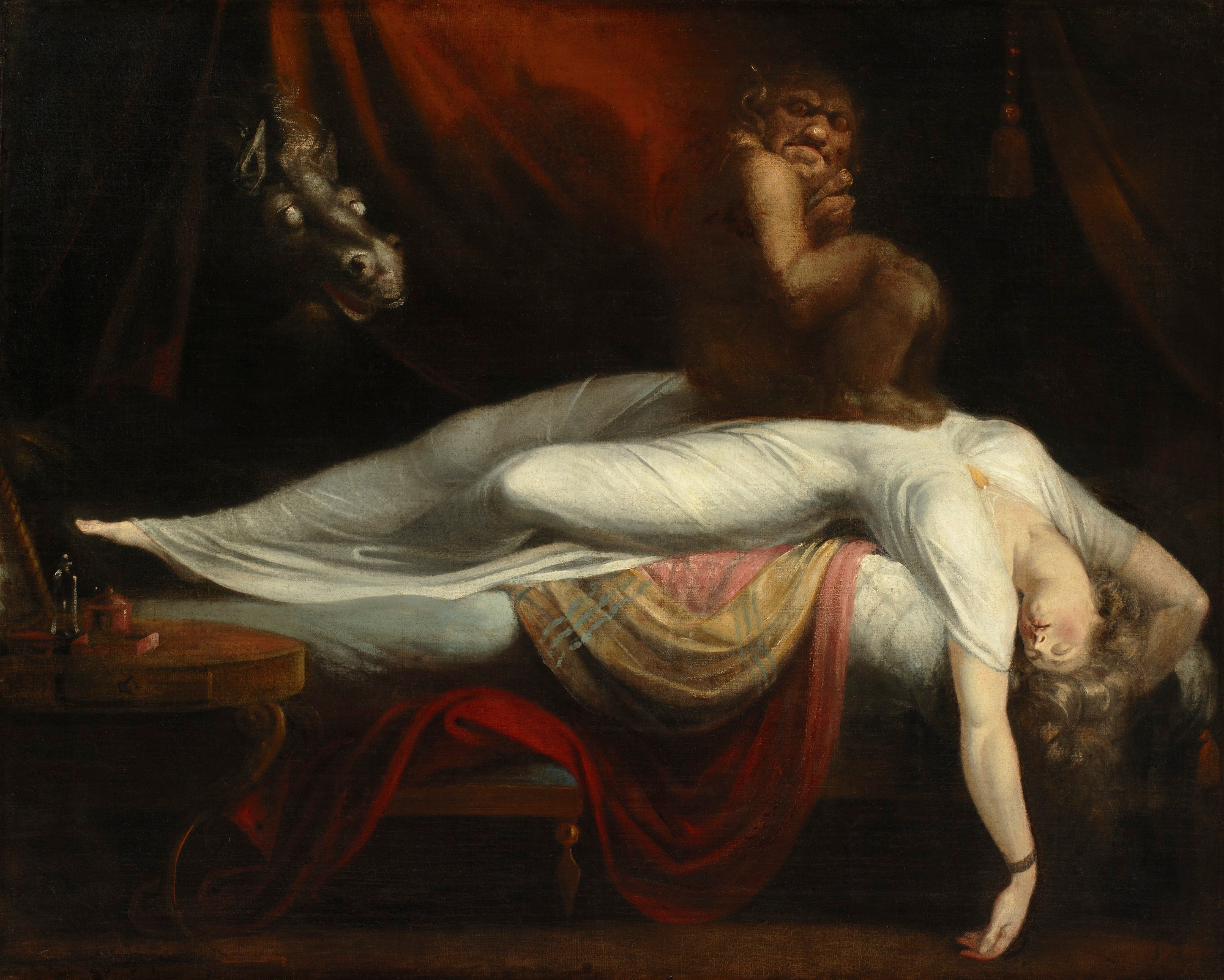
Content Notes: Discussion of Castration, Racism and Sexism
We have previously discussed Joseph Campbell’s Icarusian rise to fame and his theft of mythology from all around the world. For this final essay, I want to examine why his use of Freudian and Jungian theories may be faithful retellings, but are unhelpful at changing others lives. And how Campbell is just one daisy, in a chain that leads to our present day and our future.
Two Bros Chilling in the 19th Century
Sigmund Freud was born in 1856, in what was then Freiburg of the Austrian Empire but is now the Czech Republic.[1] He initially studied physiology, but was soon under the tutelage of neuropathologist Jean-Pierre Chacot, who specialised in “hysterical” patients. I.e. women having problems caused by a wide variety of sources. It was during this stint that Freud first conceptualised of mental diseases that do not show up clearly in the brain.

Retrieved From: Wikimedia
More than anything, Freud is renowned for his psychoanalytical hypotheses, a set of ideas around development and psychopathology to explain a vast amount of mental health issues.[1] This is where we get terms like anally retentive, which to most people means someone overly detail orientated and precise. To Freud the characterisation is the same, but is due to a disturbed psycho-developmental issue, where as a child they were overly chasistised or otherwise shamed in relation to potty training or similar activities. I am not kidding.
Of interest to us today however, are two of his more simplistic theories. The Oedipus complex and dream analysis. The former you have likely heard of, named after the Greek hero foretold to marry his mother. And in his attempts to escape doing so, stumbles into his destiny. The first reference to the complex appeared in 1910, where Freud argued that young boys would often associate their mothers with loose women. And would therefore develop a pubescent rage at their mother for engaging in sexual activity with their father instead of with themselves. [2]
This would get built upon later by Freud and other theorists, who included that the Oedipal child had castration anxiety, that is a fear of having their genitals removed.[3] The fear arises because the boy identifies with the mother, even though anatomically they are akin to the father, leading to a misplaced belief that kids like him become castrated. To get past the complex, the adolescent boy must reject the identification with the mother and solely identify with the father. If not they may become overly horny, vain or even a homosexual!
There is a female version of this called the Electra complex. But it gets very little mention academically and is certainly not even hinted at by Campbell in his books. Dream analysis however, is mentioned so often you’d think he was shilling out for Big DreamTM. The idea behind dream analysis is that our unconscious desires and drives manifest in our reveries as complex abstracted images. By accepting a psychoanalyst’s help to interpret these visions, a person can comprehend their individual subconscious drives.[4]

Retrieved From: Britannica
However, Freud’s opinion was not universal. Carl Jung was a Swiss psychoanalyst born in 1875 and was a contemporary of Freud. His theoretical basis, confusingly called analytical psychology, both took from and responded to, Freudian psychoanalysis.[5] In his version of dream analysis, dreams are the personifications of the dreamer’s personality. This allows people to tackle both with the beneficial and troubling parts of themselves in an abstracted environment.[4]
Jungian dream analysis builds upon his most famous and long reaching hypothesis, that of archetypal theory. This proposes there is a collective unconsciousness inside of every living being.[6] This is less of a hive mind and more a genetic imprint of life itself, which is relayed to us, through different essences that are completely universal. Imagine it as a blueprint by which humans are meant to appreciate everything about life. These essences are archetypes, which can be characters such as the old woman and the wise man or even just frequent occurrences like the number 4.
Archetypes therefore manifest in our dreams to mirror ourselves and our position within the world.[6] Through this notion, archetypal theory gave us the idea of introversion-extroversion and led to the Myers-Briggs Personality Test.[6] So every time you’re on a first date with someone who tells you their moon, sun and rising sign along with a 4 letter encapsulation of their entire personality, you can blame the Swiss for it.
Freud and Jung occupy an interesting place in popular culture. They are viewed as both scientific and philosophical, maintaining this dual purpose of being intellectually correct and spiritually healing. This is how their theories so easily slot into Campbell’s work. They tell us the psychological underpinnings of myths as well as how these stories can fulfil our spiritual needs. Therefore, to fully refute them, we need to not only show how they are unscientific, but how they are unhelpful in people’s lives. And where better to start that with Campbell’s own introduction.
The Origins of Daddies
When I first began to read The Hero with a Thousand Faces, I primarily went into the book blind. I was somewhat aware of the critiques of Campbell’s use of Native American mythology and felt personally his hypothesis of universal storytelling was rather oversold. However, what blind-sided me more than anything was how quickly and how fully Campbell embraces psychoanalysis. Starting off with the Oedipus Complex.

Note: This is an insight into the kind of notes I make, especially when I feel like I am slowly going insane.
Throughout the book, Campbell routinely calls back to the complex both explicitly and implicitly. He talks of the Yolngu castration ritual, a narrow section of a larger coming of age ceremony, as if it represents the boy’s alleviation of maternal connection.[7] Time and again, heroes journey away from Goddesses to Gods and sons reject their mothers for their fathers. Repeatedly, Campbell lionises the idea of men teaching the youth as being innately needed for the psychosexual and spiritual development of the child.
There are many ways to address this scientifically. One could talk about how opposite sex children of gay couples do no worse than those of heterosexual parents.[8] We could mention how the issues of single parent households fall more economic, social and environmental factors than it does on single mothers “sissifying” young boys. You, the reader, could even reflect on your pubescent childhood and if it was spent wondering whether your penis would be cut off. Though considering I am trans and I imagine some of my readers are, I may uncover castration elation instead of anxiety. Frankly though, any of this is all giving this hypothesis too much credit.
Psychological and neurobiological discourse has long since moved past the idea of Oedipus complexes because children’s psychosexual development is incredibly complicated. The impact of culture, law, environments, parenting styles, sexual orientation, religion, physiology, social setting, socialisation, education and so much more, means that psychosexual development is thoroughly individualised. One can note trends for sections and communities, but to generate a universal theory would be a fool’s errand.

Retrieved From: Wikipedia
And the fact of the matter is, Campbell employs the Oedipus Complex in its more commonly utilised fashion. Not as a scientific hypothesis but as a sexist club to bludgeon mothers. The blame for boys who do not attach to their fathers, who do not identify with them, is invariably, solely placed on the mothers lap. They are coddling, they are overbearing, they enable him.
This seed of hatred towards maternity is what would later lead to the stereotype that therapists always blame the mother. And to the term “refrigerator mother” to describe how women who are too uncaring, who never coddle, lead to children becoming autistic. A common dichotomy present throughout the feminine experience that there is a contradictory double standard you can never navigate through. And therefore, you are always ready to be the scapegoat.
Campbell pretends to praise motherhood, but really he praises men who are “raised well.” Put differently, the only praise a mother achieves is when her son does well, in some metric decided by a man. And therefore a woman’s worth is inherently either to idolize a man as a mother or a wife. The raising of daughters is never considered, because to Campbell, girls do not become heroes.
They become wives, and do this through some abstract power of nature that stirs inside of them when they first menstruate.[7] And of course, any woman who deviates from nature, is a monster. A witch. A demon. She can exclusively obtain godhood if she is self-sacrificing and exists purely to please or support the man. The hero. Mothers are not complex individuals with their own flaws, desires and needs. They remain tools for raising men, for assisting them to get past their issues. And in that sense, Campbell really understood Freud well.
The Shadows On A Cave
Andrew Neher provides an excellent examination of the various alternate explanations for Jungian archetypes. He focuses on carrying out more logical, reasonable and sound explanations to the ideas that Jung proposes.[6] To cite a rather memorable example, Jung discusses a delusion of a schizophrenic patient, who saw a penis on the sun itself and believes that produces wind.

Retrieved From: Wikipedia
Jung relates this to a Mintharic text whereby the sun emits the wind itself through a tube extending out from it.[6] Jung is suggesting that this relates to an archetype of phallic imagery with the sun. That embedded with in all of us is the irrevocable truth of such an association. Because to Jung, psychotic hallucinations, along with dreams and mind wandering, represent the brain interacting with the archetypes buried deep within us. So this two, must represent an pattern we all share.
Neher, with an limitless amount of patience I do not possess, suggests that this could be simply be because both cultures associated the sun with masculinity.[6] Which is a comparatively common association. Another explanation could be that the patient was already familiar with the Mintharic texts or a precursor/byproduct of the text itself. Therefore there is a similar basis for both accounts. But most simple of all is that it is just a coincidence of sorts.
Any experience, be they reality, dream or hallucination could likely be contrasted to a myth because there are so many stories in the world.[6] No matter how bizarre, you are likely not the first to consider an idea or experience an oddity. And this could be further compounded by abstraction and contortion in order to provide a certain narrative, where similarities between two accounts are emphasised and differences are overlooked. You do not have to leap to a collective unconsciousness when the bounds of human imagination and wealth of human tales can clearly explain it.

Retrieved From: Wikipedia
Coincidences are bountiful in our world. Things happen, and we ascribe meaning where there is none. We encounter someone at the opportune moment or catch a bus as it is about to leave or receive a lucky break when we need to. And then believe that because it benefitted us that there is meaning behind it. Though we forget when we have barely missed someone, that we’ve been a second too late or that nothing came when we needed to. Most of the time, we remember to positive outliers and forget the negative commonalities.
Really the one archetype we all share is that we are terribly subjective. We are all prone to bias, interpretation and letting our own theorising become universal experience of humanity. Most of us try to correct for this, always imperfectly. But Jung and Campbell let this idyllic dream run away with them. They imagine that their interpretation of patterns is the one true order. That unlike with the scientific process or most forms of human communication, they do not need to consider the perspective of others.
I call this a dream because it is a nice fantasy to possess such knowledge. A secret gnosis that you alone truly perceive. But it is also dreamlike because it is ephemeral, it shifts illogically, and abstracts in ways only a lone person can intuit. Campbell’s writing frequently feels like that. As if he is divulging an intuitive truth only he understands and is woefully inept to explain to us. Because such biases, such dreams manifest in that manner. Emotively true. Logically wrong.
Dreaming of Science
Campbell often would intersect tales of mythology with extracts from the dreams of Jung’s patients. Once more, an exceptional example is from his section on the Yolngu, where after describing the tale of The Great Father Snake who desires foreskin, he quotes Jung:
“One of my patients dreamt that a snake shot out of a cave and bit him in the genital region. This dream occurred at the moment when the patient was convinced of the truth of the analysis and was beginning to free himself from the bonds of his mother-complex.”[7]
Dreams comprise a fascinating area of psychology and rife with so many con artists because we don’t assuredly know a whole lot about them. Psychological studies on reveries to this day rely on self-report, an infamously unreliable method of data extraction because humans suck at recounting and describing our own experiences. Though that doesn’t mean science hasn’t advanced past Jung’s imagination.
To understand dreams, we need to get to know a little about sleep. When humans sleep, we do so in three distinct phases. Hypnagogic, Non Rapid Eye Movement (NREM) and Rapid Eye Movement (REM).[9] Hypnagogic sleep represents the drifting into a proper repose during the first hour. This is where we get the term hypnagogic jerk for when you suddenly awaken with a start after having just drifted into dreamland.
NREM and REM subsequently begin one after the other and cycle as we sleep.[9] Each cycle lasts around 90 minutes although the precise cycles themselves are individualised. As well both of these phases are typified by, of course, eye movement and the presence of specific neurobiological signals. In REM there are signals called Ponto-geniculo-occipital waves or PGO waves. Named because they spread through the brain stem and visual cortex.[10] They are believed to, although never solidly proven to, facilitate dreaming.
One of the more convincing neurobiological explanations for dreams is memory reactivation. When humans sleep, we are, amongst other things, consolidating our memories.[11] Transferring them from short to long-term storage and getting rid of useless information. There is a hypothesis that when we do so, some of our memories are consolidated through dreaming. This could be deliberate or a by-product of the neurobiological mechanisms.

Retrieved From: ArtStation
This hypothesis has a couple of cool studies behind it. One is by Stickgold and colleagues in 2000 where 27 participants played Tetris when they woke up and before they went to sleep.[12] The players were awoken during the hypnagogic stage of sleep and asked to describe their dreams. The participants mentioned that they often dreamed of Tetris games, though usually a condensed version without a score board or border, just the pieces being moved.
This becomes especially fascinating as most of the players recounted a 24-hour delay in these Tetris based hypnagogic dreams, suggesting a wait in the processing of memories into soporific material.[12] Additionally, for those who had played the game before, they reported some of their dreams were replays of games that had happened years ago.
This study is particularly intriguing to me for four reasons, and a number that is clear proof archetypes exist. Firstly, it is something I have experienced, having sometimes fallen asleep playing Hades II, only to then dream of playing as Melinoë better than I ever could. Secondly, it suggests that dreams are not exclusively the realm of REM sleep and can, in fact, occur in any phase. Thirdly, the research itself was so notable it led to the coining of the term “The Tetris Effect” for the phenomenon.

Retrieved From: Twitter
And finally, because one of the researchers, David Roddenberry, owns a company called HealthyWage. This company was purportedly was the first to offer cash incentives to encourage people to lose weight in the United States.[13] Just one of the strangest connection to academic research I have found so far. But overall, this does suggest that dreaming could, in some cases, be related to the brain trying to process the memories of the previous day. And it is not the only study to do so.
Damaged Dreams
In 2020 Spanò and colleagues decide to see if the hippocampus was involved in dreaming.[9] The colleagues by the way include the prestigious Queen of the Taxi Drivers herself, Eleanor Maguire. Your hippocampus is essentially your recall centre, it is where long term memories are stored. It can also restructure itself to better facilitate long term learning. Maguire herself was instrumental in our understanding of how the hippocampus works.

Retrieved From: Wikipedia
This study examined people with hippocampal loss on both sides of the brain and compared them to controls with no neural injury.[9] They found that those with hippocampal damage experienced fewer and less detailed dreams. Suggesting that the hippocampus plays at least a supporting role in how we process dreams and therefore that memories are involved with our dreams.
However, I want to re-iterate that this is all merely a hypothesis. We do not know with any degree of certainty how dreams work or why humans developed them. There are other theories that suggest our dreams are: simply random noise we then force meaning upon, our dopaminergic system constantly activating, or our brains default state. [11]
But none of the current thinking relates to Freudian or Jungian ideas of dreams, in fact they often refute it. Dreams can, and likely do, hold some meaning towards us as people, whether they be replays of memories or our imaginations running wild. But the meaning is likely more obvious than either theoretician ascribes. It is not our unconscious desires we cannot otherwise access, nor a calling to our genetic ancestry and connection to the universe itself. It is likely more personal, more individual and more to do with our own lives than anything else.
Neher hits the nail on the head when he mentions the appeal of dream analysis:
“If such experiences as dreams and fantasies…can be seen as the product of an impersonal and universal collective unconsciousness, then we can distance ourselves from them… Granted this perspective may sometimes be healing, but the danger is it may encourage people to discount the personal implications.”[6]
The issue with Freudian, Jungian and Campbellian philosophy is that it allows for a dissociation of the self from the world. Which, I now realise, is probably a sentence that shows I have read too much of their work. What mean is that they all allow individuals to disconnect from themselves and the world around them. Their neuroses, issues and problems are not caused by themselves or other people. But by an unconsciousness they cannot reach, a collective existential network or by a lack of heroic tales to guide them.
It allows people, especially middle-class white men, to disengage from the problems of the world. Whether that be sexism, racism, genocide, colonialism or many of the other social, economic and political issues that where there when they were writing and continue to be there now. Because it is not people’s fault. It is not societies, or governments or social groups. It’s some abstracted other, and only by dealing with this muddied conceptualisation can anyone really make change.
It’s a convenient excuse to remove yourself from the world, from aiding people, whilst seeming to engage with the issues at hand. And it’s an excuse still in use to this very day.
An Ouroboros Of Masculinity
I have harped on the connection between Campbell and modern conservatives like Ben Shapiro and Jordan Peterson, often with pithy commentary. This is not merely because of a connection with their inability to communicate clearly nor that they share a similar political philosophy. Rather, Campbell is just a joint between modern-day conservatism and conservatism of the previous century. Masculinity has forever been in crisis, and women are continually blamed for it.
The reason may change on the surface level, be it feminism, women working, feminism, mothers providing for their daughters equally, feminism, lesbians sustaining public relationships and of course we can’t forget feminism. When women exist as people in public, actively engaging in the world around them, regardless of the opinion of the nearest man. It causes men who benefit from systems of oppression to become nervous.
This is double, tripled and quadrupled, when it is women who are marginalised in a variety of ways. Such as queer women, trans women, women of colour, disabled women and any other constellation of these factors you can imagine. Because these women are meant to be invisible. To not be seen. They have no use to the men Shapiro or Peterson or Campbell or Jung or Freud are speaking to. Or any use they do have is a shameful secret spirited away to protect fragile masculinity. A glass construct that breaks when it has to consider just how much of their ego, their comfort, their posturing, is built on the back of women their eyes scan over.
Campbell’s use of Freudian and Jungian psychology is the same as Peterson’s. The language may change, the presentation may be different, there may be a novel added spice of evolutionary psychology or bio-essentialist neurobiological takes. But ultimately, it exists to position a certain kind of man, who is white, educated, able bodied, cisgendered, middle class and so much more, as rightfully atop the hierarchy.
And the most ironic part is that despite the popularity of Campbell and Peterson, such men are rare and non-representative of masculinity. Most men who read Peterson today are likely poor, would likely qualify as disabled, have never achieved higher education and have more in common with the minorities they denigrate than imagined majority conjured up by public intellectuals.
If you are questioning Campbell, or Peterson, or men like them, then I want to stress something clearly. They are wrong. Scientifically, philosophically, spiritually or any other way you can think of. They do not understand what they are talking about in any depth. And you do not need to agree with my positions completely here. But I hope you will at least recognise my positions come from a depth of knowledge, that the researchers and writers I share have an even vaster reservoir of expertise and intellect.
And I hope you will read these papers and articles or read more like them. That you will learn to foster your own version of masculinity, spirituality and life. Because ultimately, Peterson, Campbell and others deprive you not just of connection to yourself. But connection to those around you. To women in your life, the disabled people in your life, the black, brown and indigenous people all around you.
But you can be better than Campbell. All you need to do, is try to understand those who are not like you. To read their words, to hear their stories, to engage with their perspectives and respect them. With open arms you will find connection in places you never thought possible. And connection, is something we all need more of, now more than ever.
Thank you so much for reading. I hope you all enjoyed this foray in psychoanalysis and I will be back next time with hopefully a less intensive essay. Let me know what you think below or on Bluesky.
References
- Jay, M. (2025). Sigmund Freud. In Encyclopædia Britannica. Brittanica
- Freud, S. (1910). A special type of choice of object made by men. SE, 171.
- Freud, S. (1922). Nachschrift zur Analyse des kleinen Hans. Internationale Zeitschrift für Psychoanalyse, 8(3).
- Roesler, C. (2023). Dream interpretation and empirical dream research–an overview of research findings and their connections with psychoanalytic dream theories. The International Journal of Psychoanalysis, 104(2), 301-330.
- Fordham, F., & Fordham, M. S. M. (2025). Carl Jung | Biography, Theory, & Facts. In Encyclopædia Britannica. Britannica
- Neher, A. (1996). Jung’s theory of archetypes: A critique. Journal of Humanistic Psychology, 36(2), 61-91.
- Campbell, J. (1949). The Hero with a Thousand Faces. Pantheon Books.
- American Psychological Association. (2021). Lesbian and gay parenting: Theoretical and conceptual examinations.
- Spanò, G., Pizzamiglio, G., McCormick, C., Clark, I. A., De Felice, S., Miller, T. D., Edgin, J. O., Rosenthal, C.R, & Maguire, E. A. (2020). Dreaming with hippocampal damage. Elife.
- Tsunematsu, T. (2023). What are the neural mechanisms and physiological functions of dreams?. Neuroscience Research, 189, 54-59.
- Graveline, Y. M., & Wamsley, E. J. (2015). Dreaming and waking cognition. Translational Issues in Psychological Science, 1(1), 97.
- Stickgold, R., Malia, A., Maguire, D., Roddenberry, D., & O’Connor, M. (2000). Replaying the game: hypnagogic images in normals and amnesics. Science, 290(5490), 350-353.
- Sayre, C. (2010). A New Weight-Loss Plan: Getting Paid to Shed Pounds. Time. Retrieved From: Time



.jpg#/media/File:Sigmund_Freud_colorized.jpg)


.jpg)


.jpg)

.jpg)
_in_the_shape_of_a_minotaur_Greek_made_in_Ionia_580-560_BCE_Terracotta_(1).jpg)
