Throughout the past two essays on gaming addiction and the addictiveness of loot boxes and gachas, it may have been apparent that I have not really engaged with the games that are the focus of academics. This is predominantly an issue of genres. I cannot aim guns to save my life and autoplay mechanics bore me to tears. But there is one amongst the pantheon of addictively designed games that I have played. Today we will look at Infinity Nikki and see how it manipulates you to spend, spend, spend.
Together Till Infinity
The Nikki series is a set of mostly mobile dress up games created by the Chinese developer Paper Games. The first instalment Nikki UP2U was released in 2012, and the most recent version, Infinity Nikki, launched in December 2024. I personally started with Love Nikki, the third instalment, when I was a young teenager, before shifting to Shining Nikki and then Infinity Nikki. Although there were years long gaps between me playing them.
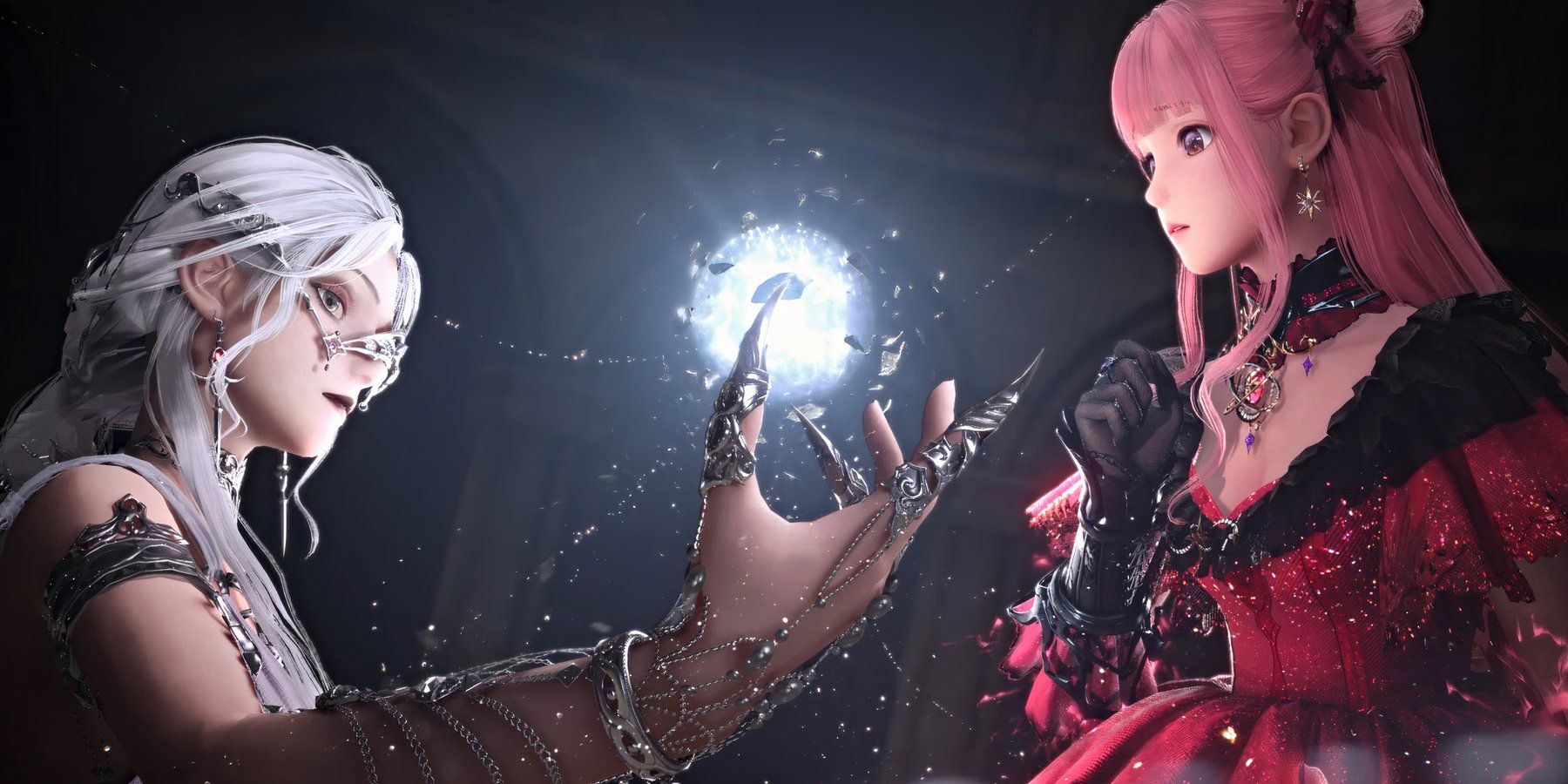
As you may guess, the games revolves around the titular Nikki, a pink haired girl transported to a mystical world called Miraland, alongside her trusty talking cat friend Momo. In it, people resolve conflicts through style battles, where points are accrued based on creating outfits that fit into a set of descriptors. Though there has been at least one incident where someone just shot the other person.

Retrieved From: The Gamer
The basic gameplay of all the Nikki games revolves around the player collecting new clothes to progress in the story. Going through styling battles unlocks further worlds, more materials and better clothes. These outfits are of different rarities and can be upgraded to increase your proficiency in styling battles. But Infinity Nikki somewhat differs from its predecessors, in that it is open world and available on all platforms, instead of being exclusively on mobile. This means both its presentation and how it utilises standard mobile game mechanics differs from the usual.
For example, both traditional Nikki games and Infinity Nikki make use of stamina mechanics. You possess a certain number of hearts, which can be expended to carry out activities. They slowly regenerate with time, or you can spend in game currency to instantly recharge.
However, traditionally Paper Games employs this to gate progression through levels and acquiring of materials, whereas in Infinity Nikki they use it only to bar very specific items. Many materials are gained through the open world itself. Although notably the rarer items may only have one source, like a specific animal, forcing you to wait 24 hours to collect again.

Retrieved From: Eurogamer
Note: People do actually try to play songs using this violin, my favourite being this
Moreover, Infinity Nikki contains an unusual method of delivering gameplay. Abilities are gained through the accumulation of specific outfits, usually comprising 8-11 articles of clothing to collect. These can provide to you the capability to float, attack enemies or the most crucial power of all. Playing violin! These outfits serve a dual purpose of being aesthetically interesting to the player and offering mechanical benefits. Some are given to the player for free, some are earned through gameplay. And some are gained through the gacha element of Infinity Nikki.
There are essentially two parts of the gacha mechanic. One is a permanent banner, currently with four outfits. This uses blue Resonance Crystals, in order to gain attempts, or pulls, from it. The other is two monthly cycling banners usually containing four outfits, but it can be only two in shorter periods.
These comprise two easy to obtain outfits (requiring at most 10 pulls per article of the outfit) as well as inconsistently containing two hard to obtain outfits (requiring at most 20 pulls per article of the outfit). These banners use pink Resonance Crystals. Whilst you can earn both types of crystals in gameplay, the primary way of obtaining them is through purchases with in-game currency.

Retrieved From: Sport Skeeda
You can obtain three forms of currency within Infinity Nikki. Blings is the most common, used for small easily accessible items as well as the general payment for crafting or refining materials. Diamonds is the currency used for buying more exclusive products, be these clothes or modest mechanical benefits. On top of this, they are how you buy Resonance Crystals, with some people saving up literal millions of diamonds for banners they like. And finally we have Stellarite.
Unlike the previous two which could be earned in game, Stellarite is exclusively available through investing real-life money. It is primarily used to access exclusive outfits, which get rotated out each month, as well as bonuses for special updates, like a bicycle that can go any place. No, I am not kidding, Infinity Nikki includes bicycles locked to certain regions, meaning you could not use a bike from one area in another.
Until they dropped a free roaming bicycle for Stellarite and then after this offered an outfit which summoned a motorbike. Though it was only obtainable through the gacha element. Rather scummy right? Well, it’ll only get worse from here.
Through The Pattern Darkly
Dark Patterns or Deceptive Patterns is a term coined by website designer, Harry Brigull.[1][2] It describes a set of interface design choices which manipulate users in order to promote benefits (usually profit) for the owners. In other words, you know how scammy websites will have arbitrary timers in big bold font to make you sign up for their rubbish? Dark patterns describe the mechanical aspects of such design choices.

Retrieved From: Wikipedia

It is a rather comprehensive term, used in all forms of technology from shopping websites to social media to video games. Naturally, for our purposes, we are only interested in the latter most. To save on space, I will focus on the specific deceptive patterns that I have identified in Infinity Nikki. As well, there is no comprehensive list of what is and isn’t a dark pattern. In fact, there is much debate about whether some of these mechanics are really wholly underhanded. Therefore we will start with their general definitions and then look at how they link to Infinity Nikki, as well as the damage they cause.
Dark patterns are often separated into one of three categories: Temporal, Monetary, Social.[2][3] Temporal concerns deceptive mechanics which manipulate the players time, often with the goal of convincing them to devote more time than is reasonable or desired. Monetary is when users financial sense is exploited or they are tricked into spending more than is necessary. Social is when relationships or desire for bonds is leveraged.
Grinding is a common temporal example, where a tedious repetitive task is necessary to achieve a goal.[3] This means all you can hope to do is accelerate the process as there is no other way around it. Endowed Progress is another, unfortunately named, one which is when the initial advancement is significant quicker than subsequent advancement. Leading to a warped sense of progression. Fear Of Missing Out (FOMO) is when games use daily logins gifts, frequent updates or reward passes to persuade players that they should log in everyday.
Loot boxes or gacha mechanics are the chief monetary dark pattern. But since I have already dedicated an essay to them, I will not delve far into Infinity Nikki’s specific brand.[3] Pay Walls are when content is locked behind payment. This is a common tactic for free to play games, where necessary or even just useful mechanical benefits are locked behind small payments (often called micro-transactions). Comparison prevention involves an interface making comparisons between products difficult, especially when monetary value is obfuscated.[2]
The sole social dark pattern of interest is fake social proof. These include user reviews, testimonials or inter-user social medias that are manipulated or forged in order to present a more favourable version of the product.[2] Though it is important to note there are other examples. Like social pyramid schemes, where players are encouraged to onboard others in return for in-game currency.[3] But that is the be all and end all of the phenomenon, so there isn’t much more depth to them.
However, as you will see, the others are really baked into the foundational practices of Paper Games and how they made Infinity Nikki.
Tailoring Your Mind
Grinding is one of the most normalised dark patterns listed. In Infinity Nikki, grinding is primarily done through the gating of materials to make new clothes. These clothes can be integral to story progression as well as giving diamonds for completed outfits. For me, the majority of Infinity Nikki gameplay was spent picking plants, brushing sheep and playing a fishing mini-game I dearly wish I could have skipped.

Retrieved From: Reddit
Note: Average fishing hater be like
But to do so was mandatory to complete quests and to gain new clothing items, the two major conceits of the game. This leads to people expending money on quick fixes. Such as spending Diamonds on more stamina or additional materials to quicken progression. Sometimes you would even need to expend Stellarite for exceedingly rare items. You could also try your luck on the gachas, as some outfits quicken the progress of collecting materials.
Endowed progress is another common mechanic within games. For Infinity Nikki, like many others, you first level up and gain access to resources quickly. This leads to a blistering pace, where you’re constantly acquiring new clothes and new features to try out. However, this plateaus swiftly, with the gaining batches of clothing going from every day, to every week, to every month if you’re waiting for new non-gacha content. And to collect them requires either paying into the gacha element or spending each day grinding to obtain more materials.
The way Infinity Nikki uses Fear of Missing Out is different to its predecessors, where there were explicit daily login rewards. Alternatively, Infinity Nikki makes use of a two tier battle pass system. For those who do not spend money, they can gain some much needed diamonds by completing daily and weekly tasks. Paying money unlocks extra Diamonds as well as access to Stellarite, stamina boosts and even exclusive outfits for Momo. If you need Diamonds for the gacha mechanic or to progress quicker, this is the most economical way. However, it is also the most time consuming.

Retrieved From: Reddit
I’ve already sort of touched on Pay Walls with the whole bicycle debacle. Games will formulate annoyingly arbitrary problems and then sell solutions to the consumer. Grinding and Endowed Progress also feed into these, as users are expected to pay for the luxury of reasonable progression. Paying players then become preferentially treated, which in and of itself, can encourage others to fork out for the “premium” experience. By which of course I mean, mildly functional experience.
Comparison Prevention makes this even worse. The use of in-game currency and in-game currency that can only be bought with in-game currency, obfuscates comparisons between game products and likening products to real world value. Crystals can be purchased, but never directly with money, only with Diamonds or Stellarite. Meaning players are likely to spend more than they otherwise would due to this complexity. Even the savviest shopper would be bogged down in mathematics to understand the likely monetary cost of clothing gained from the gacha machine.
Fake Social Proof is an intriguing one, because I cannot say definitively if the Steam reviews have been flooded with bots. There has been some evidence of suspicious activity on Steam. Such as profiles which have engaged in no other games, play very little of Infinity Nikki and provide glowing endorsements.[5][6]
This would make some sense as there have been efforts in the fan spaces to review bomb Infinity Nikki on Steam.[7] Usually whenever Paper Games pushes the envelope on exploitative corporate practices, like a cat near a precarious glass of water hanging over electrical equipment. But nothing I have observed is concrete, so it will not be the basis of my foundation for this point.

However, there are a frequent stories of the official Infinity Nikki discord server being heavily moderated against controversy, with most expressing their experiences on the fan run subreddit.[8-10] Doing so serves two purposes. Firstly, it serves to insulate paying customers in a cheerful atmosphere, thereby reducing the likelihood of player numbers (and therefore payments) dropping. Secondly, it means newer players are in a complimentary upbeat community, that incentivises a lack of critical thinking when engaging with the game. Meaning new players can be on-boarded to pay and continue paying.
Overall, this seems a pretty scathing indictment on the methods used by Paper Games in their game. And don’t get me wrong it absolutely is. But it wouldn’t be one of my essays without some complexity thrown into the mix.
The Light Hand of Darkness
Look, I want to state my position here clearly. I do believe that Paper Games (and by extension other publishers) are engaging in deeply unethical and manipulative practices. But that does not mean I agree with how the research on dark patterns is applied. There’s nothing inherently wrong with it, but much of the writing feels out of touch with both game design and with gamers.
Take grinding for example. I am a filthy turn based RPG player, so I have spent most of my time playing games by gaining levels and abilities to defeat the next big bad boss. Its undeniably mostly grinding. But I don’t believe it would qualify as inherently deceptive. There’s a lot to complain about with Final Fantasy games, but its routine of fighting is usually part of the appeal. It creates a gameplay loop where you master the skills of your characters. Iteratively getting more competent at the mechanics and gaining artificial boosts to power through the game itself.

Drawn By Akihiko Yoshida
Retrieved From: Tumblr
To put it in more simple terms. Its really fun beating those level 5 blobs that caused you trouble at the start of the game with a giant fireball because you now comprehend elemental weaknesses. And have way higher stats. This needs to be considered when applying these dark patterns to games. Some are clearly just manipulative no matter what, like fake social proof, comparison prevention and loot boxes. There is no mechanical or narrative reason to dissipate dissent, to prevent players from making informed financial decisions or to use randomised mechanics to give rewards. It is solely to increase profit.
Though with practices like endowed progress, they can create good gameplay experiences. Infamously, Runescape took the idea perhaps a little too far, with the meme of 92 is half of 99. Because the necessary experience points to get to level 92 were half of those needed to get to level 99. But quicker beginning progression gives a fast-paced gameplay and allows players to quickly explore the benefits of level ups. Whilst later slower progression, instils rarer, more substantial benefits for sticking with certain characters or mechanics.
And that, in my own experience, is extremely fun. I want to use Ultima on the ultimate boss because I spent so long working on these characters to get to it. So my reward should be to one shot those who stand in my way with the power to end all reality.

Note: Me at every minor inconvenience in a game
This lack of fundamental lived experience by the academics investigating it, means they miss the intricacies of gaming. And admittedly, I am not considerably better. The reason I even heard about dark patterns is because a friend brought up the concept. Without the connections I have to many talented friends involved in diverse aspects of game design, I would have missed a remarkably rich vein of discussion.
So, how about we look at some research by actual game academics?
Gaming In The Dark
In their 2021 paper, Dupont and Malliet try to develop a version of dark patterns that can be understood through the lens of game design theory.[11] In it, they make use the fundamental unit of a game called a ludeme. This is akin to the basic unit of speech called a phoneme, which is the smallest possible sound a person can produce. Phonemes are then strung together to create words, which generates sentences, which formulates paragraphs, so on and so forth. In a similar manner, their ludeme comprises the root components of a game. Comprising a graphic element, sound cue and mechanic. Which can then be strung together to create puzzles, levels and games.
Their example is the block pushing from the original legend of Zelda games. Within is a graphical representation of both Link and the block, the sound of something dragging on the floor and the mechanic of pushing the block through the character.[11] Whilst this definitionally is not the base element of the game itself; it is the most stripped down interaction for what a player experiences.

Merely looking at the block is not the player interacting with the world. It is only with all three combined that they enact change upon the game world itself. Audiovisual feedback punctuates mechanical changes and tells them they are doing something right.
Just as a sound can be utilised in a variety of different words, ludemes can be employed in a variety of different games. Nintendo does not own the patent for pushing blocks. Although I wouldn’t put it past them to be honest. But if you played the original Legend of Zelda and then saw a similar block within another game. You would attempt the action again, to try and push it, to see if it is the same ludeme.[11] In this way, games not only instruct us about further gameplay within themselves, but base mechanics and genre conventions condition our view of future games as well.
The benefit of framing dark patterns through ludemes, is that we can appreciate the mechanical differences between deceptive practices and beneficial practices. There is much focus on how it is the slick graphics or earworm auditory cues, that lead to people becoming dependent on these games. But really, those elements are similar across MMORPGs. The difference is the context of the mechanic.

Retrieved From: The Gamer
For example, MMORPGs often allow the player to gather materials through the world. Whether it be getting plants, foraging for foods or interacting with animals, even fighting bosses can net you rare items. These materials can then be used to craft better armour or weapons. All without spending a single real world penny. Similarly in Infinity Nikki, you can forage for plants, interact with animals and go through boss trials to gain rare items, in order to craft better clothes. But, these are significantly more gated behind 24 hour timers and stamina mechanics. And unlike say, World of Warcraft, the game has easy ways for you to spend money to get around these arbitary restrictions.
So, despite both seeming similar on the surface, in Infinity Nikki (alongside other scummier games) you are incentivised to expend real money. Dark patterns manipulate training from previous games, slightly twisting our ingrained responses of collecting materials to profit. That is what causes them to be manipulative. The parasitic contortion of otherwise normal gameplay elements to further incentivise spending.
The most important part to stress through this framework is how player interaction with the game is highlighted. Sizeable amounts of research positions players as passive, that they are being manipulated through these tricks without input. This isn’t to say it is the player’s fault, rather that their input and prior experiences are integral to the manipulation itself. It is in their interactions with games that grinding or endowed progress is seen as normal and not harmful. Which subsequently allows for manipulative practices to catch them off guard.
Lighting Up Darkness
There has been academic discussion of the ways in which we can limit or otherwise ameliorate the effects of dark patterns. This is especially pressing considering that even games for preschoolers have been found to exhibit some characteristics of dark patterns.[12] Nong (2025) states some simple changes, such as game distribution boards enforcing stricter methods of transparency for in-store and online descriptions.[13] Like an enormous yellow warning signs saying “contains gambling and unbridled ravenous predation by executives”. Though my suggestion may need workshopping.

Retrieved From: Royal Society Publishing
Further effective interventions suggested include clear conversion rates between the value of items and real money, perhaps through a toggle or enforcing price tags only in the relevant currency for the country.[13] You know, instead of three levels of obfuscation. Others have suggested more legalistic action, such as challenging games companies on these deceptive practices violating data protection and consumer rights laws.[1] All things considered, I think these methodologies can be easily surmised like this.
Make deceptive practices as inconvenient to implement as humanly possible.
To me this is reasonable as unfortunately, there really is no individual method to salvation here. You can be an informed consumer; trying to research the games you wish to play. But this is rapidly becoming the standard for most games. And exploitative practices are becoming increasingly normalised. I will always champion education on these topics, but I don’t think there is a way to outmanoeuvre this as a typical consumer.
I’d like to say that since boycotting worked to get Paper Games to reverse some decisions, the same is true for games companies like Activision-Blizzard. Unfortunately, Paper Games isn’t a massive megacorporation. When they are boycotted, it impacts their bottom line. When Activision-Blizzard is, it affects their employees. Plus, Paper Games relies on the Nikki series almost exclusively, whereas other corporations retain a wide berth of games companies beneath them to throw under the bus. They won’t stop until they are forced to.
So the most urgent communal action we can carry out as gamers, is not boycotts, though I would still recommend avoiding their games. Instead it is political pressure on lawmakers. The tried and true method of shouting on the streets, educating others, as well as pushing for change personally and politically. Inconvenience is a effective tool and one that routinely influences those with actual access to power. And only through preventing easy money, will we ever hope to stop capitalistic enterprise. Their laziness is their greatest moneymaker and their greatest downfall.
The End of Infinity
I do want to emphasise that I really love the Nikki games. At least. Abstractly. In terms of dress up games, they are some of the best if not the best. They are an oasis in a desert of a deprived genre. It caters very explicitly to women, to a particular genre of women’s gaming that is never considered to be profitable or worthwhile. They fufill a fantasy for many people, not just women, that is severely deprived otherwise.
But, that’s the issue, right. The reason for Infinity Nikki’s popularity, the reason as to why people will latch on and cling to it despite Paper Games practices, is the desperation. Is the lack of catering to a market that is crying out for high quality games. And, to me at least, that makes Paper Games practices worse. They are not even the worst offenders in implementing dark patterns, much more ink is spilled on Overwatch, Genshin Impact and FIFA amongst others.
Infinity Nikki is arguably one of the better games within this manipulative genre. I want that to sink in for you. Amongst consistent use of dark patterns, this is as good as it gets. Yet it is still a game that got under my skin so much and made me buy into the sunk cost fallacy of spending money on it, that I had to stop playing. Again.
Because this is a repeat issue in the Nikki games for me. And for many others. Even at their best, they are coercive, deceptive and most of all, greedy. Unfettered in their desire to accumulate wealth at the cost of ethical practice. Even as they nominally pretend to care about their player base, the company’s only real concern is a loss of revenue. The sole method to stopping their relentless onslaught of harm, if we force them to. And unfortunately the only current way to prevent it from harming you, is to stop playing.
Thank you all so much for reading, do let me know your thoughts on dark patterns below. And I will be back with next time to discuss Joseph Campell’s, The Hero’s Journey.
References
- Mathur, A., Kshirsagar, M., & Mayer, J. (2021). What makes a dark pattern… dark? Design attributes, normative considerations, and measurement methods. In Proceedings of the 2021 CHI conference on human factors in computing systems (pp. 1-18).
- Shemeikka, A. (2024). Dark patterns in video game monetization (Bachelor’s thesis).
- Veiga, E., Silva, N., Gadelha, B., Oliveira, H., & Conte, T. (2025). Dark Patterns in Games: An Empirical Study of Their Harmfulness. Proceedings of the 27th International Conference on Enterprise Information Systems (ICEIS 2025), 2, 470–481.
- Koeder, M. J., Tanaka, E., & Mitomo, H. (2018). ” Lootboxes” in digital games- A gamble with consumers in need of regulation? An evaluation based on learnings from Japan. 22nd Biennial Conference of the International Telecommunications Society (ITS): “Beyond the Boundaries: Challenges for Business, Policy and Society.”
- Masterre (2025). I may of found proof that some of the most recent positive steam reviews are not only fake but probably were purchased. Retrieved From: Reddit
- TheHeadlessFool (2025). I have a feeling that Steam reviews are manipulated. Retrieved From: Reddit
- BanananaCherryBiscuits (2025). So we’re finally now over 50% negative reviews on Steam. Retrieved From: Reddit
- Mischeveouslyacat (2025). The majority of us who were participating in the discourse about the game got 24 hour bans and we’re muted by last night. Retrieved From: Reddit
- Nysanion (2025). The Discord situation is ridiculous. Retrieved From: Reddit
- Hitomienjoyer (2025). The censorship in official spaces takes the cake for me!! LIKE WHAT. Retrieved From: Reddit
- Dupont, B., & Malliet, S. (2021). Contextualizing Dark Patterns with the Ludeme Theory: A New Path for Digital Game Literacy?. Acta Ludologica, 4(1), 4-22.
- Sousa, C., & Oliveira, A. (2023). The Dark Side of Fun: Understanding Dark Patterns and Literacy Needs in Early Childhood Mobile Gaming. In European Conference on Games Based Learning (Vol. 17, No. 1, pp. 599-610). Academic Conferences International Limited.
- Nong, M. N.(2025) Predatory Game Monetization: Going Beyond Loot Boxes and Gambling.